Bahuchara Mata and the Hijra Community

Goddess of the Third Gender

In Gujarat, a goddess rides a rooster and blesses those whose nature transcends the binary. Bahuchara Mata has been the patron deity of the hijra community for centuries, her worship establishes that tritiya prakriti individuals have divine protection, defined roles, and established tradition. Unlike Western frameworks that treat gender-diverse people as patients needing medical intervention or activists demanding recognition, the dharmic tradition positions them as devotees of a specific goddess, participants in sacred lineages, and holders of ceremonial roles that society needs. Where Western gender clinics offer diagnosis and hormones, Bahuchara Mata offers purpose and belonging.

The Goddess Who Claims Her Own

In the heart of Gujarat, near the town of Becharaji in Mehsana district, stands an ancient temple that tells a story Western gender theory cannot explain. Here, the goddess Bahuchara Mata has been worshipped for centuries as the patron deity of the hijra community, those whose prakriti expresses gender beyond the binary.

This is not reluctant accommodation. This is not modern "inclusion." This is a goddess who specifically claims tritiya prakriti individuals as her devotees, grants them her shakti, and empowers them to bless others.
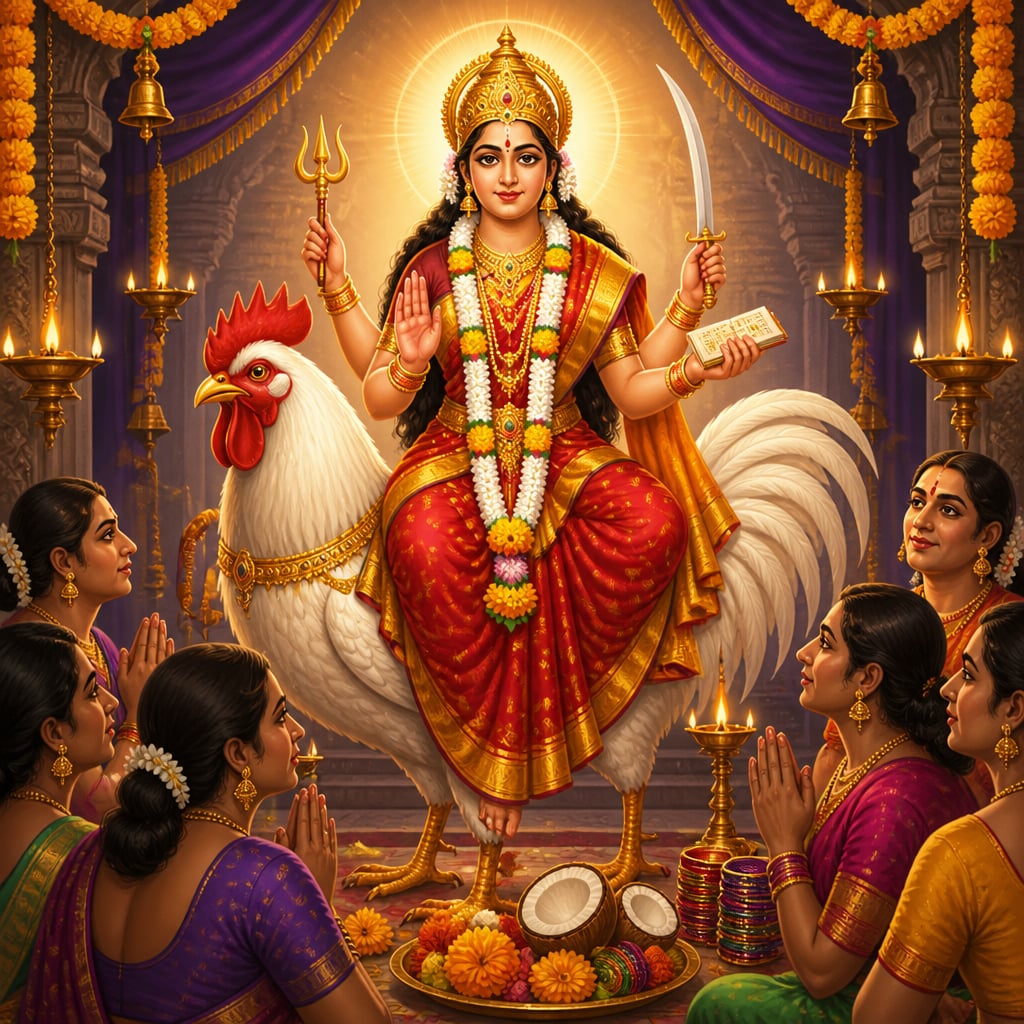
Goddess Bahuchara Mata seated on her white rooster vahana, four-armed, blessing her devotees in the inner sanctum at Becharaji.

The Legend of Bahuchara

The Skanda Purana and regional traditions tell how Bahuchara came to be associated with the third gender.

In one account, Bahuchara was a princess traveling with her sisters when bandits attacked their caravan. Rather than submit to violation, she invoked a curse and performed tragu, self-immolation as the ultimate act of honor. She manifested as a goddess at the spot where she died.

In another telling, she cursed a prince who could not consummate his marriage due to his nature. She decreed that men of such nature should worship her and dress as women, and in return, she would grant them her power to bless and curse. From this curse came a calling.

But the most significant teaching is this: Bahuchara does not merely tolerate those of tritiya prakriti. She claims them. They are her special devotees. Their difference is not disorder but divine selection.

The Hijra Community: Structure, Not Chaos

Unlike Western gender-diverse communities that formed recently through shared political grievance, the hijra community has existed for centuries with defined structure:

The Guru-Chela System
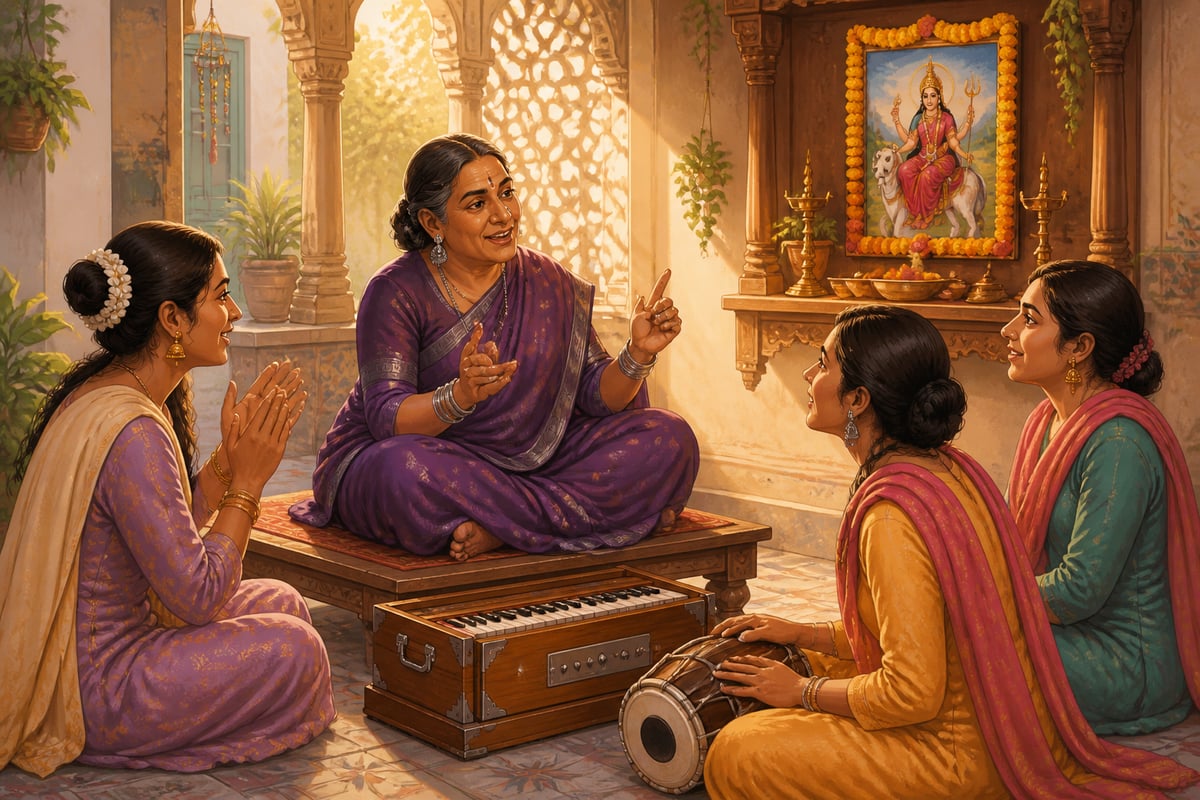
Hijra guru teaching young chelas in a gharana courtyard

Hijras organize into gharanas (houses) led by gurus (teachers). When someone joins the community, they become chela (disciple) to a guru. This isn't casual belonging, it's a lineage relationship with mutual obligations.

The guru provides:

The chela provides:

This structure creates belonging without requiring external validation. A hijra's identity comes not from society's acceptance but from their place in a lineage stretching back generations.

Defined Roles

Hijras have specific ceremonial functions that society needs:

Role Function Why It Matters
Badhai Blessings at births and weddings New families seek fertility blessings; hijras' unique nature gives them special power
Temple service Rituals at Bahuchara Mata temples The goddess's special devotees serve her shrine
Performance Traditional songs and dances Cultural preservation through artistic tradition

This is integration through contribution, not demands for acceptance, but providing what community needs.

Divine Patronage vs. Medical Pathology

Consider the contrast:

Western Framework Dharmic Framework
Gender variance is a medical condition Gender variance is divine selection
Treatment by psychiatrists and endocrinologists Guidance by gurus in spiritual lineage
Identity comes from diagnosis and affirmation Identity comes from belonging to a goddess
Community formed through activist organizations Community formed through traditional gharanas
Success = passing as desired gender Success = fulfilling ceremonial role
Validation from society Validation from Bahuchara Mata

Which framework provides more stable grounding? The one that depends on society's ever-changing attitudes, or the one rooted in a goddess's eternal claim?

The Power to Bless and Curse

Hijras' ceremonial power comes precisely from their liminal nature, they stand between categories, which gives them access to forces ordinary people cannot invoke.

At births, hijras arrive to bless the newborn. Their blessing invokes fertility and protection. Families who refuse to receive them or pay inadequate respect risk the hijras' curse, which tradition holds to be especially potent regarding fertility and lineage.

At weddings, hijras bless the couple's union with songs and dances that invoke Bahuchara's grace. Their presence marks the transition from single to married state, and who better to mark transitions than those who embody transition?

This is power, not victimhood. Hijras are not begging for acceptance. They are offering something families need and cannot get elsewhere.

Why Bahuchara Chose the Rooster

The goddess rides a rooster, an unusual vahana (vehicle) that carries deep meaning.

The rooster crows at dawn, marking the transition between night and day. It announces change. It stands at the boundary between states.

Bahuchara's devotees similarly stand at boundaries, between masculine and feminine, between blessing and curse, between ordinary and sacred. The rooster reminds us that liminal positions have power precisely because they span categories.

The Riti Ceremony

A young initiate receiving a new name in the riti ceremony

Joining the hijra community traditionally involves the riti ceremony, a ritual of becoming that Western gender clinics cannot replicate.

The ceremony involves:

This is not a medical procedure but a spiritual transformation. The individual doesn't merely change their body or presentation, they are claimed by a goddess and born into a lineage.

Compare this to the Western clinic experience: forms, diagnoses, hormone prescriptions, surgery consultations. Where is the meaning? Where is the belonging? Where is the connection to something larger than individual desire?

What Western Gender Theory Misses

Western approaches to gender diversity suffer from a fundamental blindness: they have no place for the sacred.

In the Western medical model, a gender-diverse person is a patient. In the Western activist model, they are a member of an oppressed class. In neither model are they something the dharmic tradition has always recognized: a special type of human being with a specific relationship to the divine.

Bahuchara Mata fills this gap. She provides:

Purpose: Her devotees don't merely exist differently, they serve a goddess and fulfill ceremonial functions.

Lineage: Through the guru-chela system, every hijra belongs to a chain of transmission reaching back generations.

Power: The ability to bless and curse gives hijras agency that victims cannot have.

Community: The gharana system provides belonging without requiring society's validation.

Patient Observation: How Families Navigate

In traditional practice, a family observing a child with signs of tritiya prakriti would not rush to affirm or deny. They would observe svabhava over years, consult elders and gurus, and eventually, if the signs persisted, make connection with the hijra community.

This process includes:

  1. Observation: Does the child consistently show gender-diverse nature across contexts and over years?
  2. Consultation: Elders and spiritual guides help interpret what is observed
  3. Connection: If genuine, introduction to hijra community through a guru
  4. Integration: Gradual incorporation into gharana life and training

Notice what's absent: rush, panic, medicalization, diagnosis, hormones, surgery for minors. The dharmic approach gives svabhava time to reveal itself and provides community belonging rather than medical intervention.

Living the Tradition Today

Bahuchara Mata's temple in Becharaji remains active. Hijras from across India make pilgrimage to their patron goddess. The guru-chela system continues, though colonial disruption and modern pressures have weakened it.

In recent decades, some hijra organizations have adopted Western activist frameworks, demanding "rights," staging protests, seeking legal recognition. These efforts have produced mixed results. Legal recognition has come, but has it improved flourishing more than the traditional system did?

The Bahuchara tradition offers an alternative: identity rooted not in political struggle but in divine selection, community structured not by activist organizations but by spiritual lineage, purpose found not in changing society but in serving those who seek blessings.

The Gift of the Goddess

Bahuchara Mata's message is clear: tritiya prakriti individuals are not mistakes to be corrected, patients to be treated, or victims to be rescued. They are her special devotees, chosen for a particular relationship with the divine.

This does not mean every person experiencing gender confusion should join the hijra community. Patient observation distinguishes genuine svabhava from temporary confusion or social influence. But for those whose nature truly transcends the binary, Bahuchara offers what Western frameworks cannot: belonging to a goddess, place in a lineage, purpose through ceremonial role, and power to bless.

As we continue exploring tritiya prakriti in dharmic tradition, let Bahuchara Mata remind us that gender diversity is not a modern discovery requiring modern solutions. It is an ancient reality that the goddess herself has claimed and empowered.

Case studies

The Mughal Court Advisor: Navigating Power Through Wisdom

In the court of Emperor Akbar (16th century), a hijra named Khwaja Itibar served as a trusted advisor and harem guardian. But Itibar's role extended far beyond guarding the women's quarters. The emperor consulted Itibar on sensitive matters, succession disputes, family conflicts, matters requiring someone trusted by all factions precisely because Itibar belonged to none. When a rival courtier attempted to have Itibar removed through accusations of impropriety, Itibar faced a dharmic dilemma: how to defend position without appearing to grasp for power (which would have been inappropriate for someone of hijra status) while also not abandoning responsibilities to those who depended on Itibar's protection?

Itibar consulted the gharana's senior guru through letters and drew upon Bahuchara Mata's teachings. The guidance was clear: 'Your power comes not from fighting for position but from being essential. Make them see what they would lose.' Rather than defending against accusations directly, Itibar simply continued performing ceremonial blessings for court births and marriages with exceptional grace. When the families who had received these blessings, including several powerful nobles, heard of the threat to Itibar, they intervened on their own. The rival courtier found himself isolated. Itibar's position was secured not through confrontation but through demonstrating value. This is the hijra way: power through essential function, not through demanding rights.

Itibar remained in the Mughal court for another two decades, trusted precisely because of the liminal position that made others uncomfortable. Itibar's story was preserved in gharana oral tradition as teaching: 'Do not grasp for what is already yours through seva. Let your contribution speak.' The pattern, hijras in South Asian courts serving as trusted intermediaries and harem guardians, continued into the British period. These were not token positions for 'inclusion' but essential roles that gender-diverse individuals were uniquely suited to fill.

The dharmic approach positions tritiya prakriti individuals not as outsiders demanding acceptance but as holders of specific roles that society needs. Itibar didn't need activism or legal protection, position was secured through demonstrated value. When families whose children Itibar had blessed stood up for their protector, this was dharmic integration in action: contribution creates belonging.

Modern corporate diversity efforts often focus on visible representation while ignoring the deeper question of contribution. The most effective inclusion happens when individuals are valued for specific skills and institutional knowledge. Think of how organizations like the Indian Administrative Service have historically integrated people from diverse backgrounds by focusing on competence and loyalty, creating belonging through demonstrated value rather than identity categories.

The Mughal court employed thousands of eunuchs and hijras during the 16th-17th centuries. Emperor Akbar's administration (1556-1605) maintained an estimated 5,000 harem guards, many of whom served in advisory and diplomatic capacities well beyond simple guardianship.

The Gender Clinic Assembly Line: Diagnosis Without Belonging

In 2018, Jamie (composite based on documented UK patterns) presented to a National Health Service gender clinic at age 15. Jamie had discovered trans content online, felt alienated from peers, struggled with autism-related social difficulties, and experienced discomfort with puberty. Within four sessions, approximately eight hours of clinical contact, Jamie received a gender dysphoria diagnosis and referral for puberty blockers. No exploration of the autism diagnosis. No investigation of the online community that had provided Jamie's first sense of belonging. No family therapy. No alternative community connections. The clinic operated on the 'affirmative' model: patient declares identity, clinician validates and refers for medical intervention.

Consider what the dharmic approach would have provided that the Western clinic did not: **Patient observation**: Rather than diagnosis in weeks, observation over years. Does this nature express consistently across contexts? Through phases of development? Or does it correlate with specific social media use and peer groups? **Community belonging**: A Western clinic offers hormones but no community. The hijra gharana offers belonging, purpose, lineage, and spiritual connection. Jamie received a diagnosis but remained isolated. **Family integration**: The clinic sent Jamie home with a prescription but no framework for the family to navigate together. Dharmic tradition would have involved family elders, sought to strengthen rather than bypass family bonds. **Divine purpose**: Jamie was told that medical transition would align body with identity. But to what end? For what purpose? Bahuchara Mata's devotees know why they exist, to serve the goddess and bless others. Jamie knew only that the body felt wrong. The Western model provided medical intervention without meaning, diagnosis without belonging, affirmation without purpose.

Jamie began puberty blockers at 15, testosterone at 17, had mastectomy at 18. At 22, Jamie began the process of detransition, realizing that the gender distress had been a manifestation of autism-related difficulty with bodily changes and desperate desire for community belonging that trans online spaces had provided. The physical changes, lowered voice, facial hair, removed breasts, are permanent. Jamie now advocates for better assessment processes and asks: 'Why did no one explore what community I needed? Why was the only answer medical?' The UK's Cass Review (2024) documented this pattern as systemic. The Tavistock GIDS clinic was closed. But the damage to thousands of young people had already been done. The dharmic alternative, patient observation, community belonging through tradition, family involvement, spiritual purpose, would have protected Jamie. It would have revealed whether the distress was genuine svabhava or social influence and autism-related difficulty. And it would have offered belonging without requiring irreversible medical intervention.

Western gender clinics offer diagnosis and medicalization but cannot provide what humans actually need: belonging, purpose, community, and meaning. Bahuchara Mata's tradition provides all of these through the gharana system, ceremonial roles, and divine patronage. Jamie needed a guru, not a gender clinic. The tragedy is that Western society has nothing equivalent to offer, and so it substitutes hormones for belonging, surgery for purpose, and political identity for spiritual grounding.

The rise of 'gender-affirming care' as an industry, projected to exceed $5 billion globally by 2030, reveals a system that profits from diagnosis without providing belonging. Online forums are filled with post-transition individuals reporting that medical changes did not resolve their isolation. Meanwhile, community-based approaches like support groups, mentorship circles, and spiritual communities consistently show better mental health outcomes than medicalization alone.

The UK's Cass Review found that the NHS gender service provided 'wholly inadequate' assessment, with many patients receiving referrals after just 2-3 sessions. Sweden, Finland, and Norway have since restricted pediatric gender interventions, citing insufficient evidence base.

Living traditions

The Bahuchara Mata tradition continues despite challenges from modernization and colonial-era criminalization (Section 377, repealed 2018). Some hijra organizations have adopted Western activist frameworks, while others maintain traditional religious focus. The tension between these approaches, identity through divine devotion versus identity through political struggle, represents a key question for the community's future. The temple at Becharaji remains active, and pilgrimage continues, but economic changes have disrupted the traditional badhai system on which many gharanas depended.

Reflection

More in The Living Tradition

All lessons in The Living Tradition · Tritiya Prakriti: A Family's Dharmic Guide course