Should We Attend a Same-Sex Wedding?
Dharmic considerations for family ceremonies
When a family member or friend invites you to a same-sex wedding, how do you navigate this dilemma? The dharmic approach offers guidance that neither the Western 'affirm everything' nor the 'reject completely' positions provide. Learn how to make decisions based on relationships, svadharma, and compassion, while maintaining your own dharmic principles.
A Modern Dilemma
In the City
Suresh and Kamala received an unexpected invitation. Their nephew Vikram, brilliant, successful, and always kind to their children, had sent a card announcing his wedding to his partner Rahul.
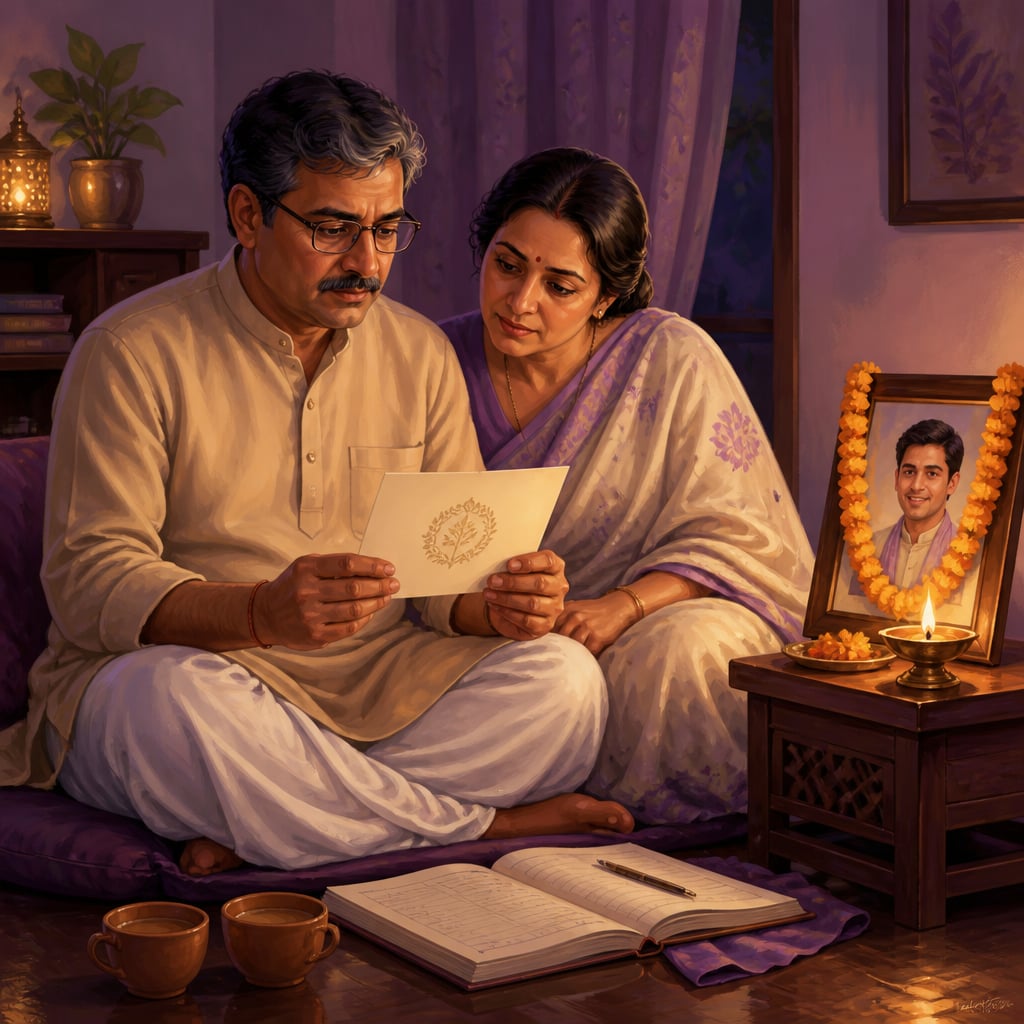
"We can't go," Suresh said immediately. "What will people say?"
But Kamala wasn't so sure. "Vikram came to both our children's weddings. He's been a loving uncle. His partner Rahul has been respectful to us every time."
"But this isn't a wedding in the dharmic sense, "
"Is it about the ritual, or about Vikram?" Kamala asked. "What does our relationship with him require?"
Suresh fell silent. He realized this wasn't a simple question with a simple answer. It was a dharma sankatam, a genuine dilemma requiring careful thought.
In the Village
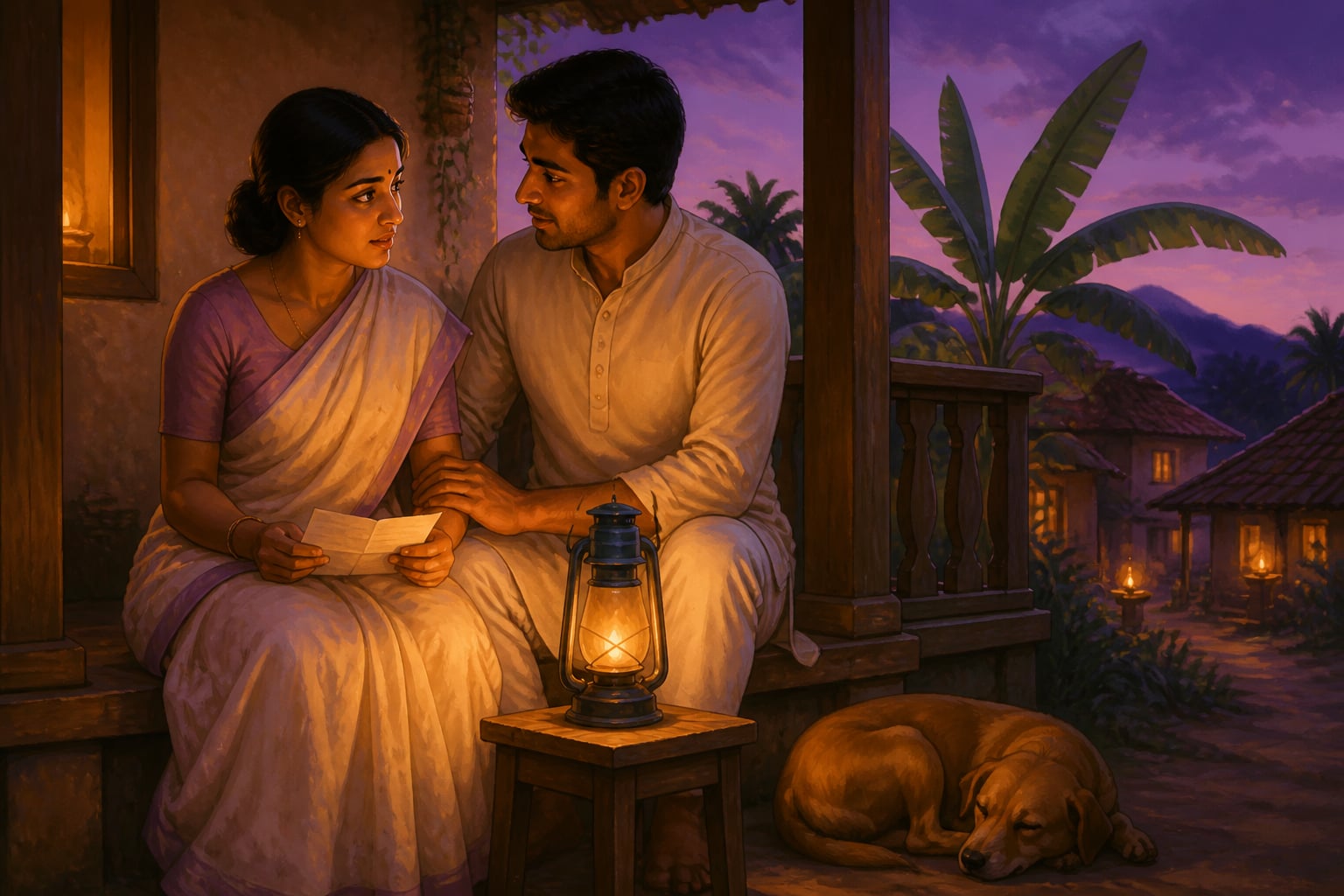
Meena's childhood friend Priya had moved to Chennai years ago. Now Priya was inviting Meena to her "commitment ceremony" with another woman.
"My mother says I shouldn't go," Meena told her husband. "She says it goes against dharma."
"What does YOUR dharma say?" her husband asked. "Priya helped you when your father was sick. She sent money when we couldn't afford your brother's school fees. Does all that mean nothing?"
"But if I go, am I saying I approve?"
"Attending doesn't mean approving everything. When we went to your uncle's wedding, the one who drinks and beats his wife, did that mean we approve of his behavior?"
Meena realized her husband had a point. Attendance at a ceremony and endorsement of every choice weren't the same thing.
The Dharmic Framework: Neither Blind Acceptance Nor Cruel Rejection
This is not a simple question, and anyone who gives you a simple answer, whether "always attend to show acceptance" or "never attend because it's sinful", is not being honest about the complexity.
The dharmic approach requires us to consider multiple factors:
1. The Relationship (Sambandha)
Who is this person to you? Your child? Your sibling? A close friend? A distant acquaintance?
Dharma recognizes that we have different obligations to different people. We owe more to close family than to acquaintances. The question "Should I attend?" cannot be answered without first asking "Who is this person in my life, and what do I owe them?"
Consider: A parent who refuses to attend their own child's ceremony may damage that relationship permanently. Is that outcome dharmic? What about a child who refuses to attend their parents' ceremony?
2. The Intention (Sankalpa)
Why are you going? What is your intention?
- Going to celebrate the love between two people you care about? That's a legitimate intention.
- Going because you're afraid of being called "bigot" if you don't? That's social pressure, not dharma.
- Going to cause a scene or express disapproval? That's neither kind nor appropriate.
Dharmic action requires purity of intention. Examine yours honestly.
3. Your Own Svadharma
What are your personal dharmic commitments? If you're a temple priest whose role requires upholding traditional ceremony, your situation is different from a businessperson with no religious role.
Svadharma varies: A person whose svadharma involves officiating at ceremonies faces different questions than someone who is simply a guest. Don't confuse attendance with endorsement, or presence with participation.
4. The Message You Send
What will your absence communicate? What will your presence communicate?
If your absence says "I reject you completely as a person," that may cause more harm than good. If your presence says "I abandon my own principles the moment there's social pressure," that's also problematic.
The middle path: Being present for someone you love, while privately holding your own views, is possible. We do this regularly, we attend functions where we disagree with many choices being made.
What the Western Approach Gets Wrong
The "Total Affirmation" Demand
Western LGBTQ activism increasingly demands not just tolerance or even acceptance, but total affirmation. You must not only attend, you must celebrate. You must not only celebrate, you must declare that there is absolutely no difference between this union and traditional marriage. Any hesitation is "bigotry."
This approach:
- Leaves no room for genuine moral reflection. You're not allowed to have mixed feelings or nuanced views.
- Weaponizes attendance. The ceremony becomes a political loyalty test rather than a family gathering.
- Creates unnecessary conflict. People who might have attended with mixed feelings are pushed into opposition.
The Performative Rejection
On the other extreme, some Western religious conservatives treat non-attendance as a mandatory public statement. They demand that you not only stay away but publicly explain why, turning every ceremony into a battlefield.
This approach:
- Prioritizes performance over relationship. It values being seen as "righteous" over maintaining family bonds.
- Achieves nothing positive. Has any dramatic boycott ever changed someone's mind about their relationship?
- Causes permanent damage. Relationships destroyed over attendance rarely recover.
The Dharmic Alternative
Dharma offers a third path: Make your decision based on relationship, intention, and svadharma, not on what either side demands you perform.
You are not required to affirm everything to show love. You are not required to reject people to maintain principles. You can hold complex, nuanced positions that honor both your relationships and your conscience.
Historical Dharmic Wisdom: Integration Over Isolation
Let's be clear about what dharmic tradition actually shows us:
Tritiya Prakriti Had Ceremonial Roles
For centuries, hijra communities were invited to ceremonies, particularly births and weddings. Their blessings were considered auspicious. Families didn't agree with every aspect of hijra lifestyle, but they recognized a place for tritiya prakriti individuals in community celebrations.
This wasn't "total affirmation" in the modern Western sense. It was integration with distinction, acknowledging that tritiya prakriti individuals had a role in society, without pretending there were no differences.
The Mughal Court Example

Historical records show that eunuchs (khwajasaras) in Mughal courts participated in royal ceremonies, including weddings. Hindu families at court navigated relationships with these individuals without demanding ideological purity from either side.
A Hindu noble attending a ceremony where khwajasaras were present wasn't "endorsing" their lifestyle, he was fulfilling his social obligations while maintaining his own dharmic practice.
The Principle
Dharmic tradition shows us that presence doesn't require total agreement. We have always navigated complex social situations by participating appropriately while maintaining our own principles.
Practical Guidance: Making Your Decision
Questions to Ask Yourself
What is my relationship with this person? Close family requires more consideration than distant acquaintance.
What has this person done for me and my family? Relationships are built on reciprocity. Have they supported you in your important moments?
What will my absence communicate? Will it say "I have principled concerns" or "I reject you as a person"?
What is my genuine intention? Am I acting from love, from fear, or from wanting to make a point?
Can I attend without compromising my core principles? Attending a ceremony and officiating at one are very different things.
What does my svadharma require? A temple priest has different obligations than a businessman.
Possible Dharmic Responses
Attending with love: "This is my nephew. I will attend because I love him. My presence doesn't mean I agree with every choice he makes, just as his presence at my children's weddings didn't mean he agreed with every choice I've made."
Attending with boundaries: "I will come to the celebration dinner, but I won't participate in any ritual that I feel conflicts with my dharmic practice. I hope you understand."
Not attending, with grace: "I struggle with this ceremony for personal reasons, but I love you and want to celebrate your happiness in another way. Can we have dinner together separately?"
What to avoid: Public announcements of your decision, dramatic explanations, social media statements, making the ceremony about your views rather than their celebration.
What NOT to Do: The Western Trap
The Western approach has turned ceremony attendance into a political battlefield. Don't fall into this trap.
Don't Make It About You
The ceremony is about the couple, not your views on their relationship. If you attend, attend graciously. If you don't, decline graciously. Either way, don't turn their moment into a platform for your opinions.
Don't Demand Explanations
You don't owe anyone a detailed explanation of your decision. "I'm not able to attend, but I wish you well" is sufficient. Similarly, "I'll be there" doesn't require a speech about your complex views.
Don't Let Others Decide for You
Neither activists demanding "total affirmation" nor conservatives demanding "public rejection" should make this decision for you. Consult your own dharma, your own relationships, your own conscience.
Don't Destroy Relationships Over Performance
The Western approach has destroyed countless families over ceremony attendance. Relatives who once loved each other become enemies because one "didn't attend" or "attended and therefore betrayed" various causes.
Dharma values relationships. Before taking any action, ask: "Will this bring more harmony or more conflict? Will this preserve the relationship or destroy it?"
The Empowered Position
You are not a victim of this dilemma. You are an empowered person making a choice.
You don't have to accept the Western framing where you're either "a bigot who didn't attend" or "a progressive who celebrated." You can occupy a dharmic position that honors your relationships AND your principles.
The dharmic person:
- Makes decisions based on relationship and intention, not political pressure
- Maintains love for family members regardless of disagreement
- Doesn't demand total agreement before showing care
- Doesn't abandon principles to avoid social discomfort
- Navigates complexity with wisdom, not slogans
This is agency. This is svadharma. This is the dharmic approach to a genuinely difficult question.
A Final Thought: What Matters More?
Ten years from now, what will matter more, that you made the "correct" political statement about a ceremony, or that you maintained a loving relationship with a family member?
Dharma teaches that relationships are sacred. They require navigation, compromise, and sometimes holding our tongues on matters where we disagree.
The ceremony will be over in a day. Your relationship with this person continues for a lifetime.
Choose wisely. Choose dharma.
Case studies
The Maratha Noble's Wisdom
Dharmic tradition recognized tritiya prakriti roles within society. Families navigated relationships with members who took different paths by distinguishing presence (honoring relationship) from participation (adopting their practices). Maintaining sambandha doesn't require abandoning svadharma.
Modern Indian families navigating a relative's gender identity often instinctively follow this pattern. They maintain relationships during festivals, participate in life events, and show care, while not necessarily adopting every aspect of the person's new identity expression. This 'love with boundaries' approach, where presence is maintained without full ideological agreement, produces better long-term family outcomes than either complete rejection or forced celebration.
Under Shivaji Maharaj's reign (1674-1680), the Maratha kingdom recognized hijra communities as performing ceremonial functions at births, weddings, and coronations. Historical accounts record over 12 hijra troupes operating across Maratha territories with formal recognition from local nobles.
The Canadian Grandmother's Cancellation
Western LGBTQ activism increasingly demands total affirmation, not merely acceptance or even celebration. Any hesitation, any boundary, any nuance is treated as hatred worthy of destruction. This framework destroys families and prevents the kind of loving-with-disagreement that humans have practiced for millennia. Margaret's instinct, love with boundaries, was dharmic. The response she received was the fruit of ideology that cannot tolerate complexity.
The phenomenon of 'cancellation' within families has become widespread in Western countries, with surveys showing that family estrangement rates have roughly doubled since 2010. Social media amplifies the message that any family member who doesn't fully affirm is 'unsafe' and should be cut off. Yet longitudinal studies consistently show that individuals who maintain family connections, even imperfect ones, have better mental health outcomes than those who sever ties based on ideological disagreements.
A 2019 Pew Research study found that 79% of Americans believe people can disagree on same-sex marriage without being hateful, yet 47% of LGBTQ respondents reported cutting off a family member over insufficient affirmation. The gap between the general public and activist expectations continues to widen.
Reflection
- Think of a family event you attended where you disagreed with choices being made, perhaps a wedding where you had concerns about the match, or a ceremony in a tradition not your own. Did your attendance mean you endorsed everything? How did you navigate being present while holding your own views?
- Why has Western culture turned ceremony attendance into a political loyalty test? What is lost when we demand total affirmation rather than accepting love-with-complexity?
- If a family member attends your important ceremonies despite having different beliefs, does that diminish their presence? Or is showing up despite disagreement actually a stronger statement of love?
- Margaret, the Canadian grandmother, lost her entire family for offering 'love with boundaries.' Would the dharmic approach, which traditionally maintained relationships across difference, have led to a different outcome? What does this tell us about which framework better serves family harmony?