Dealing with Family Pressure

Standing firm with compassion

Family pressure cuts both ways: sometimes families resist accepting a tritiya prakriti member, and sometimes external forces pressure families to affirm what they're not ready for. The dharmic approach offers guidance for navigating both situations, with patience, wisdom, and the preservation of family bonds as a central value.

Two Types of Pressure

In the City: Pressure to Reject

Arjun had known since childhood that he was different. By his twenties, he identified as tritiya prakriti, neither fully male in the conventional sense nor interested in the grihastha path his parents expected.

His father's reaction was harsh: "This is not our culture. This is Western influence. You've been corrupted."

His mother wept. His grandfather refused to speak to him.

Arjun felt crushed. But he also felt something his online friends didn't understand: he didn't want to lose his family. He loved them. He wanted them to understand him, not to abandon them.

An Indian father, mother, and adult son in a city living room caught in a quiet, charged moment of family tension and unspoken love.

In the Village: Pressure to Affirm

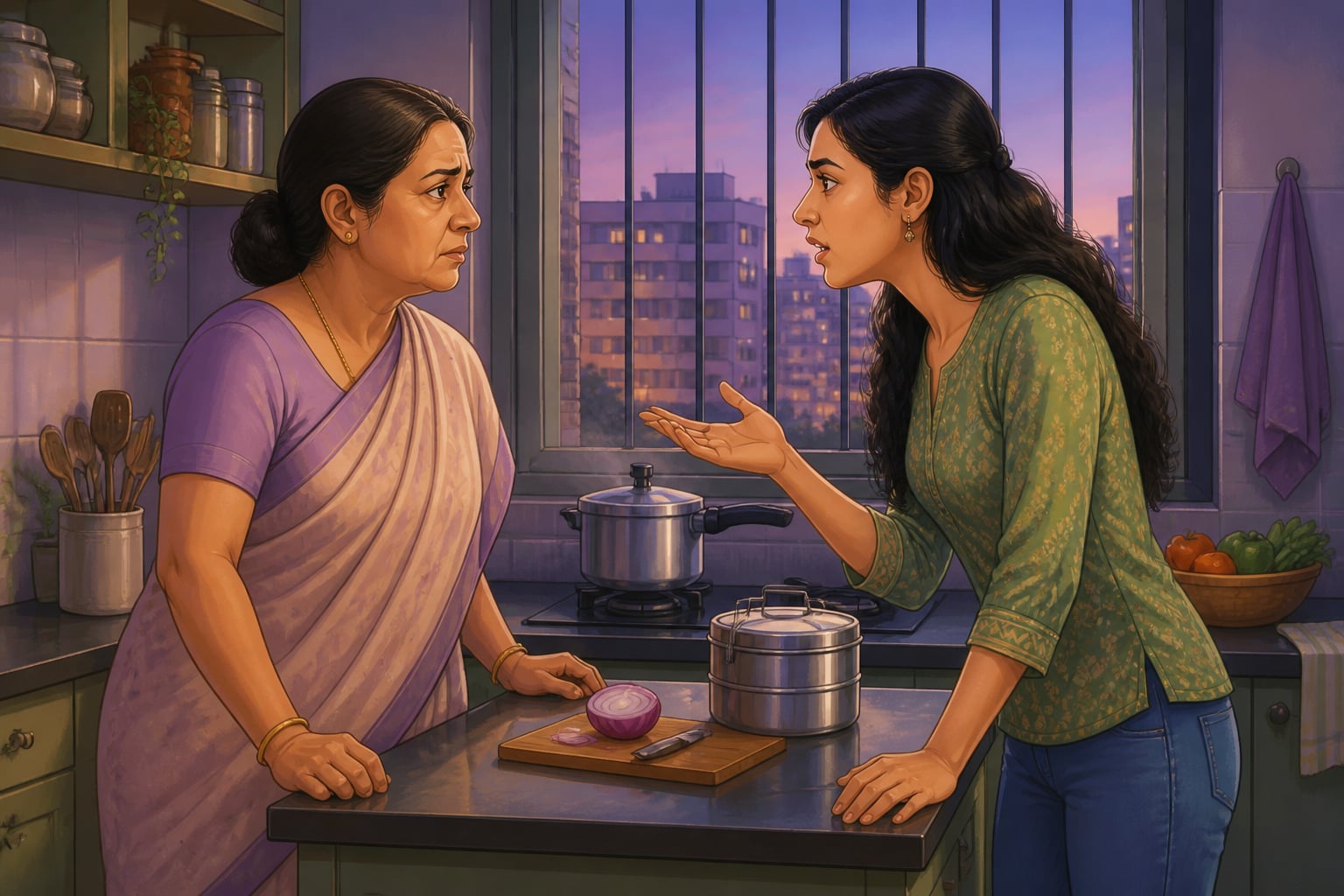
Sunita and her daughter Kavya tense across a Bangalore kitchen

Meanwhile, in Bangalore, Sunita's daughter Kavya, a college student, announced she was "non-binary" and demanded the family use new pronouns, change her name in all documents, and publicly affirm her identity on social media.

When Sunita asked for time to understand, Kavya accused her of "violence." When Sunita's husband suggested they speak with their family priest, Kavya said they were "harming" her by not immediately affirming.

"If you don't support me completely, you're against me," Kavya declared. "That's what my support group says."

Sunita felt trapped. She loved her daughter. But she was being given no time to process, no space to ask questions, no permission to have her own feelings.


The Dharmic Framework: Patience Over Ultimatums

Both families face pressure. Both are being told there's only one acceptable response, immediate, complete, no questions allowed.

This is not the dharmic way.

Dharma recognizes that:

1. Relationships Unfold Over Time

Families don't transform overnight. Parents who have imagined one future for their child need time to grieve that imagined future before they can embrace a different one. Children who have hidden their nature need patience while family members adjust.

The Western approach demands instant transformation: "Accept me completely right now or you're hateful." This creates crisis rather than allowing natural adjustment.

The dharmic approach allows for process: "I am who I am. I love you. Let us navigate this together over time."

2. Understanding Requires Dialogue, Not Demands

Arjun's family needs to understand what tritiya prakriti means in a dharmic context, that it's recognized in scriptures, that it has a place in tradition, that their son hasn't been "corrupted" but is following his svabhava.

This understanding comes through patient conversation, not through ultimatums. It may involve consulting respected elders, reading scriptures together, visiting temples where tritiya prakriti traditions are honored.

Kavya's family needs space to ask questions, not as attacks, but as genuine attempts to understand. When questions are treated as violence, understanding becomes impossible.

3. Both Sides Have Legitimate Concerns

Arjun's family worries about his future, his happiness, what society will say. These concerns come from love, even if expressed poorly.

Sunita worries whether this is genuine svabhava or social influence, whether her daughter has been fully informed about consequences, whether rushing will lead to regret. These concerns also come from love.

Dharmic navigation acknowledges that both the individual's nature AND the family's concerns deserve respect. Neither side should dismiss the other.


What the Western Approach Gets Wrong

The Estrangement Model

Western LGBTQ activism increasingly promotes family estrangement as empowerment. Online communities encourage young people to "cut off toxic family members", meaning anyone who doesn't immediately affirm.

This approach:

The "Validation or Violence" Framework

The Western model increasingly treats anything short of complete affirmation as "harm" or "violence." A parent asking questions is "harmful." A grandparent needing time to understand is "violent." Family members processing their own emotions are "abusers."

This framework:

The Dharmic Alternative

Dharma offers a framework where:


For the Tritiya Prakriti Individual: Navigating Family Resistance

What to Do

1. Lead with Love, Not Demands

"I know this is difficult for you. I love you. I'm not asking you to understand everything immediately. I'm asking you to stay in relationship with me while we figure this out together."

This approach invites dialogue rather than provoking defense.

2. Educate Through Dharmic Sources

Your family may believe tritiya prakriti is "Western corruption." Show them otherwise:

When family sees this is dharmic, not foreign, resistance often softens.

3. Find Allies Within the Family

Is there a grandmother who is more understanding? An aunt who asks thoughtful questions? A cousin who can translate between generations?

Family change often happens through internal advocates. Find yours and work with them.

4. Be Patient With Process

Your parents may need months or years to fully accept. That's not failure, that's human reality. As long as the relationship continues, transformation remains possible.

Many parents who initially rejected have eventually become their children's strongest supporters. But that transformation requires time.

5. Distinguish Rejection of Behavior from Rejection of You

Your father's harsh words may come from fear, not hatred. Your mother's tears may be grief for an imagined future, not rejection of who you are. Your grandfather's silence may be confusion, not condemnation.

Try to see past the initial reaction to the love underneath. Often, it's there.

What NOT to Do

Don't Issue Ultimatums

"Accept me or lose me forever" forces people into corners. It creates the very rejection you fear. It closes doors that patient dialogue could open.

Don't Let Online Communities Replace Family

Online groups may tell you to "cut off" anyone who doesn't immediately affirm. These groups don't know your family. They don't understand Indian family dynamics. They're often projecting their own traumas onto your situation.

Your family, with all its flaws, has known you since birth. Strangers on the internet have known you for months. Weigh their advice accordingly.

Don't Treat Questions as Attacks

When your aunt asks "But what about marriage?" she's not attacking you, she's trying to understand. Answer her questions with patience. Every genuine question is an opportunity for understanding.

Don't Rush Major Decisions While In Conflict

If you're considering medical interventions, legal changes, or other irreversible steps, don't make those decisions while in active conflict with family. The Western approach says "Your family doesn't get a say." The dharmic approach says "Major decisions benefit from collective wisdom, even when that wisdom is initially resistant."


For Family Members: Navigating Your Own Adjustment

What to Do

1. Acknowledge Your Own Feelings

You're allowed to grieve the future you imagined. You're allowed to feel confused, scared, even angry. These feelings don't make you a bad person, they make you human.

Process your feelings with trusted friends, elders, or counselors. Just don't make your child responsible for managing your emotions.

2. Educate Yourself, Through Dharmic Sources

Learn what tritiya prakriti actually means in dharmic tradition. You may be surprised to find it's not a modern invention or Western import.

Understanding the dharmic context often transforms "my child has been corrupted" into "my child's nature is recognized in our own tradition."

3. Ask Questions, With Genuine Curiosity

There's a difference between questions that seek understanding and questions that are disguised attacks. Ask from genuine curiosity:

4. Seek Wise Counsel

Consult respected elders, spiritual teachers, or counselors who understand both dharmic tradition and contemporary realities. Avoid those who will simply tell you what you want to hear.

5. Maintain the Relationship

Even if you can't immediately accept everything, maintain the relationship. Keep communication open. Continue including your family member in gatherings and traditions.

The worst outcome is estrangement. As long as you're in relationship, growth remains possible.

What NOT to Do

Don't Issue Ultimatums

"Change back or you're dead to us" destroys relationships and rarely achieves its goal. It only proves to your family member that conditional love isn't safe.

Don't Assume It's a Phase or Corruption

Some expressions of gender difference ARE phases. Some ARE social influence. But some are genuine svabhava. You can't know which without patient observation over time.

Dismissing it immediately as "Western nonsense" closes your eyes to what might be genuine.

Don't Prioritize "What Will People Say" Over Your Child

Society's judgment is temporary and changeable. Your relationship with your child is permanent and irreplaceable. Don't sacrifice the second to manage the first.

Don't Weaponize Dharma

Using selective dharmic quotes to condemn rather than understand is not dharmic. Dharma also teaches compassion (karuna), patience (kshama), and acceptance of diverse natures (svabhava).


The Goal: Integration, Not Victory

The Western model frames family dynamics as a battle: one side wins, one side loses. Someone must surrender completely.

A grandmother and grandchild at a reconciled multi-generational meal

The dharmic model seeks integration: both sides adjust, both sides grow, both sides maintain relationship and dignity.

This doesn't mean the tritiya prakriti individual hides their nature. It doesn't mean the family abandons their concerns. It means both navigate toward a new equilibrium where:

This is harder than victory. It requires patience, humility, and genuine love from all parties.

But the fruit is family intact, and that is worth the effort.


When Reconciliation Seems Impossible

Sometimes, despite best efforts, family members remain rigid. What then?

1. Maintain Your Own Dignity

You don't need to accept abuse or cruelty. Boundaries are legitimate. If family interactions cause real harm, you can limit them while keeping the door open.

2. Don't Close Doors Permanently

Even if you need distance now, don't declare the relationship over forever. People change. Parents who rejected have later become advocates. Time transforms positions that seemed permanent.

3. Find Your Sangha Elsewhere

If biological family cannot provide support, find chosen family, but not as a replacement, as a supplement. The hijra tradition of guru-chela relationships offers a model of non-biological family that doesn't require rejecting biological ties.

4. Keep Hope Alive

Many estranged families have reconciled, sometimes after years, sometimes after a crisis revealed what truly mattered. Don't give up on reconciliation even if it seems impossible today.


The Empowered Position

You are not a victim of family pressure. You are an empowered person navigating complex relationships.

Whether you are the tritiya prakriti individual or the family member adjusting to new understanding, you have agency. You can choose patience over ultimatums. You can choose dialogue over demands. You can choose to preserve relationships rather than destroy them.

This is harder than the Western model of quick estrangement. It requires more strength, not less.

But the fruit, family intact, love preserved, understanding deepened, is worth it.

Choose dharma. Choose patience. Choose love.

Case studies

The Three-Year Transformation

Patient dialogue within maintained relationships can transform even severe initial rejection. Finding allies within the family, seeking wise dharmic counsel, and refusing to issue ultimatums created space for understanding to grow. The three years of patience were harder than estrangement would have been, but the outcome was family preserved and deepened.

Family therapists globally are recognizing the value of 'slow acceptance,' finding that families who take time to process, ask questions, and gradually adjust produce more stable outcomes than those pressured into immediate affirmation. The American Psychological Association's updated guidelines now acknowledge that family adjustment is a process, not an event, echoing the patience-centered approach that dharmic tradition has always practiced.

A 2019 study published in the Journal of Family Psychology found that parental acceptance of LGBTQ children increased significantly over time: 64% of initially rejecting families showed meaningful improvement within 2 to 4 years when the relationship was maintained, compared to 0% improvement where contact was severed.

The Online Community's Advice

Online communities often encourage estrangement as empowerment, treating any imperfect family response as 'abuse' worthy of permanent no-contact. These strangers don't know your family. They're often projecting their own traumas. The Western 'cut off toxic people' ideology destroys relationships that patience could heal. Tyler's father was learning, growing, trying, but the ideology gave no credit for imperfect progress. The cost of that ideology was a relationship lost forever.

The 'chosen family' movement in Western LGBTQ communities was meant to replace biological families, but research increasingly shows its limitations. Chosen families often dissolve during personal crises, relocations, or political disagreements. Meanwhile, biological family reconnection is one of the strongest predictors of long-term mental health among gender-diverse individuals. The growing 'family reconciliation' movement reflects recognition that replacing families is harder than repairing them.

A 2021 Cornell University study found that 26% of LGBTQ young adults reported estrangement from family members, with over 60% citing online community advice as a factor in their decision. Among those who later reconnected, 83% reported that estrangement had been more harmful than the original family conflict.

Reflection

More in Hard Questions Part 2

All lessons in Hard Questions Part 2 · Tritiya Prakriti: A Family's Dharmic Guide course