Is Being LGBTQ+ Against Dharma?
Natural diversity vs. ideological conversion
The West asks 'Is homosexuality sinful?', a question born from Abrahamic traditions that criminalized and medicalized what dharmic civilization recognized for 4,000 years. Tritiya prakriti (third nature) is not a modern invention, a disease, or a sin. It is a svabhava, an inherent nature recognized in our shastras, embodied in our deities, and integrated into our society through defined roles. This lesson separates the genuine recognition of natural diversity from Western gender ideology that has caused immense harm through rushed medicalization, family fragmentation, and the creation of perpetual victimhood.
The Question Itself Is Wrong
In the City
Rahul's parents sat in their living room, faces tense. Their 24-year-old son had just told them something they never expected to hear.
"I've known since I was 15," Rahul said quietly. "I didn't choose this. It's just who I am."
His father's first instinct was anger. His mother wept. But his grandmother, 78-year-old Ammamma, who had been listening from the corner, spoke up.
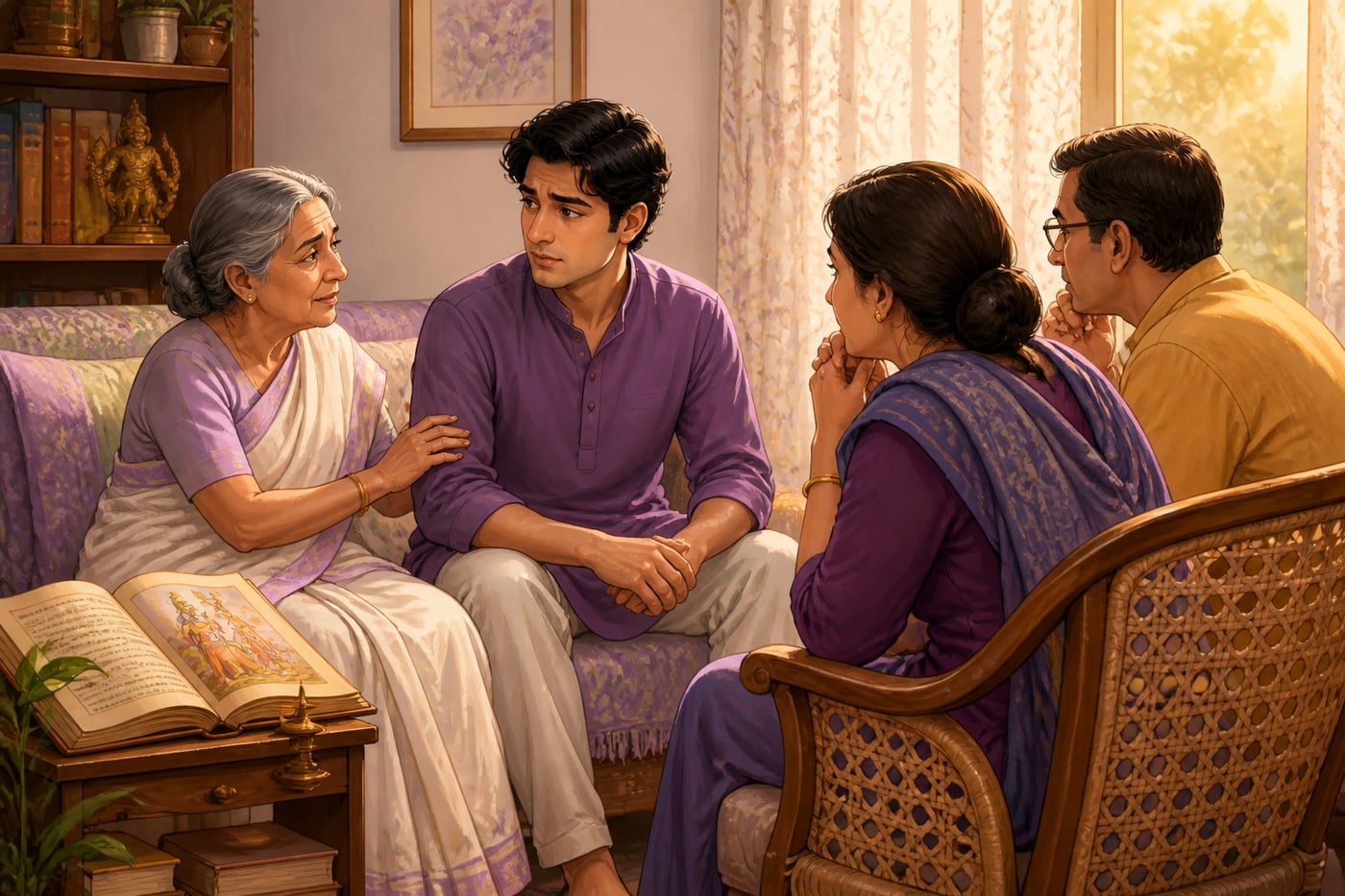
"Do you know about Shikhandi?" she asked.
Everyone looked at her.
"In the Mahabharata. Born as a woman, lived as a man, fought in the great war. Krishna himself accepted Shikhandi. Are we wiser than Krishna?"
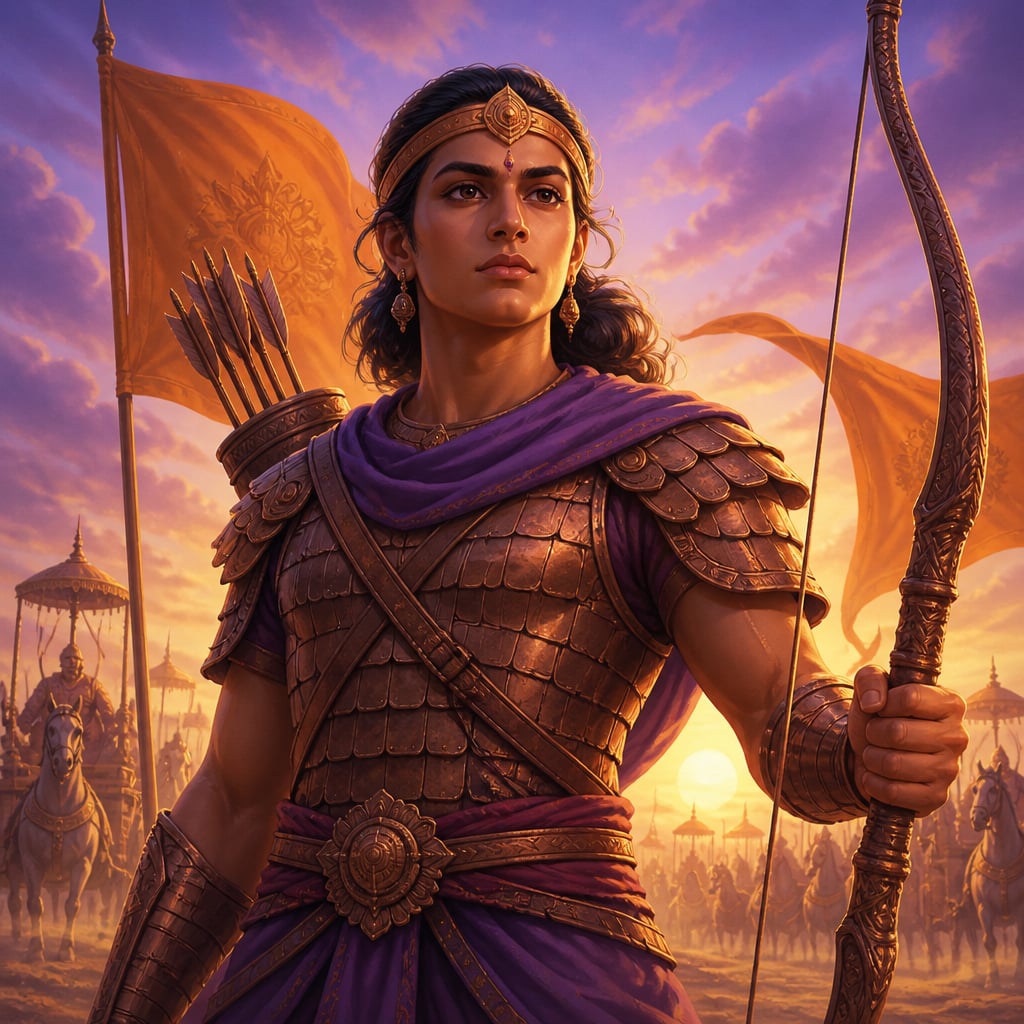
She turned to Rahul. "Beta, this is your svabhava, your inherent nature. The shastras recognized people like you thousands of years ago. They called it tritiya prakriti, third nature. You are not broken. You are not sinful. You are who Brahma made you."
Rahul's father was silent. He had never heard his mother speak of such things.
"The British brought their Christian laws," Ammamma continued. "Section 377 was their gift, not ours. For 200 years they taught us to be ashamed of what our ancestors accepted. Don't let their shame become yours."
That conversation didn't resolve everything overnight. But it opened a door. Rahul's parents began reading, not Western LGBTQ literature, but the Mahabharata, the Kamasutra, the Narada Smriti. What they found surprised them: their tradition had answers their British-influenced education had hidden.
In the Village
In Rameshwaram, Lakshmi's family faced a different version of the same dilemma. Her younger brother Murugan had always been different, preferring to help with cooking rather than farming, speaking and moving in ways that drew teasing from village boys.
When Murugan turned 18, a group of hijras passing through the village recognized him. "He has the nature," one of them told Lakshmi's mother. "We see it. Do you?"
Lakshmi's mother was frightened. She had heard terrible stories about hijras, begging, cursing, living on margins.
But the hijra guru spoke gently. "Those stories are from the British time and after. Before the colonizers came, we had places in courts, in temples, at weddings. We blessed children. We served the goddess. Your son has options that don't require leaving family."

She pointed to the local Aravan temple. "There, every year, people like your son marry the god. It is ancient. It is dharmic. It is real."
Lakshmi's mother consulted the village priest, not a young man trained in modern seminaries, but an old one who remembered stories from his grandfather. He confirmed: "Tritiya prakriti is recognized in our texts. The question is not whether such people exist, they always have. The question is how we help them find their dharmic path."
Murugan didn't leave his family. He found a role, helping at the temple during festivals, learning traditional arts, being part of the community. Not the Western path of pride parades and political activism. A dharmic path of acceptance, integration, and purpose.
What Dharma Actually Teaches
The Fundamental Recognition: Svabhava
The dharmic approach begins with a concept that Western gender theory lacks entirely: svabhava, inherent nature.
Svabhava is not chosen. It is not constructed by society. It is not a phase or a trend. It is the fundamental nature with which a being is born, shaped by karma from previous lives and manifesting in this one.
The Bhagavad Gita teaches:
"It is better to perform one's own dharma imperfectly than to perform another's dharma perfectly. Death in one's own dharma is preferable; another's dharma is fraught with danger." (3.35)
This verse is usually applied to varna (social role), but the principle extends to all aspects of svabhava. Trying to force someone to be what they are not, whether forcing a scholar to be a warrior, or forcing a tritiya prakriti individual to perform as a binary male or female, violates their svabhava and creates suffering.
4,000 Years of Recognition
Unlike the West, which criminalized homosexuality until recently (UK until 1967, US until 2003, some countries still today), dharmic civilization has recognized gender diversity for millennia:
Vedic Period (1500-500 BCE)
- The Rig Veda mentions individuals who are "neither male nor female"
- Ardhanarishvara, Shiva as half-male, half-female, appears in early iconography
Epic Period (500 BCE - 500 CE)
- Shikhandi in the Mahabharata, born female, becomes male, crucial to the war
- Brihannala, Arjuna living as a woman during exile
- Mohini, Vishnu taking female form
Dharmashastra Period (200 BCE - 500 CE)
- Manusmriti acknowledges tritiya prakriti with specific inheritance provisions
- Narada Smriti categorizes 14 types of men who cannot procreate (panda), recognizing biological diversity
- Arthashastra discusses napumsaka (third gender) in legal contexts
Medieval Period (500-1500 CE)
- Hijra communities established with defined social roles
- Temple traditions including Aravan festival in Tamil Nadu
- Bahuchara Mata worship established
Mughal Period (1526-1857)
- Hijras served in royal courts as guardians of harems, advisors, messengers
- Defined roles with social recognition and economic security
Colonial Period (1857-1947)
- British imposed Section 377 (1861), criminalizing "unnatural offenses"
- Criminal Tribes Act (1871) specifically targeted hijras
- Centuries of integration disrupted by foreign moral framework
The West's acceptance is new, perhaps 20-30 years old. Dharmic recognition is 4,000 years old. We are not learning from the West; we are remembering what colonialism made us forget.
The Critical Distinction: Svabhava vs. Ideology
Here is where the dharmic approach diverges sharply from Western gender theory, and where clarity is essential.
What Dharma Recognizes (SVABHAVA)
Genuine tritiya prakriti:
- Manifests from early childhood, not adolescence
- Is consistent over years, not sudden onset
- Does not depend on social media, peer groups, or ideological exposure
- The individual often knows before they have words for it
- Families often recognize it before the child announces it
This is svabhava, inherent nature. It is real. It has always existed. Dharmic tradition recognizes it.
What Dharma Questions (IDEOLOGY)
Western gender theory introduces concepts that are NOT svabhava:
Social construction: The idea that gender is entirely created by society, infinitely malleable. This contradicts prakriti (nature). Gender diversity exists IN nature, it is observed, not invented.
Rapid onset: Teenagers, especially girls, suddenly announcing transgender identity after heavy social media use and peer influence. Dr. Lisa Littman's research documented this pattern, it doesn't match classical tritiya prakriti presentation.
Infinite categories: Western theory has produced 70+ gender identities. Dharmic tradition recognizes clear categories without fragmenting into confusion.
Medical intervention as first response: Western clinics rush to puberty blockers and hormones. Dharmic wisdom counsels patient observation of svabhava over time.
Victimhood identity: Western framework treats LGBTQ individuals as oppressed minorities fighting for rights. Dharmic framework treats tritiya prakriti individuals as empowered agents with defined roles.
The Practical Test
How do you distinguish genuine svabhava from ideological influence?
Signs of svabhava:
- Present from early childhood (before age 8-10)
- Consistent over years
- Recognized by family members who observed the child
- Does not depend on validation from others
- The individual seeks integration, not activism
Signs of ideological influence:
- Sudden onset in adolescence
- Preceded by heavy social media use
- Peer cluster effect (multiple friends announce simultaneously)
- Depends heavily on external validation
- Identity defined through political activism and grievance
- Underlying issues (autism, depression, trauma) unexplored
The dharmic approach protects both groups: it affirms genuine tritiya prakriti while exercising discernment about social contagion.
The Western Failure: Evidence and Consequences
What Happened in the West
The Western approach to gender diversity has undergone a remarkable reversal in recent years, one that vindicates the dharmic emphasis on patience and discernment.
The Tavistock Closure (2022)
The UK's Gender Identity Development Service (GIDS) at the Tavistock clinic was the largest gender clinic for minors in the world. In 2022, it was ordered to close following the Cass Review, which found:
- Insufficient evidence base for puberty blockers
- 98% of children on blockers progressed to cross-sex hormones (not the "pause" that was promised)
- Inadequate exploration of underlying mental health issues
- Potential influence of social factors on referrals
European Restrictions
Following the Cass Review, multiple European countries have restricted or paused youth gender interventions:
- Sweden (2022): Restricted hormones and surgery for under-18s
- Finland (2023): Prioritized psychological support over medical intervention
- Norway (2023): Issued new guidelines emphasizing caution
- UK (2024): NHS England banned puberty blockers outside clinical trials
The Detransitioner Testimony
Thousands of individuals who transitioned young have come forward to share their regret:
"I was a depressed, anxious teenage girl who didn't fit in. The internet told me I was trans. The medical system affirmed without questioning. Now I have a male voice, no breasts, and may never have children.", Helena Kerschner, detransitioner
"I was not able to consent to treatment that would change my body forever.", Keira Bell, whose case led to restrictions in UK
Why the Western Approach Failed
The Western model failed because it lacked what dharmic tradition provides:
No concept of svabhava: Without understanding inherent nature, the West couldn't distinguish genuine gender diversity from social influence.
Activism replaced discernment: Questions were labeled "transphobic," silencing the careful assessment that protects vulnerable people.
Medical-industrial complex: Clinics profited from interventions, creating incentives for diagnosis rather than careful observation.
Victimhood framework: Treating gender-diverse individuals as oppressed minorities created adversarial relationships with families instead of integration.
Denial of prakriti: Insisting gender is purely social construction denied biological reality that even their own bodies would eventually assert.
The Clear Dharmic Position
TRITIYA PRAKRITI IS RECOGNIZED. WESTERN GENDER IDEOLOGY IS QUESTIONED.
These are not contradictory positions. They are complementary:
What dharma affirms:
- Gender diversity exists in nature (prakriti) and has always existed
- Tritiya prakriti is a legitimate svabhava, not a disease, sin, or choice
- Individuals with this nature deserve dignity, defined roles, and family integration
- Divine examples (Ardhanarishvara, Shikhandi, Mohini) provide theological grounding
- 4,000 years of recognition precedes and exceeds Western acceptance
What dharma questions:
- The Western rush to medicalize children
- The social contagion documented in research (ROGD)
- The infinite proliferation of identity categories
- The victimhood-activism framework that fragments families
- The denial of prakriti (nature) in favor of pure social construction
The dharmic path:
- Patient observation of svabhava over years, not months
- Family as first support, not obstacle to be overcome
- Integration through defined roles, not isolation through political identity
- Discernment that protects both genuine tritiya prakriti AND binary children from confusion
- Empowerment through dharmic purpose, not victimhood through grievance
Dharmic Guidelines
| ✅ DO | ❌ DON'T |
|---|---|
| Recognize tritiya prakriti as a legitimate svabhava acknowledged in shastras | Adopt Western victimhood narratives that define identity through oppression |
| Observe children patiently over years to understand their genuine nature | Rush to label or intervene based on sudden adolescent declarations |
| Consult traditional wisdom (shastras, elders, gurus) alongside modern understanding | Rely solely on Western gender theory that has proven harmful |
| Support family integration and defined roles in community | Encourage separation from family as the path to authenticity |
| Distinguish genuine svabhava from social media influence and peer contagion | Affirm every declaration without discernment |
| Remember divine examples: Ardhanarishvara, Shikhandi, Mohini | Apply Abrahamic concepts of sin to what dharma recognizes as nature |
Why This Matters to YOU (The Karma Angle)
If you reject someone for their genuine svabhava:
- You reject what Brahma created and what Krishna accepted
- You apply colonial shame to what dharmic civilization recognized
- You cause suffering to someone navigating a challenging path
- You miss the opportunity to be the family member who provides support
If you uncritically affirm Western ideology:
- You may enable harm to vulnerable individuals (especially youth)
- You adopt frameworks that have already failed in the West
- You replace dharmic discernment with ideological conformity
- You fragment families instead of integrating them
The dharmic middle path:
- Recognize genuine tritiya prakriti with compassion and integration
- Exercise discernment about ideological influence, especially in youth
- Be the family member who provides both acceptance AND wisdom
- Draw on 4,000 years of dharmic recognition rather than 20 years of Western activism
Messages for Different Ages
For Children (8-12 years)
Some people are born different, they might not feel like a typical boy or a typical girl. This has always been true, and our ancient stories include such people.
In the Mahabharata, there's a character called Shikhandi who was born one way but became another. Even Lord Krishna accepted Shikhandi and gave them an important role in the great war.
If you ever feel different, or if you know someone who is different, remember: being different isn't wrong. What matters is being a good person, kind, honest, and helpful. That's what dharma teaches.
For Teenagers (13-17 years)
You're at an age when identity questions become intense. Here's what you should know:
If you genuinely feel you might be LGBTQ:
- This isn't shameful. Dharmic tradition recognized people like you for 4,000 years.
- Take time. Genuine svabhava (inherent nature) is consistent over years, not a sudden realization.
- Talk to family if you can. Many families, when given time and information, become supportive.
- Seek guidance from those who understand dharmic tradition, not just Western ideology.
If you're questioning because of social media or friends:
- Be aware of social contagion. The "rapid onset" pattern is documented.
- Genuine identity doesn't depend on validation from others.
- Explore underlying feelings, sometimes gender confusion masks other issues.
- There's no rush. If this is your true nature, it will remain true in five years.
For Adults (18+ and Parents)
If you are tritiya prakriti:
- Your svabhava is recognized in our tradition. You are not broken or sinful.
- Seek integration, not isolation. Family and community connections matter.
- Define yourself through purpose and contribution, not through victimhood and activism.
- Draw on 4,000 years of dharmic wisdom, not 20 years of Western theory.
If you are a parent:
- Observe patiently. Genuine svabhava manifests early and consistently.
- Don't panic at adolescent declarations. Wait, observe, engage.
- Consult dharmic sources, not just Western ones. Our tradition has guidance.
- Be the family member who provides both love AND discernment.
If you are an elder or community member:
- Your voice matters. You can provide the perspective that younger generations lack.
- Share the traditional knowledge: Shikhandi, Ardhanarishvara, hijra traditions.
- Help families navigate with wisdom rather than either rejection or uncritical affirmation.
The Real Question
The question "Is being LGBTQ against dharma?" is itself flawed, it applies Western categories and Abrahamic morality to something dharmic civilization understood differently.
The dharmic questions are better:
- What is this person's svabhava? (Observed over time, not declared suddenly)
- How can they fulfill their dharmic purpose? (Integration, not activism)
- What guidance do the shastras provide? (Recognition and defined roles)
- How can family support this path? (Acceptance with discernment)
When we ask dharmic questions, we get dharmic answers, answers that have guided people for 4,000 years, long before the West discovered that maybe, just maybe, it had been wrong all along.
Western gender theory encourages individuals to define themselves primarily through their gender/sexual identity and to view family/tradition as obstacles. This creates isolated, politically-defined individuals. The dharmic approach integrates identity into a larger framework of family, community, and purpose, leading to more stable, grounded lives.
Western frameworks often position family as the obstacle and encourage individuals to distance themselves from 'unsupportive' relatives. This fragments families. The dharmic approach makes family the first support, patient, loving, discerning. Research shows that family connection is protective even for gender-diverse individuals.
Western communities often adopt an all-or-nothing approach: either reject entirely or affirm every aspect of gender ideology. The dharmic approach allows nuance: recognize genuine svabhava, question ideological excess, provide integration without requiring agreement with every Western concept. This protects both tritiya prakriti individuals and the broader community.
Case studies
Malik Kafur: Tritiya Prakriti in the Sultan's Court
In 14th century Delhi, Malik Kafur rose from being a captured slave to becoming one of the most powerful military commanders in Indian history. Kafur was a khwaja sara, a eunuch, recognized in both Islamic and dharmic traditions as a distinct gender category. Rather than being marginalized, Kafur's nature gave him access to the highest circles of power. Sultan Alauddin Khilji appointed him Malik Naib (viceroy), and Kafur led conquests across South India that expanded the Sultanate to its greatest extent.
Kafur's career illustrates the pre-colonial integration of tritiya prakriti individuals into positions of power and trust. In both dharmic and Islamic traditions of the time, such individuals were valued for specific roles, guardians of the harem, trusted advisors, military commanders who could not establish rival dynasties. This was not tolerance of the marginalized; it was recognition of a distinct category with unique qualifications. Kafur navigated his path using the resources available, military skill, political acumen, loyalty, and achieved what few binary-gendered individuals could.
Malik Kafur commanded armies that conquered the wealthy kingdoms of Devagiri, Warangal, Dvarasamudra, and Madurai. He brought back treasures that funded Delhi's golden age. After Alauddin's death, he briefly held power himself before being killed by rivals. His career demonstrates that tritiya prakriti individuals, when given opportunity, could achieve at the highest levels, not despite their nature, but with their nature as part of their path to power.
The dharmic (and medieval Islamic) world had places for tritiya prakriti individuals, not as activists fighting for acceptance, but as empowered agents with defined roles. Kafur didn't identify as a victim; he identified as a commander. His nature was one factor among many in his life, not the totality of his identity. This contrasts sharply with modern Western frameworks that reduce individuals to their gender/sexual identity and define them through struggle.
Today's corporate world mirrors this pattern when individuals from unconventional backgrounds achieve leadership by focusing on results rather than identity narratives. Figures like Tim Cook, who led Apple for years before publicly discussing his orientation, demonstrate that letting excellence define your reputation creates a more stable foundation than leading with personal identity. The principle holds across contexts: defined role and demonstrated value outperform victimhood as a strategy for advancement.
Malik Kafur's conquests brought back wealth estimated at 241 tons of gold, 20,000 horses, and the famous Koh-i-Noor diamond. A 'marginalized' individual by modern Western framing achieved what few kings could.
ROGD: When Ideology Replaces Discernment
In 2016, Dr. Lisa Littman, a physician and researcher at Brown University, noticed something unusual: parents reporting that their children, primarily teenage girls with no prior history of gender dysphoria, were suddenly announcing transgender identities. These announcements typically followed heavy social media use and occurred in peer clusters, friend groups where multiple individuals came out simultaneously. Dr. Littman termed this pattern 'Rapid Onset Gender Dysphoria' (ROGD).
The ROGD pattern contradicts what dharmic tradition recognizes as svabhava. Genuine tritiya prakriti manifests from early childhood, is consistent over years, and is often recognized by family before the individual announces it. ROGD shows the opposite: sudden onset in adolescence, preceded by social media immersion, clustered among friends, and often accompanied by underlying issues (autism, depression, social difficulties) that remain unexplored. The dharmic approach of patient observation over years would have distinguished these cases from genuine svabhava.
Dr. Littman's research faced immediate backlash. Brown University removed the press release about her study. Activist groups pressured the journal to re-review the paper. Dr. Littman was accused of transphobia for documenting observable patterns. Meanwhile, many individuals matching the ROGD pattern proceeded to medical transition, and some later detransitioned with permanent changes. The inability to ask questions, the silencing of discernment, allowed ideology to override careful assessment.
The Western gender framework created conditions where asking questions became impossible. 'Affirm or be labeled transphobic' replaced the dharmic approach of careful observation over time. The result: genuine tritiya prakriti individuals are affirmed (good), but so are teenagers influenced by social contagion (harmful). Dharmic discernment, patient observation of svabhava, family involvement, consulting wisdom traditions, would have protected vulnerable individuals without denying genuine diversity. The West suppressed the very questions that could have prevented harm.
The ROGD pattern has now been documented across multiple Western countries, with clinicians in the UK, Australia, and Scandinavia reporting nearly identical clusters of adolescents presenting with sudden-onset gender distress correlated with social media use and peer group influence. The fact that asking diagnostic questions was labeled 'transphobic' for nearly a decade delayed recognition of a pattern that basic medical discernment would have caught immediately. Several countries have now reinstated comprehensive assessment protocols.
Dr. Littman's study found that in 65% of cases, the teen had increased social media/internet use before announcing transgender identity, and in 36.8% of cases, the friend group had multiple members come out as transgender around the same time, patterns inconsistent with innate svabhava.
Historical context
4,000 years of dharmic recognition vs. 200 years of colonial criminalization
Living traditions
After decades of colonial and post-colonial marginalization, India has begun reconnecting with dharmic traditions. The Supreme Court's NALSA judgment (2014) recognized transgender persons as a 'third gender', using the traditional term 'tritiya prakriti' in the judgment. The Transgender Persons (Protection of Rights) Act (2019) provides legal framework, though implementation remains uneven. Communities like Koovagam and Becharaji continue ancient traditions, demonstrating that dharmic recognition is not a modern invention but a recovered memory.
- Hijra Blessings at Births and Weddings: Traditionally, hijras (those of third gender) visit homes after births and at weddings to offer blessings. They sing, dance, and bless the family with fertility and prosperity. The family offers gifts and money in return. This practice recognizes hijras as having special blessing power, their difference makes them auspicious, not inauspicious.
- Bahuchara Mata Worship: Bahuchara Mata is the patron goddess of the hijra community. Her temple in Gujarat is a major pilgrimage site where hijras are initiated and blessed. The goddess herself is associated with those who transcend conventional gender categories.
- Bahuchara Mata Temple: The main shrine of the patron goddess of hijras. Major pilgrimage site for the hijra community; initiation ceremonies are performed here.
- Koothandavar Temple: Temple dedicated to Aravan (Koothandavar), where the annual transgender festival takes place. The temple itself dates back centuries, showing the antiquity of this tradition.
- Ardhanarishvara Temples: Temples featuring Ardhanarishvara iconography, Shiva as half-male, half-female, provide theological grounding for gender diversity as part of divine nature.
Reflection
- How does understanding tritiya prakriti as svabhava (inherent nature) rather than choice or disease change how you think about gender diversity?
- The West criminalized homosexuality until recently (UK 1967, US 2003), while dharmic texts recognized tritiya prakriti 4,000 years ago. Why do you think the narrative often portrays the West as progressive and India as conservative on this issue?
- How can families distinguish between genuine svabhava (inherent nature manifesting from childhood) and ideological influence (sudden adolescent identity shift following social media exposure)? What would patient dharmic observation look like?
- Western LGBTQ identity is often defined through activism and grievance. Dharmic tritiya prakriti individuals historically found identity through defined roles and contribution. Which approach leads to more stable, fulfilling lives? Why?