The Lone Charge of Tithwal
CHM Piru Singh's Single-Handed Assault
At Tithwal in July 1948, when the attack stalled and officers fell, Company Havildar Major Piru Singh took charge. Armed with a sten gun and grenades, he charged enemy positions single-handedly, destroying three machine gun bunkers one by one. Even after being nearly blinded by a grenade blast, he continued his assault until the objective was taken - and his life was given.
The Battle Cry That Echoed Through the Mountains
"Raja Ramchandra Ki Jai!"
With this ancient battle cry invoking Lord Rama, Company Havildar Major Piru Singh led the most extraordinary one-man assault in the Kashmir War. On the night of July 17-18, 1948, near Tithwal in the Kishanganga Valley, a village wrestler from Rajasthan demonstrated what happens when Kshatriya dharma meets desperate circumstances.
The Strategic Importance of Tithwal
By summer 1948, the Kashmir conflict had reached a critical phase. Pakistani forces and tribal raiders had dug into defensive positions across the Kishanganga River. The Indian Army needed to push them back, and the summer offensive commenced on July 11, 1948.
The fighting around Tithwal was particularly fierce. The terrain favored the defenders - steep, forested hillsides dotted with rocky outcrops that made perfect machine gun positions. Any attacking force would have to advance uphill, exposed to withering fire from multiple directions.
The 6th Battalion of the Rajputana Rifles was assigned to capture two key features held in strength by the enemy. The success of the entire offensive depended on taking these heights.
The Son of Shekhawati
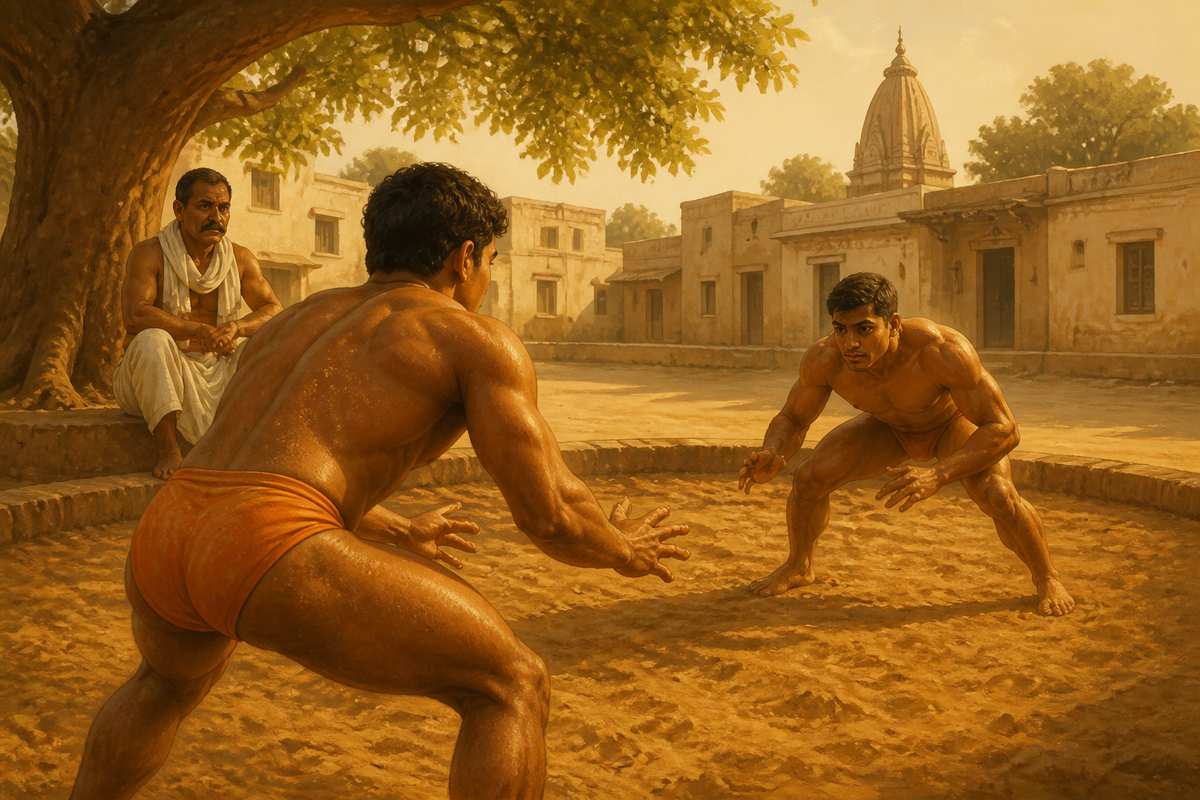
Piru Singh Shekhawat was born on May 20, 1918, in Rampura Beri village near Churu in Rajasthan's Shekhawati region - a land that had given warriors to India for centuries. The Shekhawats were Rajputs who traced their lineage to the martial traditions of medieval Rajputana.
As a young man, Piru Singh was known for his physical prowess. He was a wrestler, respected in the village akhara (wrestling pit), where he had learned the discipline that would later serve him in the army. On May 20, 1936 - his 18th birthday - he enrolled in the 6th Rajputana Rifles, beginning a military career that would span over a decade.
World War II Veteran
Piru Singh's service was not limited to garrison duty. He served in World War II as part of British Indian forces, including deployment to Japan with the Allied occupation forces. These years of combat experience shaped him into a seasoned soldier who understood both the chaos of battle and the importance of leadership.
When he returned to India in September 1947, the country had just gained independence - and immediately faced its first war. The army was reorganizing after partition, and CHM Piru Singh found himself posted back to his regiment, the 6 Rajputana Rifles, now part of the Indian Army.
The Night of July 17-18, 1948
The attack was launched at 0130 hours on July 18, 1948. The assault company began its advance up a narrow path toward the enemy positions. This approach was dominated by Pakistani bunkers that commanded clear fields of fire - anyone moving up that path would be completely exposed.
The defenders were ready. Within thirty minutes, heavy shelling and machine gun fire had caused 51 casualties in the attacking company. Officers fell. The advance stalled. In the chaos and darkness, it seemed the attack would fail.
CHM Piru Singh's section, part of the leading company, had been reduced to half strength. Most men would have sought cover and waited for orders. Piru Singh was not most men.
"With Battle Cries He Encouraged the Remaining Men"
Seeing his comrades falling around him, CHM Piru Singh made a decision that would define his legacy. Rather than retreat or wait, he rallied the survivors with shouts of "Raja Ramchandra Ki Jai!" and charged forward.
Armed with a Sten gun and grenades, he rushed toward the nearest enemy machine gun position. This was not blind rage - it was calculated aggression. He knew that staying pinned down meant certain death for all of them. The only way forward was through.
Grenade splinters ripped his clothes and wounded him in multiple places. He ignored them. The first bunker fell silent as his grenades found their mark.
Three Bunkers, One Man
Piru Singh didn't stop at one position. He moved to the second machine gun nest, spraying it with Sten gun fire before closing in for the kill. The Pakistani defenders, accustomed to fighting from protected positions, were unprepared for a madman charging directly at them through their own fire.
As he approached the third position, a grenade exploded near his face. The blast nearly blinded him. Most of his Sten gun ammunition was exhausted.
A lesser man would have stopped. Piru Singh, his vision failing and his body riddled with wounds, grabbed his remaining grenades and continued the assault. He lobbed the grenades into the third bunker and jumped in after them, bayoneting two enemy soldiers in the trench.

The Final Moment
As CHM Piru Singh rose to move toward the next position, a bullet struck him in the head. He fell in the trench he had just captured, among the enemies he had killed.
But the objective was taken. His single-handed assault had destroyed three machine gun positions that had been decimating his company. The surviving soldiers, inspired by his example, completed the capture of the feature.
The Param Vir Chakra Citation
The official citation captures the essence of his valor:
"Company Havildar Major Piru Singh was with the gruelling company which gruelled to charge of to get the enemy position on the hills at Tithwal on 17/18 July 1948... Gruelling attack as it was, CHM Piru Singh reorganized his section and rushing forward with great determination, charged onto the nearest enemy machine gun post. Grenade splinters ripping his clothes and wounding him at several places, he continued to advance unperturbed. He next, turned to the enemy light machine gun position and killed its crew with the butt of his Sten Gun. Alone, and nearly blinded, he lobbed grenades at the next Pakistani post and then jumping into a trench, bayoneted two of the enemy to death before being hit in the head and attaining martyrdom."
CHM Piru Singh was posthumously awarded the Param Vir Chakra - independent India's highest gallantry award.
The Rajputana Rifles Tradition
The Rajputana Rifles is one of the Indian Army's most distinguished infantry regiments. Raised in 1921, its battalions have served with honor in every major conflict since independence. The regiment's soldiers are predominantly recruited from Rajasthan's martial communities.
The regiment's motto - "Veer Bhogya Vasundhara" (The Brave Shall Inherit the Earth) - found its purest expression in Piru Singh's charge. He embodied the Rajput warrior tradition that stretches back through centuries - the same tradition that produced Maharana Pratap, Prithviraj Chauhan, and countless others who chose death over dishonor.
Tithwal produced another PVC recipient - Lance Naik Karam Singh of the 1 Sikh Regiment - making it one of the most decorated battles of the 1947-48 war.
Prime Minister's Tribute
Prime Minister Jawaharlal Nehru, upon learning of CHM Piru Singh's action, called him "the man with determination and eminent bravery." Coming from a leader who personally oversaw the Kashmir campaign, these words carried special weight.
The story of a village wrestler who joined the army, served across two wars, and died charging machine gun nests with a battle cry on his lips captured the public imagination. Here was proof that India's soldiers were second to none.
Remembering Piru Singh
Today, multiple memorials honor CHM Piru Singh's sacrifice:
Shaheed Piru Singh Shekhawat Circle in Jhunjhunu, Rajasthan, is named in his honor by the state government.
Rampura Beri Village where he was born now has a statue of him in the village playground, which is also named after him.
The Rajputana Rifles Center at Delhi Cantt maintains his legacy as one of the regiment's greatest heroes.
But perhaps the greatest memorial is the continued service of the Rajputana Rifles. In every conflict since 1948 - in 1962, 1965, 1971, Kargil, and beyond - soldiers of the regiment have carried forward the spirit that Piru Singh embodied.
The Lesson of the Lone Charge
CHM Piru Singh's story raises profound questions about leadership and sacrifice. He was not the commanding officer of the assault. He was a Company Havildar Major - a senior Non-Commissioned Officer. When the officers fell and the attack stalled, he had every justification to wait for orders.
Instead, he took charge. He made the decision that the mission mattered more than his life. He understood that his men would follow if someone led, and that someone had to be him.
This is the essence of military leadership: not rank, but example. Not orders from above, but initiative in the moment. The Indian Army's NCO tradition - producing leaders at every level who can take charge when circumstances demand - found its ultimate expression in that charge up the hill at Tithwal.
The Shekhawati Spirit Lives On
Every year, the Rajputana Rifles celebrates the memory of CHM Piru Singh. New recruits learn his story. Officers study his action as an example of aggressive leadership.
In the village squares of Shekhawati, children still grow up hearing about the wrestler who became a soldier, the soldier who became a hero, and the hero who became immortal.
"Raja Ramchandra Ki Jai!" - the cry still echoes in the mountains of Kashmir.
Historical context
Summer Offensive - July 1948
Reflection
- CHM Piru Singh was not the commanding officer, yet he took charge when the attack stalled. In your life, have you ever stepped up to lead when it wasn't technically your responsibility? What made you do it - or what held you back?
- Piru Singh continued his assault even after being nearly blinded. Where is the line between courageous persistence and reckless disregard for survival? Did he cross it?
- The battle cry 'Raja Ramchandra Ki Jai' invokes Lord Rama, connecting a modern soldier to ancient warrior traditions. How do cultural and spiritual traditions help (or hinder) soldiers in combat? What role should they play in a secular armed force?