Harita: The Honest Brahmin
Speaking truth even when it costs everything
The brahmin Harita discovers a terrible secret that could destroy a powerful man. Speaking the truth will cost him everything - his position, his wealth, possibly his life. Remaining silent would be safer, more practical. But Harita cannot compromise his commitment to honesty. He speaks the truth fully, accepting all consequences. His integrity, though it brings immediate hardship, ultimately elevates him to heights no deception could ever reach.
The Brahmin's Dilemma
Harita was the most respected brahmin in the kingdom of Kosala. Kings sought his counsel. Merchants begged for his blessings. Families traveled for days just to have him perform their ceremonies.
His reputation was built on one thing: he had never spoken a false word. In a world of flattery and deception, Harita was a beacon of truth.
But truth, as he was about to learn, comes with a price.
The Terrible Discovery
One evening, Harita was walking home through the royal gardens when he heard voices behind a hedge. He recognized one immediately - the king's chief minister, a man named Devadatta.

"It's all arranged," Devadatta was saying. "The poison will be in the king's wine tomorrow night. By morning, the throne will be ours."
Harita froze. Through the leaves, he could see Devadatta speaking with two foreign men - assassins, by their look.
"And what of witnesses?" one assassin asked.
"There will be none," Devadatta said. "The servants have been bribed. Anyone who speaks will be silenced."
Harita's heart pounded. He slipped away quietly before they could see him.
All night he lay awake. He had witnessed treason. The king would be murdered tomorrow unless someone warned him.
But who would believe a brahmin's word against the chief minister? Devadatta was powerful, wealthy, connected. He had spies everywhere. If Harita spoke and wasn't believed, he would be destroyed.
The safe choice was clear: say nothing. Stay out of it. Someone else would surely discover the plot.
"But what if no one does?" a voice whispered in his heart. "And even if they do - what does your silence make you?"
The Choice
The next morning, Harita dressed in his finest robes and walked to the palace. His hands trembled, but his resolve was firm.
"I must see the king," he told the guards. "It is a matter of life and death."
They admitted him to the throne room. King Prasenajit sat on his golden seat, and beside him stood Devadatta, the chief minister.
Harita felt the minister's eyes upon him - curious, then suspicious.
"Brahmin Harita," the king said warmly. "What brings you to court?"
Harita took a deep breath. He looked at Devadatta, then at the king.
"Your Majesty, I come with news that will sound like madness. But I have never lied to you, and I will not start now."
He told them everything. The garden, the conversation, the poison, the plot.
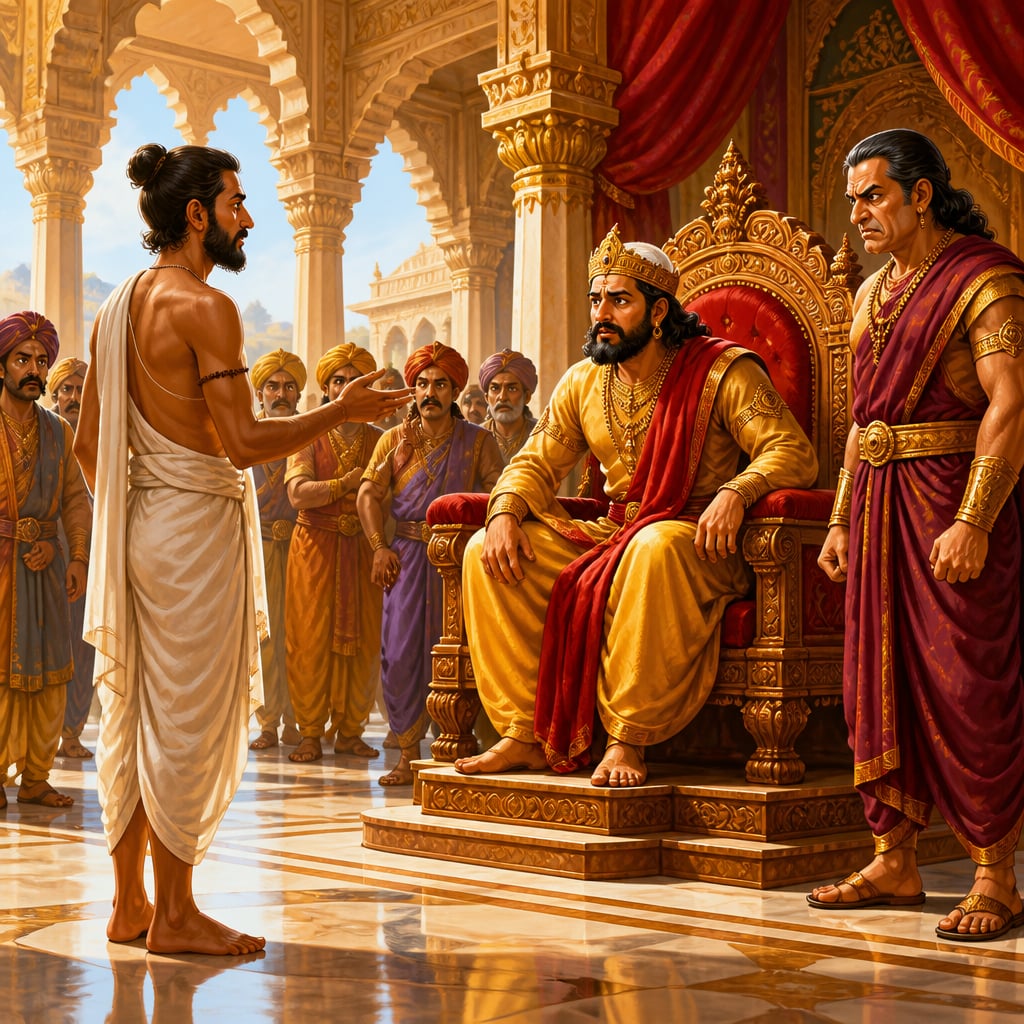
As he spoke, Devadatta's face went pale, then red with fury.
"This is absurd!" the minister shouted. "This brahmin is clearly mad - or worse, part of some rival's scheme to disgrace me!"
The king looked troubled. "Harita, these are serious accusations. Do you have proof?"
"Only my word, Your Majesty."
"The word of one man against mine?" Devadatta laughed. "I am the chief minister! I have served this kingdom for twenty years!"
The king's face was torn. Harita could see him weighing the options - the trusted minister versus the honest brahmin.
"I... I need time to think," the king said finally. "Guards, detain the brahmin until this is resolved. And minister - remain in the palace."
The Dungeon
Harita was led to a cell beneath the palace. The walls were damp, the floor was cold, and the only light came from a tiny window high above.
"You should have stayed silent," the guard said, not unkindly. "The minister has powerful friends. Even if you're right, you'll probably never leave this place."
Alone in the darkness, Harita sat cross-legged on the stone floor. He could have regretted his choice. He could have cursed himself for speaking.
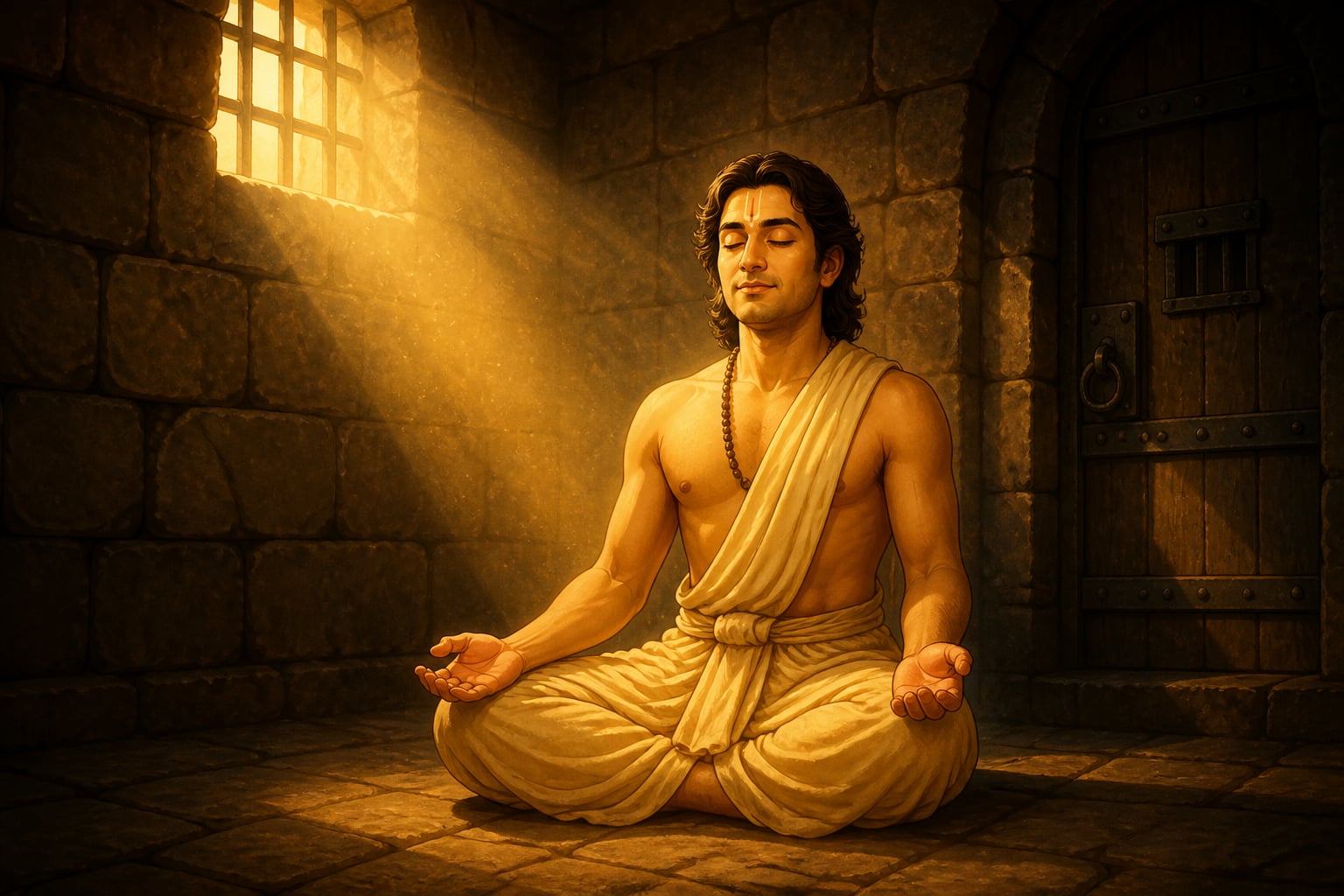
Instead, he smiled.
"I told the truth," he whispered to himself. "Whatever happens now, I told the truth."
The Proof
What Harita didn't know was that the king, though uncertain, had taken his warning seriously. That night, the royal wine was tested on a dog before serving.
The dog died within minutes.
Devadatta was seized trying to flee the palace. Under questioning, the assassins confessed everything. The minister was executed for treason.
The next morning, the king himself came to Harita's cell. He was weeping.
"Brahmin, you saved my life. You knew the risk, you knew you might not be believed, and you spoke anyway."
Harita bowed. "I spoke because it was true, Your Majesty. Not because I expected reward."
"And that," the king said, "is why you will receive the greatest reward I can give."
He made Harita his chief advisor - a position the brahmin had never sought but would hold with honor for the rest of his life.
The Wisdom
Harita's story teaches us that truth is not always rewarded immediately. Sometimes, speaking honestly brings us suffering. Sometimes, it puts us at risk.
But notice what Harita said in his cell: "Whatever happens now, I told the truth." His peace came not from the outcome, but from knowing he had done what was right.
The reward came later - but Harita was at peace even before it arrived. That's the secret of integrity: it makes you whole, regardless of external circumstances.
In Your Life
Some day, you might discover something that could get someone powerful in trouble. Maybe a teacher who made a mistake. Maybe a popular kid who did something wrong. Maybe even an adult who is doing something harmful.
Speaking up might make things hard for you. People might not believe you. You might lose friends. You might face consequences.
Remember Harita in his cell. He didn't know the king would believe him. He didn't know he would be saved. He spoke the truth anyway - not because of what he hoped to gain, but because of who he wanted to be.
The right choice doesn't always look like the smart choice. But the right choice is always the right choice.
Reflection
- Have you ever known about something wrong but stayed silent because speaking up seemed too risky? How did you feel afterward?
- Harita found peace in his dungeon cell by knowing he had done right. Do you think a person can truly be at peace when suffering for telling the truth? Or is that too hard for most people?
- The king eventually believed Harita because of his reputation for truthfulness. What are you building a reputation for? Will people believe you when something important happens?