Annadana: The Supreme Gift of Food
Why Feeding Others Is the Highest Dharma
Of all forms of giving, food-giving (annadana) is considered supreme in dharmic tradition. From the Upanishadic declaration 'Annam Brahma' (Food is Brahman) to Akshaya Patra's 2 million daily meals, we explore why the gift of food occupies a unique position in dharmic economics.
The Meal That Changed Philosophy
In 1971, Peter Singer, then a young philosophy lecturer at Oxford, was walking through London when he passed a charity collecting for famine relief in Bangladesh. He stopped, donated, and then spent the next several months grappling with a question that would reshape Western ethics: If I can prevent something bad from happening without sacrificing anything of comparable moral importance, am I obligated to do so?
His answer, published as "Famine, Affluence, and Morality", argued yes. If a child is drowning in a shallow pond, you're morally obligated to wade in, even if it ruins your expensive suit. Distance doesn't change the obligation. Neither does the number of others who could help but don't.
Singer had independently arrived at a principle the Taittiriya Upanishad had declared three thousand years earlier:
"अन्नं न निन्द्यात्। तद्व्रतम्।" "Do not reject food. That is the vow."
"अन्नं न परिचक्षीत। तद्व्रतम्।" "Do not turn away the hungry. That is the vow."
The Upanishad didn't argue for this through utilitarian calculus. It simply declared: feeding the hungry is vrata, a sacred vow, non-negotiable, beyond debate.
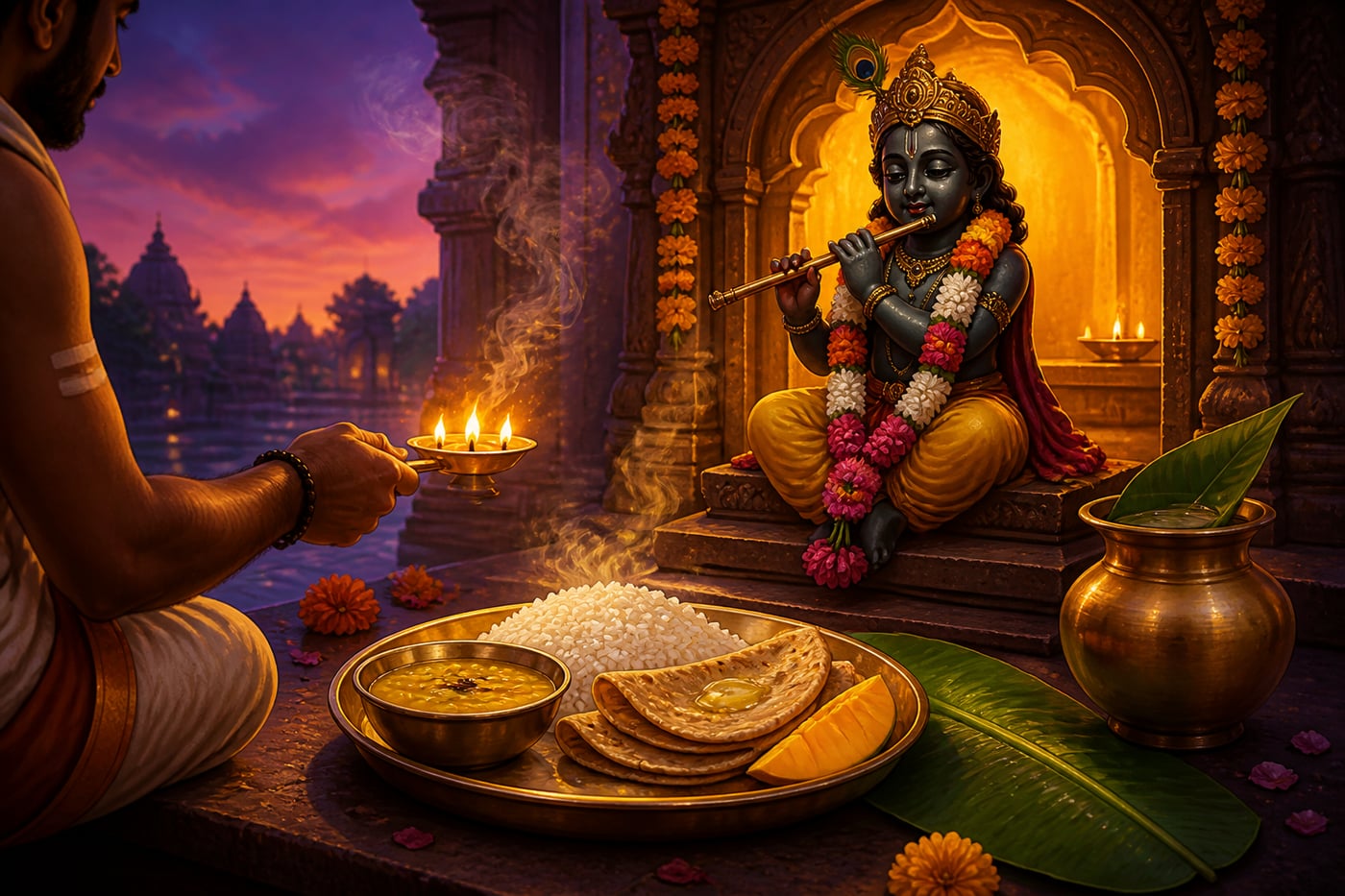
Annam Brahma: The Metaphysics of Food
The dharmic tradition places food in a category unlike any other gift. Why?
The Taittiriya Upanishad contains one of the most radical statements in any scripture:
"अन्नं ब्रह्मेति व्यजानात्।" "Annaṃ brahmeti vyajānāt." "Know that food is Brahman."
This isn't metaphor. The Upanishad systematically argues that food is the foundation of all existence:
- All beings are born from food (annād bhūtāni jāyante)
- All beings live by food (annena jātāni jīvanti)
- All beings return to food (annaṃ prayanty abhisaṃviśanti)
Food isn't just nutrition, it's the material substrate of consciousness itself. When you give food, you're not giving a commodity; you're giving life-force, prāṇa, the very substance from which beings are made.
This metaphysical elevation explains why annadana outranks other forms of giving. Money can be misused. Knowledge can be rejected. Shelter can be abandoned. But food, once eaten, becomes the recipient. It transforms into their blood, bone, and thought. No other gift achieves such complete union between giver and receiver.
The Hierarchy of Dana: Why Food Reigns Supreme
Dharmic texts explicitly rank food-giving above other forms of charity:
From the Mahabharata (Anushasana Parva):
"Among all gifts, annadana is the greatest. One who gives food gives life itself. One who gives life gains immortality."
From the Bhavishya Purana:
"If one cannot perform elaborate yajnas or give gold and land, let them give food. This single act encompasses all dharma."
The practical logic:
| Gift Type | Limitation | Food's Advantage |
|---|---|---|
| Money | Can be hoarded, misused, or lost | Food must be consumed, immediate benefit |
| Knowledge | Requires recipient's effort and time | Food works instantly, hunger ends now |
| Shelter | Location-dependent, ongoing costs | Food is portable, universal, immediate |
| Clothing | Varies by climate, size, preference | Food needs are universal, everyone eats |
Food is the only gift that cannot be deferred, stored indefinitely, or rejected without consequence. Its urgency is built-in: hunger is immediate, and so must be the response.
Global Perspectives: The Ethics of Feeding
The unique status of food-giving appears across philosophical traditions, but dharmic thought offers distinctive insights.
Peter Singer (1946-) revolutionized Western ethics with his argument that distance doesn't diminish moral obligation. If you can prevent starvation by giving, you must, regardless of whether the hungry person is next door or across oceans. Singer's "effective altruism" movement calculates which charities prevent the most suffering per dollar. His rigorous utilitarian calculus aims to maximize lives saved.
Where dharmic thought agrees: Both traditions insist that the ability to help creates the obligation to help. The Upanishadic anna-vrata (vow regarding food) and Singer's "drowning child" argument reach similar conclusions.
Where dharmic thought differs:
Beyond calculation: Singer's framework is consequentialist, what matters is outcomes. Dharmic annadana includes but transcends outcomes. The act of feeding has intrinsic spiritual value regardless of measurable impact. Feeding one hungry person completely fulfills dharma, even if millions remain hungry.
The giver's transformation: Singer focuses on recipient welfare. Dharmic thought equally emphasizes what feeding does to the giver. Annadana purifies the donor, burns karma, and cultivates the recognition that "I am not separate from the hungry."
Food's unique status: Singer treats food as one commodity among many, whatever prevents suffering most efficiently should be prioritized. Dharmic thought insists food is metaphysically distinct: "Annam Brahma." You can't substitute a malaria net for a meal without losing something essential.
Thomas Pogge (1953-), the political philosopher, argues that global poverty isn't merely unfortunate, it's unjust. The global economic system actively harms the poor. Wealthy nations don't just fail to help; they perpetuate structures that cause poverty. Pogge's insight aligns with dharmic recognition that not feeding the hungry isn't neutral, it accumulates papa (negative karma). Inaction when you can act is itself an act.
Effective Altruism as a movement has channeled billions toward high-impact charities. Organizations like GiveDirectly (cash transfers) and the Against Malaria Foundation apply Singer's logic rigorously. The dharmic response: admiration for the intent, skepticism about reducing all giving to calculation, and insistence that the relationship between giver and food and recipient contains something sacred that spreadsheets cannot capture.
| Thinker | Key Insight | Dharmic Alignment | Dharmic Addition |
|---|---|---|---|
| Singer | Ability creates obligation | Anna-vrata (food-vow) | Food is uniquely sacred, not just efficient |
| Pogge | Poverty is injustice, not misfortune | Papa from inaction | Spiritual consequences, not just moral |
| Effective Altruism | Maximize impact per dollar | Desha-kala-patra (right context) | Relationship matters, not just outcome |
Modern Resonance: India's Living Annadana Tradition
India feeds more people freely than any nation on earth, through religious institutions, not government programs.

The scale is staggering:
- Golden Temple Langar: 100,000+ meals daily
- Tirupati Temple: 80,000+ meals daily
- Shirdi Sai Baba Temple: 50,000+ meals daily
- Dharmasthala: 30,000+ meals daily
- Akshaya Patra: 2,000,000+ meals daily (to schoolchildren)
These aren't soup kitchens serving the destitute. They're prasadam distributions treating every recipient as a guest of God. The Golden Temple doesn't check income before serving. Tirupati doesn't means-test. The food is offered first to the deity, then distributed, transforming charity into divine hospitality.
What makes Indian annadana distinctive:
Dignity preservation: Recipients aren't "beneficiaries", they're atithi (guests) or receivers of prasadam (divine grace). No stigma attaches to eating.
Quality insistence: Temple food isn't poor-quality handouts. The Golden Temple's dal and roti are prepared with the same care as a home meal. Tirupati's laddu prasadam is a prized delicacy. Annadana assumes the recipient deserves the best.
Universality: No eligibility criteria. The billionaire and the beggar sit in the same line (pangat). This isn't means-tested welfare, it's cosmic hospitality extended to all.
Continuity: These systems have operated for centuries, Tirupati for over 1,000 years, the Golden Temple for over 400. They're not programs that start and stop with funding cycles; they're permanent institutions.
The Sacredness of the Kitchen
Dharmic annadana extends beyond distribution to preparation. The kitchen (pakashala or rasoi) is treated as sacred space.

At Akshaya Patra's kitchens:
- Staff begin with prayers
- No shoes in cooking areas
- Food is offered to Krishna before distribution
- Hygiene standards exceed commercial requirements
At Gurudwara langars:
- Volunteers (sevadars) cook as spiritual practice
- Seva (service) in the kitchen is considered equivalent to meditation
- The act of cooking is worship; the act of serving is worship; the act of eating is worship
This sacralization of food preparation distinguishes dharmic annadana from secular food banks. It's not just about calories reaching stomachs, it's about transforming everyone involved: cook, server, and recipient alike.
The Economics of 'Annam Brahma'
Does treating food as sacred make economic sense? Counter-intuitively, yes.
Quality effects: Because temple food is prasadam (divine), there's social pressure to maintain quality. Donors know their contribution becomes God's gift, they give generously. Recipients receive dignified meals, they don't feel diminished. This "sacred premium" attracts more resources than secular charity.
Volunteer effects: When cooking is seva rather than labor, kitchens run on devotion rather than wages. The Golden Temple operates with thousands of unpaid volunteers daily. Akshaya Patra supplements paid staff with devotional volunteers. The labor economics of sacred annadana differ fundamentally from commercial food service.
Trust effects: Temples have institutional continuity that NGOs lack. A donor giving to Tirupati annadana knows the program existed for 1,000 years and will exist for 1,000 more. This trust premium reduces donor hesitation and increases long-term giving.
Scale effects: Because annadana is religious obligation (not optional charity), participation is massive. Millions of small contributions, the family that donates rice monthly, the business that sponsors a day's meals, aggregate into enormous flows. Distributed religious giving outscales concentrated philanthropy.
Your Turn: The Anna-Vrata Practice
The Taittiriya Upanishad doesn't suggest annadana, it commands it as vrata (sacred vow):
"अन्नं बहु कुर्वीत। तद्व्रतम्।" "Produce abundant food. That is the vow."
"अन्नं न परिचक्षीत। तद्व्रतम्।" "Never turn away the hungry. That is the vow."
This week, practice anna-vrata:
Recognize food's sacredness: Before eating, pause. This substance will become you. Acknowledge "Annam Brahma."
Feed someone outside your circle: Not family, not friends, someone who cannot reciprocate. A street vendor, a delivery person, a stranger.
Contribute to systematic annadana: Donate to Akshaya Patra, a gurudwara langar, or a temple feeding program. Your contribution joins thousands of others in creating daily meals for those who need them.
Never waste: The corollary of "food is Brahman" is that wasting food is sacrilege. Finish what you take. Store leftovers. Compost what cannot be eaten.
Peter Singer asks: "If you can prevent suffering without sacrificing anything of comparable importance, shouldn't you?" The Upanishad goes further: "Food is Brahman. When you feed another, you feed the divine. This is not calculation, it is recognition."
The hungry child in Bangladesh and the hungry child at your doorstep are not two problems. They are one, the divine, waiting to be fed.
Next: Vidyadana, why the gift of knowledge is considered second only to food, and how ancient India built the world's first free universities on this principle.
Peter Singer argues we're obligated to give when we can prevent suffering without comparable sacrifice. Effective altruism calculates which interventions save most lives per dollar. These utilitarian frameworks treat food as one intervention among many, malaria nets, deworming, and cash transfers might rank higher in some calculations.
The anna-vrata framework refuses this calculation. Food isn't one commodity among many, it's Brahman materialized. You can't substitute mosquito nets for meals without violating a sacred vow. This "irrationality" has sustained massive food-giving infrastructure for millennia, regardless of whether spreadsheets recommend it.
India's religious institutions feed more people daily than all secular NGOs combined. The Golden Temple alone (100,000+ daily) exceeds many countries' national feeding programs. Sacred obligation outperforms utilitarian calculation at scale.
Modern food charities face quality problems: institutional food is often nutritionally adequate but unappetizing. Soup kitchens serve survival food, not good food. The incentive structure (minimize cost per meal) works against quality.
The prasad principle reverses this: if food is offering to God, it must be excellent. Temple kitchens face social pressure to maintain quality because prasad represents divine grace. This "sacred quality premium" produces better food than secular cost-minimization.
Tirupati's laddu prasadam is so valued that black markets exist for it. The Golden Temple's langar quality is legendary. Akshaya Patra schools report children preferring school meals to home food. Sacralization drives quality up, not down.
Key terms
- annadāna
- The gift of food; charitable feeding; considered the highest form of material giving in dharmic tradition
- annaṃ brahma
- Food is Brahman; the Upanishadic declaration that food is identical with ultimate reality
- prasāda
- Divine grace; specifically, food that has been offered to a deity and then distributed to devotees
- vrata
- Sacred vow; a religious commitment that becomes binding once undertaken
Key figures
Bhrigu
Vedic Period (traditional)
Chanchalapathi Dasa
Contemporary
Peter Singer
1946-present
Case studies
Akshaya Patra: Ancient Annadana at Modern Scale
In 2000, ISKCON Bangalore began feeding 1,500 schoolchildren daily in five government schools. The initiative, later named Akshaya Patra ("inexhaustible vessel," from the Mahabharata story of Draupadi's miraculous pot), aimed to address two problems: hunger preventing children from learning, and children dropping out to help families find food. The founders, led by Madhu Pandit Dasa, insisted that the food be prasadam, offered to Krishna first, prepared with devotion, and served with dignity. They refused to compromise on quality even as scale grew exponentially. By 2024, Akshaya Patra serves 2+ million children daily across 20,000 schools in 14 states, operating massive centralized kitchens that can produce 100,000+ meals in hours.
Akshaya Patra demonstrates 'Annam Brahma' operationalized: **Food as sacred**: Every kitchen begins with prayers; food is offered to Krishna before distribution. **Quality as worship**: Menus are designed by nutritionists; ingredients are premium; children eat from proper plates. **Recipient as divine**: Children aren't 'beneficiaries' but receivers of prasadam, they're serving Krishna by accepting his gift. **The anna-vrata in practice**: The organization's commitment is unconditional, meals continue regardless of funding fluctuations, natural disasters, or pandemic. The vow doesn't pause. The name itself (Akshaya = inexhaustible) references Draupadi's vessel that never emptied while she fed the hungry. This isn't mere branding, it's theological claim: when food-giving is aligned with dharma, resources flow inexhaustibly.
Akshaya Patra has served 4+ billion meals since inception. Schools in the program report 93% retention (vs. ~70% national average). Children's attention and test scores improve measurably. The model has been adopted by state governments; Karnataka and Rajasthan use Akshaya Patra kitchens for official mid-day meal programs. The organization attracted support from governments, corporations, and millions of individual donors worldwide. Its cost efficiency (~₹12-15 per child per day) rivals any food program globally while maintaining quality that parents often say exceeds home cooking. Critically: the prasadam principle survived scale. Children in Bengaluru and children in Rajasthan both receive food prepared as sacred offering, served with dignity, in an environment that treats the meal as divine gift, not charitable handout.
The 'Annam Brahma' principle isn't just spiritually valuable, it's operationally superior. By treating food as sacred and recipients as divine, Akshaya Patra solved problems that plague secular food charities: quality degradation at scale, donor fatigue, recipient stigma. The ancient metaphysics created better modern outcomes than purely utilitarian design would have.
The UN's Zero Hunger goal remains far from achieved, with 735 million people facing chronic hunger globally. Akshaya Patra's demonstration that sacred motivation can drive industrial-scale efficiency challenges the assumption that only secular, technocratic approaches can address hunger at scale.
Akshaya Patra's cost per meal (~₹12-15) is comparable to the most efficient global food programs, while quality surveys show higher satisfaction than typical institutional food. Sacred intent and operational efficiency proved not contradictory but complementary.
Chola Temple Feeding: Institutionalized Annadana for 1,000 Years
The Chola dynasty (9th-13th centuries CE) transformed South Indian temples from places of worship into comprehensive social institutions, and feeding was central. The Brihadeshwara Temple at Thanjavur, built by Rajaraja Chola I (completed 1010 CE), maintained detailed inscriptions recording its annadana operations. The temple employed 400 women to prepare food, fed hundreds of Brahmins daily, and distributed prasadam to all visitors. It owned 4,000+ cows for dairy, 600+ acres of farmland for grain, and received donations specifically for "eternal feeding" (nitya annadana). Similar systems operated at major Chola temples across Tamil Nadu, Gangaikondacholapuram, Chidambaram, Srirangam, creating a network of feeding centers across the empire.
Chola temple feeding embodied all dimensions of dharmic annadana: **Annam Brahma in architecture**: Temples were designed with large kitchens (madhya pakashala) and feeding halls. Food preparation was as central as worship. **Perpetual commitment**: Inscriptions specified endowments for 'eternal' feeding, land grants, cow herds, and grain stores meant to continue "as long as sun and moon endure." This isn't temporary charity but permanent infrastructure. **Integrated economy**: Temples owned productive assets (land, cattle, water tanks) specifically to fund feeding. The annadana wasn't dependent on donations; it was self-sustaining through endowed wealth. **Universal access**: While Brahmin feeding was prioritized in some inscriptions, prasadam distribution was universal. Every visitor to a Chola temple received food, merchant, pilgrim, or beggar.
The Chola annadana system operated continuously for over 300 years under their rule and continued under successor dynasties. Some temples, like Srirangam, maintain feeding programs that trace direct lineage to Chola endowments. The temple inscription system created legal permanence: gifts for annadana became temple property, protected from royal confiscation or family disputes. This legal innovation allowed charitable feeding to persist across political changes. The economic scale was enormous: historians estimate that major Chola temples fed tens of thousands daily across the network, making this possibly the largest organized feeding system in the medieval world. The system survived invasions, dynasty changes, and centuries of political turbulence, a testament to the institutional resilience created by dharmic framing.
The Chola temple system shows how to make annadana permanent: through endowed productive assets, legal protection, and institutional embedding. Modern donors write checks; Chola donors gave land that produced food forever. This 'endowment model' for food security, rather than ongoing fundraising, offers lessons for contemporary philanthropy seeking sustainability.
Modern endowment-based philanthropy, from university endowments to community foundations, independently arrived at the same insight the Cholas institutionalized a millennium ago: productive assets dedicated to a purpose outlast any individual donor's generosity. The shift from annual fundraising to endowment building in contemporary philanthropy echoes this ancient model.
The Thanjavur Brihadeshwara Temple inscriptions (1010 CE) record 400 women employed for food preparation, 4,000+ cows for dairy, and specific grants for feeding visitors 'in perpetuity', making it the most thoroughly documented medieval feeding operation, with records surviving 1,000+ years.
Historical context
Vedic Period through Medieval Temple Kingdoms (~1500 BCE - 1300 CE)
India's unique status of food-giving emerges from multiple reinforcing factors: Upanishadic metaphysics (Annam Brahma), epic narrative (Draupadi's inexhaustible vessel), temple economics (endowed feeding programs), and continuous living tradition (langars, prasadam distribution). No other civilization developed such elaborate philosophical justification combined with institutional implementation for feeding the hungry.
Medieval European monasteries provided food to the poor, but as charity rather than cosmic duty. Islamic waqf endowments funded feeding, but without the metaphysical claim that food is divine. Chinese state granaries addressed famine but through bureaucratic management, not sacred obligation. The Indian synthesis, metaphysical elevation plus institutional implementation plus universal participation, remains distinctive.
Inscriptional evidence shows that by 1200 CE, major South Indian temples collectively owned enough productive land to feed hundreds of thousands daily, possibly the largest coordinated food security system in the medieval world, predating state welfare by centuries.
Understanding the historical depth of Indian annadana reveals it as sophisticated social technology. When Akshaya Patra feeds 2 million children daily, it's not innovating, it's scaling principles tested over millennia. The metaphysical framework (Annam Brahma) and institutional models (temple endowments) provide proven templates for sustainable food security.
Living traditions
India's religious feeding infrastructure exceeds government welfare in scale and efficiency. The Golden Temple (100,000+ daily), Shirdi (50,000+ daily), Vaishno Devi (30,000+ daily), and thousands of smaller temples and gurudwaras collectively feed millions. This parallel welfare system operates through sacred obligation rather than taxation, demonstrating that dharmic frameworks can achieve public goods at massive scale.
- Temple Prasadam Distribution: Every Hindu temple distributes prasadam, food offered to the deity first. Major temples serve tens of thousands daily: Tirupati's laddu, Puri's mahaprasad, Nathdwara's chappan bhog. This isn't charity for the poor; it's sacred food for all devotees, maintaining dignity through universal divine hospitality.
- Gurudwara Langar: The langar tradition, free meals for all visitors without distinction, began with Guru Nanak and continues unbroken. The Golden Temple feeds 100,000+ daily, prepared by volunteers, served in egalitarian lines where billionaire and beggar sit together. This is perhaps the world's largest continuous free kitchen.
- Bhandara (Community Feasts): Bhandaras are mass feeding events organized by individuals, families, or communities, often marking anniversaries, festivals, or religious vows. A family might feed their entire village; a business might sponsor thousands of meals. This distributed tradition creates millions of mini-annadana events annually.
- Golden Temple Langar Hall, Amritsar
- Akshaya Patra Central Kitchen, Hubli or Bengaluru
- Puri Jagannath Temple, Odisha
- Tirumala Tirupati Devasthanams (TTD): TTD operates the world's largest temple-based annadana program, serving 80,000+ pilgrims daily through its free meals program - demonstrating how professional trust management can scale the sacred gift of food to serve millions annually while maintaining the spiritual dimension of Annam Brahma
- Jagannath Temple Puri: For over 800 years, the temple trust has maintained the world's largest temple kitchen (Rosoi Ghar) with 752 clay ovens operated by 600+ cooks, exemplifying how trusteeship preserves ancient annadana traditions across centuries through systematic institutional management
Reflection
- The Upanishad declares 'Annam Brahma', food is ultimate reality. Sit with this claim. If food is divine substance, how does that change your relationship with eating? With cooking? With the hungry person you pass on the street? What would change in your daily life if you genuinely believed food was sacred?
- Peter Singer argues that if you can prevent suffering without comparable sacrifice, you're obligated to do so. Calculate: What portion of your monthly income, if donated to Akshaya Patra or a similar program, could feed a child for a month? For a year? What would you sacrifice to do this? Is it truly 'comparable' to the suffering prevented? What does your answer reveal about your actual (not stated) values?