What Makes Kautilya Unique

The Dharmic Difference

We've compared Kautilya to Machiavelli, Hobbes, Locke, and Smith - finding parallels but also differences. What makes Kautilya's synthesis distinctive? The answer lies in dharma: his integration of realistic statecraft with ethical purpose creates something no Western thinker achieved.

Beyond Comparison
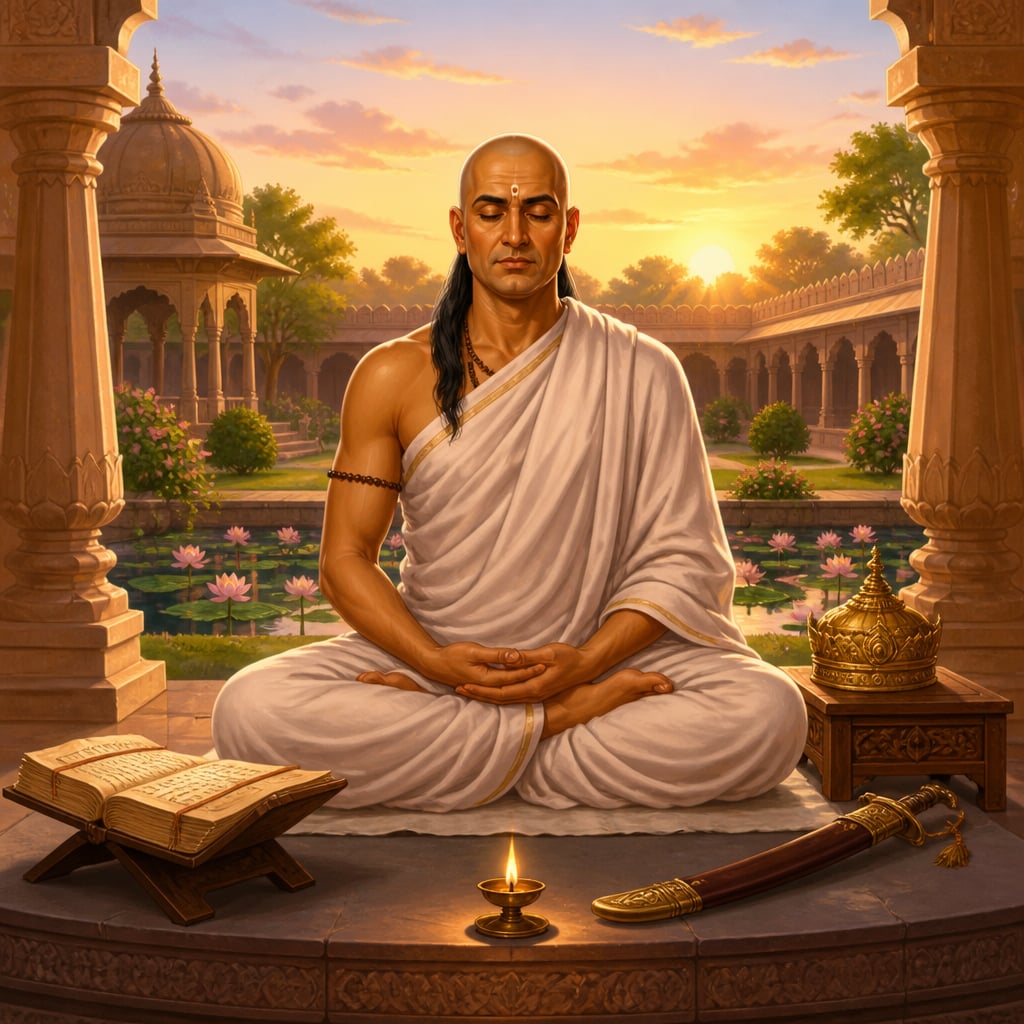
A Mauryan rajarshi sage-king in dawn meditation with shastra and sword in balance

Through this chapter, we've placed Kautilya alongside Western political philosophy's greatest names:

These comparisons illuminate what Kautilya shared with Western thought. But they can obscure what makes him different.

What does Kautilya offer that no Western thinker provides? What makes the Arthashastra more than an Indian version of ideas Europeans developed later?

The answer lies in one word: dharma.

The Missing Piece in Western Thought

Western political philosophy tends to split along a fundamental fault line:

Realists (Machiavelli, Hobbes) see politics as it is - power, conflict, self-interest. They're clear-eyed about human nature but often cynical about ethics. The result: effective but potentially immoral governance.

Idealists (Plato, utopians) see politics as it should be - justice, virtue, harmony. They're inspiring but often naive about power. The result: beautiful theories that fail in practice.

This split never quite healed. Modern political philosophy oscillates between realistic approaches that can justify terrible things and idealistic approaches that can't handle terrible realities.

Kautilya integrates what the West splits apart.

The Dharmic Integration

Dharma is difficult to translate because it has no Western equivalent. It means:

For Kautilya, dharma isn't separate from politics - it's the framework within which politics operates.

"धर्मार्थाविरोधेन कामस्य उपभोगः" - Enjoyment should not conflict with dharma and artha (righteousness and prosperity).

This is the trivarga - the three legitimate goals of life (dharma, artha, kama) in proper balance. Notice: artha (material success) and kama (pleasure) are legitimate, but dharma constrains them.

A king can pursue power - but not in ways that violate dharma. A merchant can pursue profit - but not through fraud. A soldier can fight - but not slaughter innocents.

Realism WITHIN Ethics

Kautilya's genius is making realism serve dharmic ends.

Consider his famous teaching on the four methods (upayas):

"साम दान भेद दण्ड" - Conciliation, gifts, division, punishment.

This sounds Machiavellian - use whatever works. But notice the order: try peaceful methods first. And notice the purpose: these are tools for establishing dharmic rule, not just grabbing power.

Machiavelli says: use whatever works to get and keep power.

Kautilya says: use whatever works to establish dharmic order.

Same methods. Different framework. Different outcomes.

The Praja-Sukhe Principle

No Western political philosopher placed popular welfare so centrally as a structural principle.

"प्रजासुखे सुखं राज्ञः प्रजानां च हिते हितम्" - In the happiness of his subjects lies the king's happiness; in their welfare, his welfare.

This isn't just advice - it's the theoretical foundation of legitimacy. The king's interests ARE the people's interests, properly understood. A king who acts against the people acts against himself.

Machiavelli advises appearing to serve the people. Hobbes argues that any sovereign is better than anarchy. Locke requires consent but doesn't guarantee outcomes. Smith trusts the invisible hand.

Kautilya structurally aligns ruler and ruled. The dharmic king succeeds by serving; the adharmic king fails by exploiting. It's not idealism - it's incentive design.

The Institutional Framework

The Mauryan mantriparishad council of ministers advising the king

Kautilya doesn't just articulate principles - he builds institutions that embody them.

The Mantriparishad (Council of Ministers) - ensures the king receives counsel and cannot act unilaterally on major matters.

The Dharmasthiya (Courts) - apply law independently, constraining even royal power.

The Samaharta (Revenue System) - with built-in limits on taxation and oversight against corruption.

The Spy Network - yes, even spies! But their function includes reporting on corrupt officials and whether the king's own orders are just.

Locke theorized checks and balances. Kautilya designed them two millennia earlier.

The Comprehensive Vision

Western political philosophy tends to be specialized:

Kautilya wrote about everything:

The Arthashastra is a complete system - not fragments that later thinkers must assemble, but an integrated vision of statecraft covering every domain.

The Contextual Flexibility

Kautilya's framework adapts to circumstances in ways Western theories often don't.

Dharma itself is contextual:

This means Kautilya's advice isn't rigid rules but principles for judgment. The one-sixth tax rate is a guideline; circumstances may require adjustment. The four methods follow a preference order, but wisdom knows when to deviate.

Western philosophy often struggles with this. How do you apply Locke's natural rights to situations he never imagined? Kautilya's dharmic framework provides tools for contextual application.

The Spiritual Grounding

Beneath Kautilya's practical statecraft lies something Western political philosophy lacks: spiritual purpose.

The trivarga (dharma, artha, kama) connects to the fourth goal: moksha (liberation). Political life isn't ultimate - it creates conditions for spiritual development.

The rajarshi (sage-king) ideal isn't just about ruling well but about ruling as spiritual practice. Good governance is a form of karma yoga - action performed as duty without attachment to results.

This gives Kautilyan statecraft a depth that purely secular Western philosophy cannot match. The king serves not just the people but cosmic order. His duty isn't just practical but sacred.

What Kautilya Offers Today

In our time of ideological polarization, Kautilya offers a third way:

For realists: Yes, politics involves power, conflict, and difficult choices. But these must serve larger purposes. Naked power-seeking leads to failure - dharmic power-seeking leads to sustainable success.

For idealists: Yes, politics should serve justice and human flourishing. But wishing doesn't make it so. You need practical institutions, realistic incentives, and clear-eyed analysis of how power actually works.

For everyone: Ethics and effectiveness aren't opposites. The most sustainable success comes from dharmic governance that genuinely serves the people. The "choice" between being good and being effective is often false.

The Living Synthesis

Kautilya's framework isn't a museum piece. It addresses questions we still face:

Western philosophy offers partial answers. Kautilya offers an integrated framework that has been tested across millennia.

This doesn't mean copying the Arthashastra mechanically. It means recognizing that dharmic governance - realistic, ethical, comprehensive, contextual, spiritually grounded - represents a distinct tradition with much to teach.

Your Turn

Think about the leaders you've admired. Did they succeed through pure power politics? Through naive idealism? Or through something that combined effectiveness with genuine service?

The best leaders usually integrate what weaker ones split apart. They're clear-eyed about power but committed to purposes beyond themselves. They're practical but principled.

That integration is what Kautilya systematized. It's what makes him more than an Indian Machiavelli, Indian Hobbes, Indian Locke, or Indian Smith.

He's Kautilya - and his dharmic synthesis stands as a distinct contribution to human political wisdom.

Western thought often treats ethics and effectiveness as tradeoffs - you can be good OR successful. Machiavelli explicitly separated them. Modern business ethics struggles with this split.

Kautilya denies the dichotomy. Dharmic action is more sustainable than adharmic action. The choice between being ethical and being effective is usually false - in the long run, ethics IS effective.

JRD Tata walking the Tata Steel Jamshedpur mill floor in the early 1970s

Companies that cheat customers may profit short-term but lose long-term. Enron was 'effective' until it collapsed. Johnson & Johnson's ethical handling of the Tylenol crisis built lasting trust. Dharmic business works.

Modern economics recognizes the 'principal-agent problem' - agents (employees, politicians) may not serve principals' (owners', citizens') interests. Solutions involve incentive alignment. Kautilya anticipated this.

Kautilya makes alignment foundational, not a fix for problems. Build structures where success requires service. Don't rely on good intentions - create systems where selfish behavior produces good outcomes.

Employee stock ownership plans align worker and company interests. Democratic elections align politician and voter interests. These are structural alignment mechanisms - Kautilya's insight institutionalized.

Western political philosophy rarely discusses personal virtue as professional requirement. Machiavelli dismissed it; Locke and Smith focused on institutional design. Only ancient virtue ethics (Aristotle) emphasized character.

Kautilya integrates personal and political. Good institutions require good people - or at least disciplined ones. You can't build dharmic governance with undisciplined governors. Character matters.

Marcus Aurelius - philosopher-emperor - governed effectively while practicing Stoic self-discipline. His reign (161-180 CE) was one of Rome's best. Personal virtue translated to political success.

Verses

धर्मार्थाविरोधेन कामस्य उपभोगः

dharmārthāvirodhena kāmasya upabhogaḥ

Enjoyment of pleasure should not conflict with dharma (righteousness) and artha (prosperity).

The trivarga principle: all three legitimate goals must be balanced. This is Kautilya's integration - pleasure is legitimate, but constrained by ethics and practical wisdom.

Book 1, Chapter 7, Verse 5-7 (R.P. Kangle)

प्रजासुखे सुखं राज्ञः प्रजानां च हिते हितम्

prajā-sukhe sukhaṃ rājñaḥ prajānāṃ ca hite hitam

In the happiness of his subjects lies the king's happiness; in their welfare, his welfare.

This is Kautilya's foundational principle. It's not advice to act nicely - it's a structural claim about what makes rule sustainable.

Book 1, Chapter 19, Verse 34 (L.N. Rangarajan)

इन्द्रियजयं विनयमूलम्

indriya-jayaṃ vinaya-mūlam

Conquest of the senses is the foundation of discipline.

Kautilya grounds political effectiveness in personal discipline. This spiritual element - the conquest of internal enemies - is missing from Western political thought.

Book 1, Chapter 6, Verse 1-3 (R. Shamasastry)

Case studies

Tata: Dharmic Business Over Generations

The Tata Group, founded in 1868, has maintained a distinctive business philosophy: profits serve purpose, not the reverse. Tata companies must donate significant profits to charitable trusts. The founder, Jamsetji Tata, built steel and power industries while funding education and healthcare.

Tata exemplifies Kautilyan integration. Effective business (artha) serves dharmic purposes. The company's longevity - over 150 years across radical changes - demonstrates that dharmic business is sustainable business. Short-term profit maximizers come and go; integrated enterprises endure.

Tata remains one of India's most respected and successful conglomerates. Its reputation for ethics attracts talent and trust. The charitable trusts have funded transformative institutions. Both artha and dharma have flourished together.

Kautilya's integration works across centuries. The false choice between profit and purpose can be rejected in practice, not just theory. Dharmic business builds something that outlasts any individual.

Patagonia's 2022 decision to transfer ownership to an environmental trust follows the Tata blueprint. Founder Yvon Chouinard structured the company so that all profits serve the planet, proving that purpose-driven ownership models are gaining traction across cultures and industries, not just within Indian business tradition.

The Tata Group, founded in 1868, has grown to over $150 billion in revenue across 100+ companies in 150 countries. Tata Trusts have donated over $100 billion (inflation-adjusted) to education, healthcare, and rural development since inception.

Historical context

c. 4th century BCE

Kautilya synthesized multiple Indian intellectual traditions - Vedic thought, Dharmashastra, earlier Arthashastra literature, Buddhist and Jain critiques of statecraft. The Arthashastra represents a culmination, not a beginning.

Understanding Kautilya's uniqueness reveals what he offers that Western thought lacks: the dharmic integration of realistic statecraft with ethical purpose. This isn't just historical interest - it's a living alternative to the realist-idealist split that still troubles political thought.

Living traditions

India's constitution-makers drew on both Western constitutional thought and Indian dharmic traditions. The result - with its combination of rights, duties, and directive principles - reflects Kautilyan integration. Modern India continues to negotiate between imported Western frameworks and inherited dharmic insights.

Reflection

More in Kautilya's Legacy

All lessons in Kautilya's Legacy · Arthashastra: Philosophy of Power course