East Meets West
Universal Principles of Freedom
Having compared Kautilya with Western thinkers, we can now identify principles that transcend cultural boundaries. Some truths about governance are universal - discovered independently by different civilizations. These shared insights point toward timeless wisdom for free and flourishing societies.
The Convergence
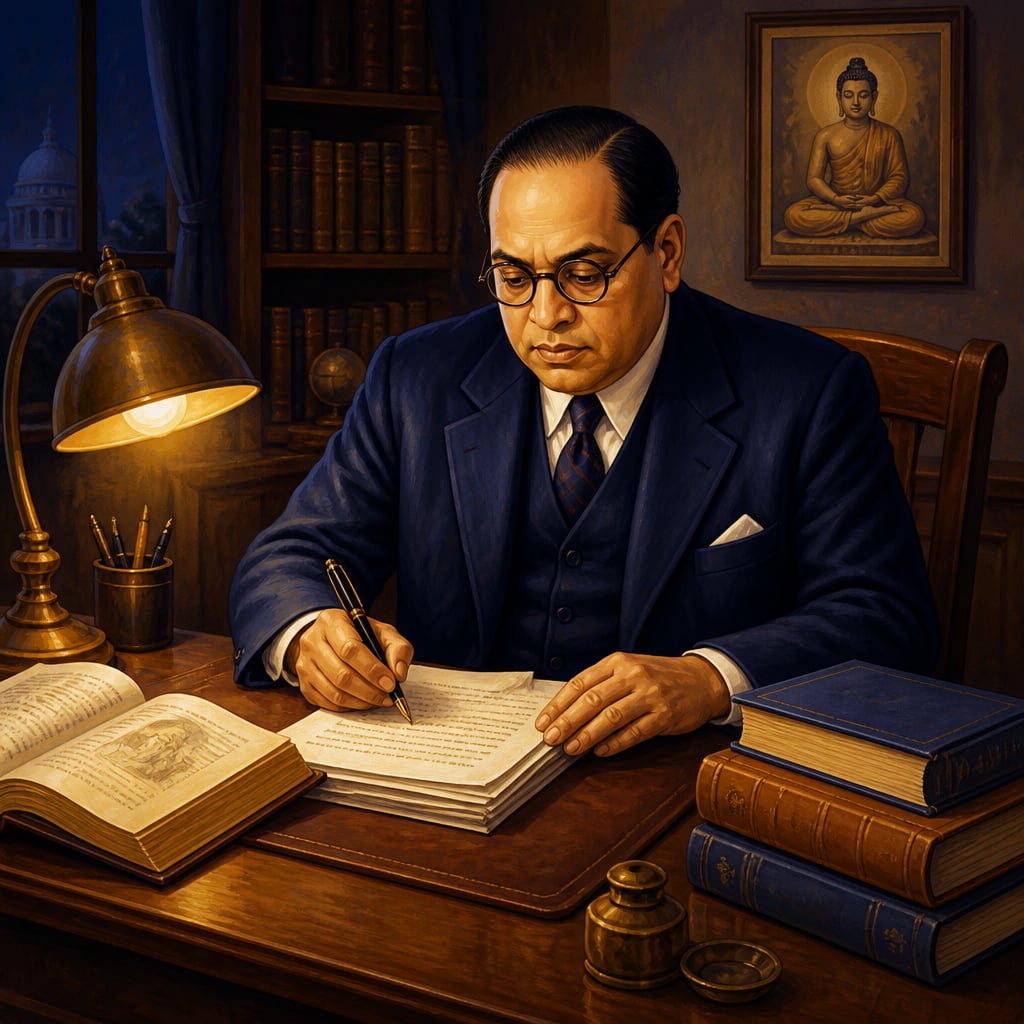
We've traveled a long road through this chapter. We've compared Kautilya to:
- Machiavelli - finding shared realism but different moral frameworks
- Hobbes - finding shared concern with order but different solutions
- Locke - finding shared emphasis on property and limits, reached through different paths
- Smith - finding shared understanding of markets and wealth creation
And we've identified what makes Kautilya unique - his dharmic integration of realism with ethics.
Now we can ask the deepest question: What do both traditions teach us about good governance?
When thinkers separated by millennia and continents reach similar conclusions, those conclusions deserve special attention. They may reflect universal truths about human nature and political organization.
Seven Universal Principles
From our comparative study, seven principles emerge that both Eastern (Kautilyan) and Western (Enlightenment) traditions affirm:
1. Power Must Be Limited
No one - not even the wisest ruler - should have unlimited power.
Kautilya: The king is bound by dharma, constrained by councils, accountable for results. "Counsel is the foundation of the kingdom."
Western: Montesquieu's separation of powers, Madison's checks and balances, constitutionalism.
The universal insight: Concentrated power corrupts. Even good people make bad decisions when unchecked. Institutional constraints protect against both tyranny and error.
2. Property Rights Enable Freedom
Secure property is foundational to economic and political liberty.
Kautilya: Detailed property law, contract enforcement, taxation limits. "The gardener gathers fruits without harming the tree."
Western: Locke's natural rights, Smith's prerequisites for markets, modern property rights indices.
The universal insight: People won't invest in improvement if others can take the results. Property security creates the incentives that drive prosperity.
3. Trade Creates Wealth
Exchange and specialization make everyone richer.
Kautilya: "Trade, agriculture, and animal husbandry cause the growth of the kingdom." Welcome foreign merchants.
Western: Smith's invisible hand, Ricardo's comparative advantage, modern globalization.
The universal insight: Wealth isn't a fixed quantity to be redistributed but something created through productive activity. Win-win exchange is possible.
4. Leaders Must Serve the Led
Legitimate authority serves those subject to it.
Kautilya: "In the happiness of his subjects lies the king's happiness." Performance legitimizes.
Western: Social contract theory, democratic accountability, consent of the governed.
The universal insight: Authority without service becomes exploitation. Rulers who harm their people are illegitimate, regardless of how they came to power.

5. Laws Must Apply to Rulers Too
No one is above the law.
Kautilya: The king is bound by dharma. Courts apply law independently. Even the sovereign has duties.
Western: Rule of law, constitutional limits, "a government of laws, not men."
The universal insight: When rulers exempt themselves from rules, those rules become tools of oppression rather than frameworks for justice.
6. Order Requires Authority
Some coercive power is necessary to prevent chaos.
Kautilya: Matsya nyaya (law of the fish) describes what happens without governance. Danda (authority) protects.
Western: Hobbes's state of nature, the need for government, police power.
The universal insight: Anarchy isn't freedom - it's the strong preying on the weak. Government, for all its dangers, is necessary.
7. Taxation Must Be Sustainable
Governments that take too much destroy their own foundation.
Kautilya: The gardener metaphor, one-sixth as baseline, sustainable extraction.
Western: Smith's tax principles, Laffer Curve, limits on state extraction.
The universal insight: The relationship between taxation and prosperity isn't linear. Beyond some point, more taxation means less revenue as productive activity declines.
Why the Convergence Matters
These seven principles weren't borrowed. Kautilya didn't read Locke; Locke didn't read Kautilya. They arrived at similar insights through independent reasoning about the same human problems.
This convergence suggests these aren't arbitrary cultural preferences but discoveries - truths about political organization that any civilization will eventually recognize if it thinks carefully enough.
For those who think liberal principles are "Western impositions": Kautilya shows that limited government, property rights, and rule of law have deep Indian roots.
For those who think only the West invented good governance: The Arthashastra demonstrates sophisticated political theory in ancient India, predating Western equivalents by centuries.
For everyone: When East and West agree, pay attention. These may be truths about human nature rather than cultural accidents.
The Differences That Remain
Convergence doesn't mean identity. Important differences persist:
Framework: Kautilya grounds governance in dharma; Western thought often relies on secular reason or natural rights.
Integration: Kautilya synthesizes ethics and effectiveness; Western thought often separates them.
Comprehensiveness: The Arthashastra covers everything; Western works tend toward specialization.
Spiritual dimension: Kautilya connects governance to moksha; Western political philosophy is largely secular.
These differences matter. They create distinct flavors of good governance - both valid, both incomplete, both with something to teach.
A Synthesis for Today
What might a true synthesis look like - drawing on the best of both traditions?
From Kautilya and the Eastern tradition:
- Integration of ethics and effectiveness (trivarga)
- Contextual application of principles (svadharma)
- Personal discipline as leadership prerequisite (vinaya)
- Spiritual grounding of political duty
- Comprehensive, systematic thinking
From Western Enlightenment tradition:
- Clear articulation of individual rights
- Democratic mechanisms for accountability
- Scientific analysis of political systems
- Transparency and public reason
- Protection of minority interests
The best modern governance would combine:
- Western clarity about rights with Eastern integration of duties
- Western institutional design with Eastern emphasis on character
- Western democratic mechanisms with Eastern respect for wisdom
- Western secularism's neutrality with Eastern spirituality's depth
The Free and Flourishing Society
Both traditions ultimately point toward the same destination: a society where people can flourish.
For Kautilya, this meant:
- Protection from the matsya nyaya chaos of anarchy
- Secure property enabling economic activity
- Fair taxation leaving resources for growth
- Dharmic rule serving the people's welfare
- Conditions enabling pursuit of moksha
For the Western tradition, this meant:
- Protection of natural rights
- Consent-based government
- Free markets enabling prosperity
- Rule of law constraining power
- Liberty to pursue individual happiness
Different languages, different frameworks - but recognizably the same goals.

Your Turn: Living the Synthesis
You don't have to choose between traditions. You can draw on both.
From Kautilya, take:
- The integration of effectiveness and ethics
- The discipline that underlies achievement
- The recognition that your role carries duties
- The understanding that governance serves spiritual as well as material ends
From the Western tradition, take:
- Clarity about your rights and others'
- Commitment to democratic participation
- Willingness to question authority
- Insistence on transparency and accountability
The synthesis happens in practice, not just theory. Every time you act with both effectiveness and ethics, you embody it. Every time you exercise rights while fulfilling duties, you live it.
The Continuing Conversation
Political philosophy isn't finished. Kautilya and Locke and Smith didn't solve everything. New challenges emerge:
- How should we govern artificial intelligence?
- What are the limits of surveillance in security's name?
- How do we handle global problems with nation-state frameworks?
- What do property rights mean in digital spaces?
Both traditions offer tools for these questions, but neither has ready answers. The synthesis continues.
You are part of this conversation. Your generation will face problems neither Kautilya nor Madison imagined. You'll need both traditions - and new thinking beyond either.
Conclusion: Wisdom Without Borders
As we end this chapter comparing Kautilya with Western thought, the deepest lesson may be this:
Wisdom has no borders.
The insights that enable human flourishing - limited power, secure property, free exchange, servant leadership, rule of law, necessary authority, sustainable taxation - these belong to no single civilization.
They're human discoveries, reached by different peoples through different paths, pointing toward the same truths.
Kautilya belongs to India, but his wisdom belongs to humanity. Locke belongs to England, but his insights belong to everyone. The conversation between them enriches us all.
In that spirit, we've studied both. In that spirit, we go forward - drawing on the best of all traditions in pursuit of the free and flourishing society that both East and West have sought.
The Enlightenment itself drew on Greek, Roman, Hebrew, Christian, and empirical scientific traditions. Great intellectual achievements often synthesize multiple sources.
Kautilya himself synthesized multiple Indian traditions - Vedic, Dharmashastra, earlier Arthashastra literature. The Arthashastra's comprehensiveness reflects inclusive synthesis.
The American Constitution combined British common law, Roman republicanism, Enlightenment philosophy, and practical colonial experience. Synthesis produced something stronger than any single source.
Aristotle's phronesis (practical wisdom) involves applying general principles to particular situations. Both traditions recognize that principles require judgment in application.
Kautilya's concept of svadharma (one's own duty based on role) provides a framework for contextual application. What is dharmic varies by who you are and what situation you face.
The US Constitution states universal principles, but courts must apply them to specific cases. Roe v. Wade and Brown v. Board demonstrate how principles meet context. Application requires judgment.
Western political philosophy has evolved through dialogue - Locke responding to Hobbes, Mill responding to earlier liberalism, Rawls responding to utilitarianism. The conversation never ends.
The Indian tradition explicitly acknowledges that dharma is contextual - what's right varies by era (yuga dharma). This builds in the expectation that principles need re-application for new times.
The American founding was itself a continuation of political philosophy - applying and adapting Enlightenment ideas. The Constitution's amendment process acknowledges that even founding documents must evolve.
Verses
प्रजासुखे सुखं राज्ञः प्रजानां च हिते हितम्
prajā-sukhe sukhaṃ rājñaḥ prajānāṃ ca hite hitam
In the happiness of his subjects lies the king's happiness; in their welfare, his welfare.
This sutra captures the universal principle that legitimate authority serves those it governs. Both Eastern dharmic traditions and Western social contract theory converge on this insight: rulers must serve the ruled.
Book 1, Chapter 19, Verse 34 (R.P. Kangle)
मात्स्यन्यायो अभिभवः
mātsya-nyāyo abhibhavaḥ
The law of the fish is destruction (the strong devour the weak).
This sutra names what government exists to prevent - the chaotic condition where might makes right. Both Kautilya and Hobbes recognized this danger.
Book 1, Chapter 4, Verse 13-14 (L.N. Rangarajan)
धर्मार्थाविरोधेन कामस्य उपभोगः
dharmārthāvirodhena kāmasya upabhogaḥ
Enjoyment of pleasure should not conflict with dharma and artha.
The trivarga principle captures the Eastern contribution to the synthesis: integration rather than separation. Pursue success, but within ethical bounds.
Book 1, Chapter 7, Verse 5-7 (R. Shamasastry)
Case studies
India's Constitution: A Living Synthesis
India's constitution-makers (1947-1950) faced a unique challenge: creating a democratic framework for a civilization with ancient governance traditions while incorporating the best of Western constitutional thought. They produced a document that combines British parliamentary structure, American judicial review, and Indian principles like Fundamental Duties.
The Indian Constitution embodies Kautilyan synthesis. It doesn't abandon Indian tradition for Western imports, nor does it reject Western innovations. The Directive Principles (reflecting dharmic duty to citizen welfare) complement Fundamental Rights (reflecting Western individual liberty). This is samanvaya in action.
The Indian Constitution has governed the world's largest democracy for over seven decades, surviving challenges that destroyed other post-colonial constitutions. Its synthesis of traditions has proved more robust than either tradition alone might have been.
Real synthesis is possible and produces something stronger than either source. India's constitution-makers showed that Eastern and Western political thought can be combined into a functioning whole. The synthesis isn't just academic - it governs a billion people.
The African Union's Agenda 2063 represents a similar attempt to synthesize indigenous governance traditions with modern democratic frameworks. Across the developing world, nations are increasingly seeking to build institutions that reflect their own civilizational values rather than importing governance models wholesale from the West.
India's Constituent Assembly had 299 members representing diverse regions, religions, and castes. They debated 7,635 amendments to produce a constitution with 395 articles and 8 schedules, adopted on November 26, 1949.
Historical context
Synthesis across eras
India's post-independence constitution drew on both Western constitutional thought and Indian dharmic traditions. This synthesis continues in contemporary debates about governance, rights, and duties in India.
In a globalized world, we need governance frameworks that draw on humanity's full wisdom. Neither Western nor Eastern thought alone is sufficient. The synthesis this chapter models is a template for global political wisdom.
Living traditions
The synthesis of Eastern and Western political thought is happening now - in international institutions, in comparative scholarship, in countries like India that consciously draw on both traditions. This chapter provides tools for participating in that ongoing synthesis intelligently.
- Comparative Political Philosophy: Academic field that studies political thought across civilizations, identifying both unique contributions and universal insights
- United Nations Headquarters: The institution that attempts to embody universal principles of governance, drawing on all the world's traditions to create shared frameworks.
- Parliament of India: India's parliament building, where Eastern and Western political traditions meet in daily practice as the world's largest democracy governs itself.
Reflection
- Think about the governance institutions in your life (school, workplace, country). What elements seem to reflect Eastern traditions? Western traditions? A synthesis of both?
- Why might some truths about governance be universal - discovered independently by different civilizations? What does this tell us about human nature?
- This chapter suggests that wisdom transcends cultural boundaries. But some argue that values are culturally relative. How do you reconcile universal principles with cultural diversity?