Workplace and Professional Life

Excellence through svadharma

Professional success for tritiya prakriti individuals comes not from identity politics or workplace activism but from excellence in svadharma, finding work aligned with one's nature and performing it with mastery. This lesson explores how to navigate modern professional environments through dharmic principles: competence over identity, contribution over demands, and the quiet dignity of work well done. The dharmic approach offers what Western workplace identity politics cannot, sustainable success based on value created rather than categories claimed.

The Dharmic Approach to Work

Svadharma: Work Aligned with Nature

Krishna's teaching on svadharma, one's own duty aligned with one's nature, applies directly to professional life. The question is not "What identity protections does my workplace offer?" but "What work allows me to contribute according to my nature and abilities?"

This is a fundamental shift from the Western approach that increasingly views the workplace through the lens of identity categories and power dynamics.

The Western Workplace: Identity Over Excellence

Western corporations have increasingly adopted identity frameworks:

This approach positions tritiya prakriti individuals as members of a protected category rather than professionals with skills to offer. It defines their workplace identity through their gender status rather than their contributions.

The result? Work becomes another arena of identity politics. Relationships with colleagues are filtered through identity lenses. Professional reputation gets tangled with identity activism. And for some, career advancement depends more on category than competence.

The Dharmic Alternative: Excellence as Identity

The dharmic approach is refreshingly simple: your professional reputation should be based on what you do, not what category you belong to.

Consider traditional dharmic society. Tritiya prakriti individuals worked in courts, temples, households, and markets. Their work was evaluated like anyone else's, by results. A hijra court official was valued for discretion and administrative skill. A tritiya prakriti artisan was valued for craftsmanship. A performer was valued for artistic excellence.
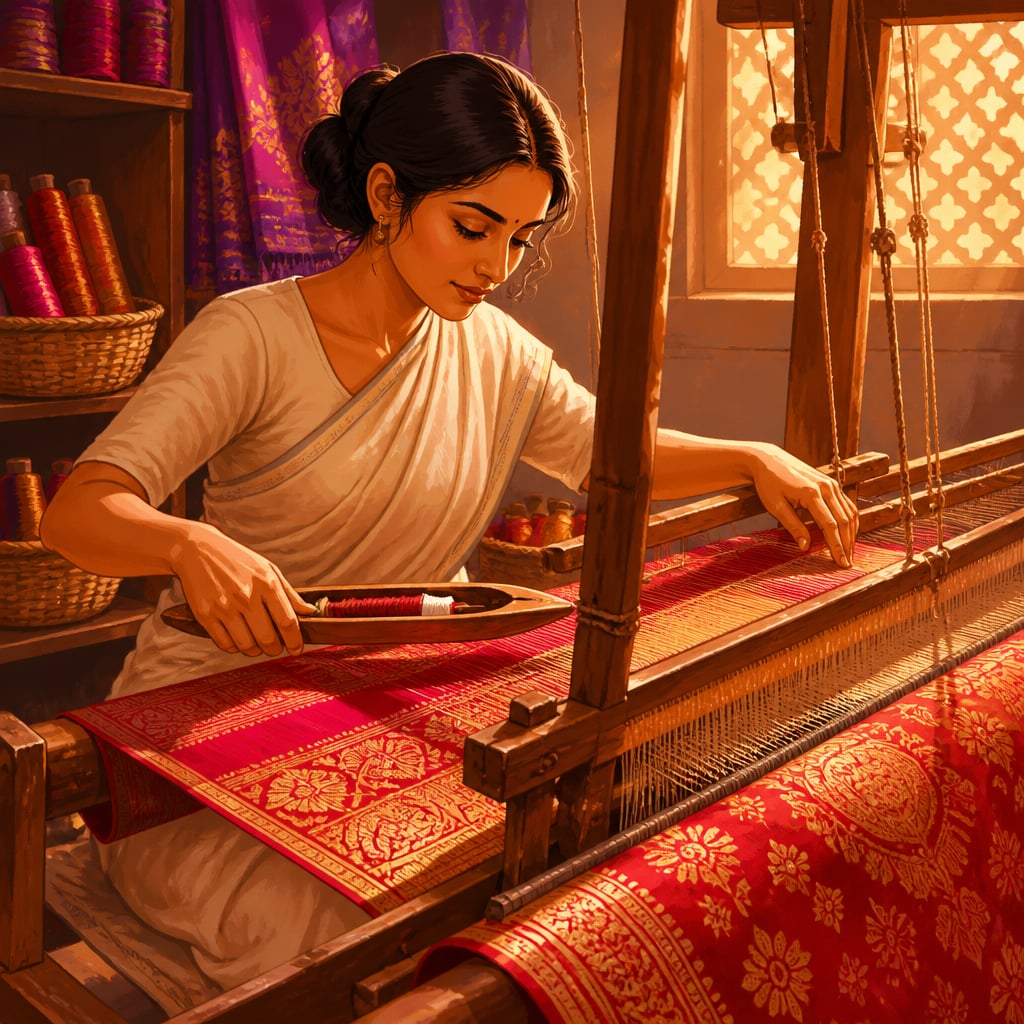
Tritiya prakriti silk weaver at a pit loom in Banaras

Identity was known but not the primary metric. Contribution was.


Finding Your Svadharma

What Work Suits Your Nature?

Svadharma means finding work where your particular nature, including but not limited to your gender expression, can be an asset rather than an issue to be managed.

Traditional roles for tritiya prakriti individuals included:

Modern equivalents might include:

The principle: find work where you can excel based on your nature and abilities, where your contributions speak louder than your categories.

The Dignity of Competence

There is profound dignity in being valued for what you can do. The Western identity model, paradoxically, can undermine this dignity by emphasizing category over capability.

When a tritiya prakriti individual is hired primarily to fill a diversity metric, or advanced to provide representation, their genuine competence is shadowed by the suspicion (their own and others') that identity played a role. This is not empowering, it's diminishing.

The dharmic approach restores dignity: you are here because you're good at what you do. Your nature is part of who you are, but your value comes from your contribution.


Navigating the Modern Workplace

A modern tritiya prakriti designer focused on excellent creative work

For Tritiya Prakriti Professionals

Lead with Competence

Let your work speak first. Build a reputation based on skills, reliability, and results. When colleagues think of you, the first association should be professional excellence, "the one who delivers quality work", not identity category.

This doesn't mean hiding who you are. It means not making identity the primary frame. You can be openly tritiya prakriti while being known primarily as an excellent engineer, creative designer, or effective manager.

Navigate Identity Politics Carefully

Western workplaces often pressure employees into identity activism:

You can choose how much to engage. The dharmic principle: participate in what aligns with your values, decline what doesn't, and never let identity activism become a substitute for professional contribution.

Handle Challenges with Dignity

Yes, challenges may occur, awkward questions, occasional discomfort, perhaps discrimination. The dharmic response:

Build Real Relationships

The best professional relationships transcend identity categories. Invest in colleagues as individuals, not as allies in identity struggles. Be known as someone who collaborates well, mentors juniors, and contributes to team success.

For Employers and Managers

Merit First, Always

Hire, evaluate, and promote based on competence and contribution. A tritiya prakriti employee should succeed or fail based on the same criteria as everyone else. This is respect, treating them as a professional, not a category.

Avoid Tokenism

Including tritiya prakriti individuals specifically for diversity metrics, or spotlighting them for their identity, is demeaning. Neither exclude based on identity nor include based solely on identity. Let competence determine outcomes.

Create Space Without Drama

A professional environment can accommodate gender diversity without making it the constant focus. Quietly inclusive is better than loudly celebratory. Most tritiya prakriti professionals want to do their work well, not be the center of identity conversations.

Handle Concerns Proportionately

If workplace issues arise involving a tritiya prakriti employee, address them as you would any other personnel matter. Neither minimize concerns because of identity politics nor amplify them for the same reason. Professional standards apply to everyone equally.


What the Dharmic Tradition Teaches

Work as Offering

The Gita teaches that work performed as an offering, without attachment to fruits, dedicated to something higher, becomes a spiritual practice. This transforms the workplace from a battleground of identity to a field of seva.

"Yat karoṣi yad aśnāsi yaj juhoṣi dadāsi yat", Whatever you do, whatever you eat, whatever you offer, whatever you give...

Work becomes worship when performed with the right attitude. This liberates from the exhausting dynamics of workplace identity politics.

A master sculptor teaching a young apprentice in a temple workshop

The Artisan Model

Traditional dharmic society valued craftspeople who mastered their work. The sculptor, the weaver, the musician, their identity was their craft. A tritiya prakriti artisan was known for their art, not their gender category.

This model remains relevant: become known for your craft. Master your field. Let your professional identity be your excellence, not your category.

Varna and Svadharma

The varna system, at its best, recognized that different people have different natural inclinations and should find work accordingly. This is not hierarchy but ecology, different functions contributing to whole.

For tritiya prakriti individuals, this means: find where your particular nature can contribute most effectively. Don't force yourself into roles that don't fit; don't limit yourself to stereotyped categories either. Discover your svadharma through experimentation and self-knowledge.


The Western Workplace's Failures

When DEI Becomes Ideology

Western Diversity, Equity, and Inclusion (DEI) initiatives have increasingly moved from reasonable accommodation to ideological enforcement:

The result is not genuine inclusion but ideological conformity. Tritiya prakriti individuals become either tokens of the ideology or, if they don't conform to activist expectations, unexpected dissidents.

The Exhaustion of Workplace Activism

When the workplace becomes another front in culture wars, everyone loses:

The dharmic workplace is calmer: people do their work, treat each other with respect, and leave identity politics at the door.

Case Study: When Ideology Backfires

A major Western corporation (anonymized composite) implemented aggressive gender identity policies: mandatory pronoun training, new restroom designations, public celebrations of gender diversity. Some tritiya prakriti employees felt showcased rather than supported. Some colleagues felt coerced into affirming beliefs they didn't hold. Workplace surveys showed declining trust across all groups. The company discovered that ideological imposition, even with good intentions, creates friction rather than harmony.

The dharmic approach would be simpler: treat everyone with respect, evaluate everyone by performance, and don't require ideological conformity from anyone.


Practical Guidance

For the Diaspora Professional

Indians working in Western corporations face particular challenges. The dominant framework is Western LGBTQ identity politics. How do you maintain dharmic grounding?

Know Your Rights, and Limits

Understand what's actually required versus what's culturally pressured. You may need to attend mandatory training; you don't need to become an activist. You should be professionally respectful; you don't need to adopt Western ideology.

Frame Differently

When conversations arise, offer dharmic perspective:

"In my culture, we've recognized gender diversity for thousands of years, not as a recent discovery but as part of natural variation. We don't see it through the victim-oppressor lens that's common here."

This offers an alternative without confrontation.

Connect with Dharmic Community

Maintain connections with other dharmic professionals navigating similar dynamics. Hindu professional networks, temple communities, and diaspora organizations can provide grounding when the workplace offers only Western frameworks.

Excel Professionally

The best protection is being too good to ignore. When your competence is undeniable, your participation in workplace identity politics becomes less scrutinized. Build excellence first; the rest becomes easier.

For Indian Workplaces

Indian corporations sometimes uncritically import Western HR frameworks, including DEI programs that may not fit Indian context. Consider:

Traditional Recognition Already Exists

Dharmic civilization recognized tritiya prakriti for millennia. Modern Indian workplaces don't need Western LGBTQ frameworks, they can draw on their own tradition of integration through role and contribution.

Avoid Western Pathologies

Mandatory pronoun training, identity-based affinity groups, diversity metrics, these Western imports often create the very tensions they claim to address. A simpler approach: hire and evaluate based on merit, treat everyone with respect, address genuine mistreatment when it occurs.

Model Dharmic Workplace Culture

Show the world an alternative: workplaces where tritiya prakriti individuals are neither marginalized nor tokenized, but simply colleagues contributing according to their abilities.


Building a Dharmic Career

Long-Term Perspective

A career is built over decades. Identity politics is ephemeral, today's required positions become tomorrow's embarrassments. Build on permanent foundations:

Work as Sadhana

The highest dharmic teaching on work: it can be spiritual practice. When you approach work as an offering, performing your duties with excellence, without attachment to results, dedicated to dharma, the workplace becomes a field of practice rather than a battlefield of identity.

This perspective liberates. The politics become less important when your focus is on right action rather than right outcomes.

Finding Your Place

Every individual, including every tritiya prakriti individual, has a place where their particular nature can contribute most effectively. Finding this place may take time and experimentation.

The dharmic approach: observe your svabhava, try different work, notice where you flourish, and gravitate toward work that aligns with your nature. Don't force yourself into categories, either traditional stereotypes or Western identity boxes. Discover your own svadharma.


Conclusion: Excellence as Liberation

The Western workplace has become a site of identity struggle. For tritiya prakriti individuals caught in this dynamic, it can be exhausting, always navigating politics, managing perceptions, participating in required activism.

The dharmic approach offers liberation through simplicity: do excellent work. Let your contribution define you. Build reputation through competence. Treat colleagues as individuals. Navigate politics minimally. Find work aligned with your nature.

This is not asking you to hide or suppress who you are. It's asking you to be known for more than your category, for skills, for character, for the value you create.

The tritiya prakriti artisan whose work was treasured, the court official whose discretion was legendary, the performer whose art moved audiences, these were professionals whose identity included their gender nature but wasn't limited to it.

You can be the same: a professional who happens to be tritiya prakriti, known primarily for what you contribute, respected for the excellence you bring.

As the Gita teaches: focus on the work, not the fruits. Do your dharma with excellence. Let the reputation take care of itself.

Case studies

The Varanasi Silk Weaver: Excellence as Identity

In Varanasi's traditional silk weaving community, a weaver known as Meera (anonymized composite) learned the craft from family and established a reputation for exceptional Banarasi sarees. Meera's tritiya prakriti nature was known in the community but rarely discussed, what mattered was the quality of the work. Over three decades, Meera became one of the most sought-after weavers in the city, with customers from across India. The identity was known; the reputation was built on craft. When asked about navigating life as tritiya prakriti in a traditional profession, Meera's response was simple: 'My looms speak for me. The silk doesn't care who weaves it, only that it's woven well.'

Meera's story exemplifies the dharmic approach to work: svadharma expressed through shilpa (craft). The tritiya prakriti nature was one aspect of Meera's identity; the primary identity was weaver, shilpkar. Traditional craft communities in India have often been quietly accommodating of gender diversity, focusing on skill transmission and quality rather than identity categories. Meera found a svadharma, work that aligned with available opportunity, learned ability, and personal nature, and pursued it with excellence. The community integrated Meera through contribution: someone who produces beautiful silk is a valuable community member, period.

Meera trained several apprentices, preserving traditional techniques that might otherwise have been lost. The workshop continues to produce some of Varanasi's finest silk. Meera's tritiya prakriti nature became a footnote in a story about artistic excellence. No identity activism was required; no workplace policies were demanded. Excellence itself created integration. When younger tritiya prakriti individuals approached Meera for guidance, the advice was consistent: 'Master something. Be so good they have to include you. Your hands' work speaks louder than any demand for acceptance.'

The dharmic model of professional integration: let excellence speak. Meera didn't demand accommodation or campaign for inclusion, the quality of the work created a place. This is sustainable integration: based on value created, not on identity claimed. It doesn't require constant activism, doesn't depend on political climate, and creates genuine respect rather than reluctant compliance.

India's handicraft and artisan communities continue to demonstrate this principle. In Jaipur's gem-cutting workshops, Moradabad's brass industry, and Kanchipuram's silk weaving, individual identity matters less than the quality of work produced. These ecosystems integrate diverse individuals through skill and output, creating a model of professional inclusion that requires no corporate diversity programs or HR mandates.

Traditional Indian craft communities often show quiet integration of gender diversity, with skill transmission and product quality taking precedence over identity categories. This represents centuries of organic accommodation without formalized policies.

When DEI Becomes Coercion: The Corporate Compliance Trap

A major Western technology company (composite based on documented patterns) implemented comprehensive gender identity policies: mandatory pronoun declaration in email signatures, required attendance at gender identity training, HR investigations for 'misgendering,' and public celebrations of gender diversity. Employees who privately disagreed faced career consequences. One engineer, who held traditional religious views, was terminated after declining to use a colleague's newly declared pronouns, despite otherwise excellent performance. A manager was reassigned after raising concerns that the training content contradicted her beliefs. Several employees reported that the constant focus on identity created workplace tension that hadn't existed before. Even some trans-identified employees felt uncomfortable being spotlighted rather than simply doing their jobs.

The dharmic approach would look entirely different. Instead of mandating ideological conformity, it would focus on professional conduct: treat everyone with respect, evaluate by performance, address actual mistreatment if it occurs. Pronouns, names, and personal beliefs would be matters of individual choice, not corporate mandate. The workplace would be for work, not for ideological training. Gender-diverse employees would be neither marginalized nor spotlighted, simply colleagues contributing their skills. This simpler approach creates less friction because it doesn't demand belief, only behavior. People can hold different views while still working together professionally.

The company faced multiple lawsuits from employees claiming religious discrimination and hostile work environment. Internal surveys showed declining trust and collaboration across teams. Some high-performing employees left rather than participate in what they saw as ideological coercion. The company's goal of inclusive workplace had backfired, creating new divisions while enforcing conformity. The trans employees it intended to support often felt tokenized rather than genuinely included. A policy designed to reduce conflict had increased it.

Ideological enforcement creates the very tensions it claims to address. When workplaces mandate particular beliefs about gender, rather than simply requiring professional conduct, they create conflict. The dharmic approach is simpler and more effective: focus on work, treat people with respect, don't police thoughts or beliefs, address actual mistreatment when it occurs. This creates space for genuine diversity, including diversity of belief, rather than enforced conformity.

The corporate DEI backlash that accelerated in 2023-2025, with major companies scaling back mandatory training programs, reflects the limits of compliance-based inclusion. Organizations that shifted toward 'professional conduct standards' rather than 'belief mandates' reported less internal conflict and, paradoxically, more genuine cross-group collaboration. The dharmic formula of respect-based interaction without thought policing turns out to be more effective than ideological enforcement.

Studies show that mandatory diversity training often backfires, creating resentment and reducing rather than increasing positive attitudes. Voluntary approaches and focus on professional conduct typically produce better outcomes than ideological mandates.

Living traditions

Traditional Indian industries, textiles, jewelry, metalwork, crafts, continue to show organic integration of gender-diverse individuals through skill and contribution. This model, developed over centuries, offers an alternative to Western DEI frameworks: accommodation through excellence rather than accommodation through ideology.

Reflection

More in Living Well in Society

All lessons in Living Well in Society · Tritiya Prakriti: A Family's Dharmic Guide course