Santoshavrata: Contentment
Being happy with what you have
Two tales teaching the value of contentment. The Golden Mangoes shows how wanting more leads to losing what you have, while More Trouble Than Wealth demonstrates that riches often bring more problems than happiness.
The Golden Mangoes
A poor farmer named Ramu lived at the edge of a forest. He had a small hut, one cow, and just enough food to get by. But Ramu was happy. He whistled while he worked and slept peacefully every night.
One morning, a beautiful white goose flew down from the sky and landed in Ramu's garden.
"Good morning, friend goose!" Ramu said cheerfully. "Are you lost?"
The goose honked and laid an egg right there in the garden. But this was no ordinary egg, it was a perfect, shining golden mango!
Ramu's eyes went wide. "This... this is solid gold!"
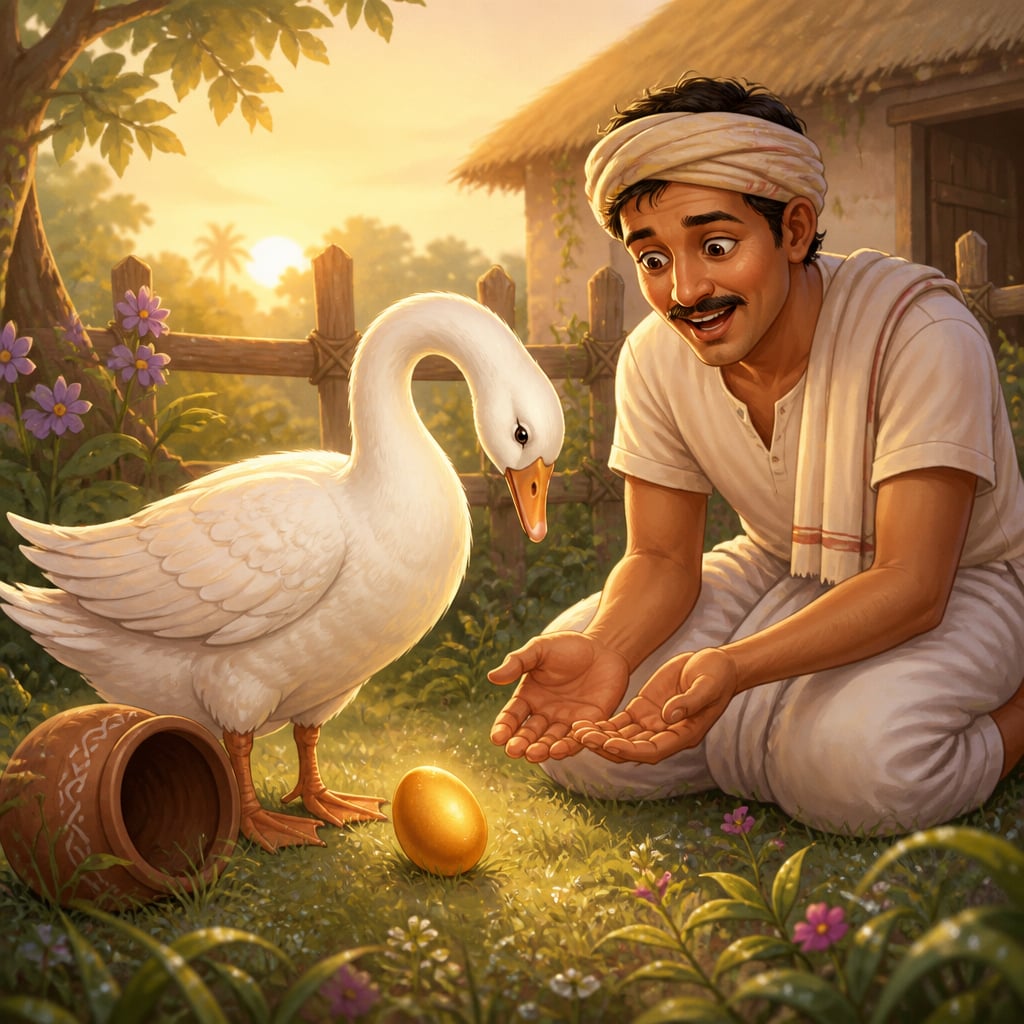
The goose returned every morning and laid another golden mango. Ramu was careful at first. He sold one mango and bought better food. He sold another and fixed his leaky roof. Life was good.
But slowly, something changed inside Ramu.
"One mango a day," he muttered. "It's not enough. If I could find where this goose comes from, I could have ALL the golden mangoes!"
He started following the goose when it flew away. He searched the forest for days. He stopped working in his field. He stopped caring for his cow. All he could think about was MORE.
One day, as the goose was about to lay its mango, Ramu grabbed it.
"Tell me where you come from!" he demanded. "I want to find the golden tree!"
The goose looked at him with sad eyes. Then it spread its wings and flew away, and never came back.

Ramu searched for years. He never found the golden tree. And he never saw the magical goose again.
More Trouble Than Wealth
In the same village lived a cobbler named Sundaram. He fixed shoes all day, earned a few coins, and sang songs while he worked. His neighbor was a rich merchant who couldn't sleep.
"That cobbler's singing is driving me crazy!" the merchant grumbled. "How can someone so poor be so happy?"
One day, the merchant had an idea. He walked over to Sundaram's shop and dropped a heavy bag on the table.
"Here," he said. "One thousand gold coins. A gift."
Sundaram was shocked. "For me? Why?"
"Just take it," the merchant said with a strange smile.
That night, Sundaram couldn't sleep. Where should he hide the gold? Under the bed? No, too obvious. In the garden? What if it rained? He stayed awake all night, worrying.
The next day, he couldn't focus on work. Every customer who walked in made him nervous. Are they looking at me strangely? Do they know about the gold?
Days passed. Sundaram stopped singing. He became thin and pale. He snapped at his wife and ignored his friends.
One morning, he looked at himself in the mirror and didn't recognize the worried face staring back.
"What has happened to me?" he whispered.

He picked up the bag of gold, walked to the merchant's house, and dropped it at his door.
"Keep your money," he said. "I want my happiness back."
That night, Sundaram slept like a baby. And the next morning, he was singing again.
The Wisdom
Tenali often shared these two stories together, because they teach the same lesson from different angles.
The farmer had enough, but he didn't know it. He chased after more and lost everything. The cobbler knew exactly what made him happy, and when gold threatened that happiness, he was wise enough to let it go.
Contentment isn't about having nothing. It's about knowing what's enough for YOU and not letting greed steal your peace.
In Your Life
Have you ever wanted something SO badly, and then when you got it, you immediately wanted something else? That's the trap both stories warn about.
Try this experiment: The next time you want something, pause and ask yourself: "Will this really make me happier? Or will I just want MORE?"
The happiest people aren't the ones who have the most, they're the ones who need the least.
Reflection
- Think of something you really wanted but didn't get. Looking back now, are you glad things turned out the way they did? Why or why not?
- The cobbler was happier being poor than being rich. Why do you think having more money actually made his life worse?
- If contentment means being happy with what you have, does that mean you should never try to improve your life or achieve goals?