Samyama: Self-Control
Mastering impulses brings mastery
Two tales about the power of self-control. The Test of Patience shows how keeping calm leads to victory, while The Angry King demonstrates that impulsive decisions often bring regret.
The Test of Patience
A traveling scholar came to Vijayanagara claiming to be the most learned man in the world.
"I can defeat any scholar in debate!" he boasted. "No one can make me lose my temper. My self-control is perfect."
King Krishnadevaraya was curious. "Tenali, what do you think?"
"Perfect self-control?" Tenali smiled. "Let me test that."
Tenali approached the scholar respectfully. "Great sir, I have a question about grammar."
"Ask," said the scholar proudly.
Tenali asked a simple question. The scholar answered perfectly.
"Thank you, sir. But I didn't quite understand. Could you explain again?"
The scholar explained again, patiently.
"I'm sorry, I'm quite slow. One more time?"
The scholar's eye twitched slightly, but he explained again.
Tenali kept asking the same question. Again. And again. And again.
For three hours.
Each time, Tenali apologized sweetly and asked for "just one more explanation."
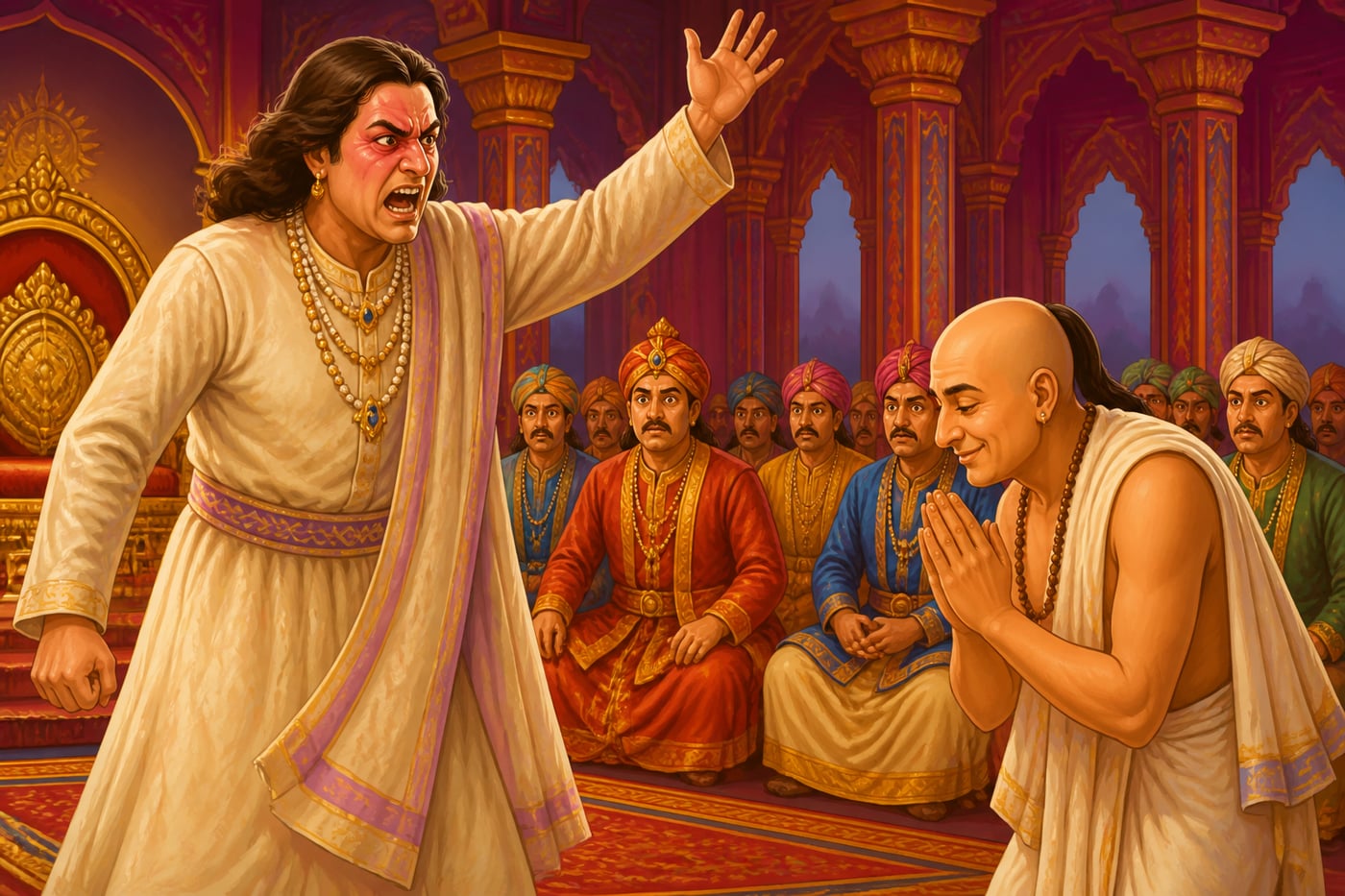
Finally, the scholar exploded.
"ARE YOU AN IDIOT?" he screamed. "I've explained it FIFTY TIMES! A child could understand! What is WRONG with you?!"
The court fell silent.
Tenali bowed. "Thank you, sir. You have proven my point. You claimed perfect self-control, but three hours of mild annoyance broke you. True patience isn't about being patient when it's easy, it's about staying calm when it's hard."
The scholar, embarrassed, had to admit his self-control wasn't as perfect as he'd claimed.
The Angry King
One morning, King Krishnadevaraya woke up in a terrible mood. His breakfast was cold. His robes weren't pressed. Everything annoyed him.
When he entered the court, his favorite parrot squawked loudly.
"SILENCE THAT BIRD!" the king roared.
A servant nervously approached the cage. The frightened parrot flew up, knocking over the cage. The door broke, and the parrot escaped through a window.
The king's anger grew. "Who is responsible for this?!"
Courtiers trembled. The servant who had startled the parrot was brought forward.

"Throw him in the dungeon!" the king ordered.
No one dared speak.
Except Tenali.
"Maharaja," he said quietly, "may I take a walk with you in the garden? The flowers are beautiful today."
Something in Tenali's calm voice reached the king. They walked outside.
In the garden, surrounded by beauty and quiet, the king's anger slowly faded. After an hour, he felt almost normal again.

"Tenali," he said, "I was about to put a man in prison... for scaring a parrot."
"Yes, Maharaja."
"Because my breakfast was cold."
"Yes, Maharaja."
The king was quiet for a long moment.
"I almost ruined a man's life because of cold food and a noisy bird. What kind of king does that?"
"A human one," Tenali said gently. "We all feel anger. The wise person doesn't act on it immediately. They wait. They walk. They let it pass. THEN they decide."
The king ordered the servant released and gave him gold as an apology.
"Today you taught me something important, Tenali. Never make a decision when you're angry. The anger will pass, but the damage will remain."
The Wisdom
Both stories teach that self-control is about what you DON'T do.
The scholar claimed perfect control, but couldn't resist reacting to annoyance. The king's anger almost destroyed an innocent man's life, all because of cold breakfast.
Self-control doesn't mean never feeling angry or frustrated. Those feelings are natural. Self-control means creating a gap between feeling and action, a pause where you can choose how to respond instead of just reacting.
The person who controls themselves controls their life. The person controlled by their emotions is controlled by everything.
In Your Life
Think about the last time you got really angry or upset. Did you say something you regretted? Did you do something you wished you hadn't?
Here's a secret: you can feel angry without acting angry. When strong emotions come:
- PAUSE. Don't speak or act immediately.
- BREATHE. Take three slow, deep breaths.
- WAIT. Give the emotion time to pass.
- THEN CHOOSE. Decide what you actually want to do.
This simple pause can change everything. It turns reaction into choice. It turns impulse into wisdom.
Remember: the goal isn't to never feel upset. The goal is to control what you DO when you feel upset.
Reflection
- Think of a time when you acted out of anger and later regretted it. What would you do differently now?
- Why do you think Tenali took the king on a walk through the garden instead of arguing with him about the unfair punishment?
- Is self-control the same as suppressing emotions? What's the difference between controlling emotions and hiding them?