Prāyaścitta: Restoring Balance
How Vedic wisdom teaches us to heal what we have broken
This lesson explores prāyaścitta, the Vedic path of restoration when ṛta has been disturbed. Rather than punishment or guilt, prāyaścitta offers a systematic approach to acknowledging harm, making amends, and restoring harmony. Through the lens of South Africa's Truth and Reconciliation Commission and traditional Dharmaśāstra practices, we discover that healing is not about erasing the past but consciously reweaving the cosmic order.
The Invitation: Beyond Punishment
When we cause harm, whether to ourselves, others, or the world around us, something in us knows that balance has been disturbed. We feel it as guilt, shame, or a persistent unease. Modern culture offers us two inadequate responses: denial ("it wasn't that bad") or endless self-punishment ("I am irredeemably broken"). But the Vedic ṛṣis charted a different path.

They called it prāyaścitta, a word often mistranslated as "penance" or "atonement" but whose etymology reveals something far more profound. Prāya comes from pra (forward) + i (to go), suggesting movement toward something. Citta means consciousness, mind, intention. Prāyaścitta is thus "forward-moving consciousness", not dwelling in guilt but actively moving toward restoration.
This is revolutionary. The Vedic view doesn't see wrongdoing as a permanent stain on the soul requiring eternal punishment. Instead, it recognizes that actions create consequences (karma), and these consequences disturb the cosmic order (ṛta). Prāyaścitta provides the technology for repairing this disturbance, not erasing what happened, but consciously reweaving the fabric of harmony.
The Journey: Understanding the Wound
Before healing can begin, we must understand what was broken. The Vedic tradition identified different levels at which imbalance can occur. Adhibhautika disturbances affect the physical world, environmental damage, broken relationships, material debts. Adhidaivika disturbances affect cosmic patterns, violations of natural rhythms, disruption of seasonal cycles, interference with ecological flows. Adhyātmika disturbances are internal, the fracturing of one's own consciousness through actions that violate one's deepest values.
Most harmful acts create ripples at all three levels. When a forest is clear-cut for short-term profit, there is physical destruction (trees, soil, habitats), cosmic disruption (water cycles, climate patterns, seasonal markers), and inner damage to those who participated while knowing it was wrong. Authentic prāyaścitta must address all these dimensions.
The ṛṣis understood that restoration cannot be outsourced. No amount of money paid, rituals performed by others, or punishments endured can substitute for the inner work of consciousness transformation. This is why prāyaścitta always includes self-reflection, not as self-torture, but as honest examination of how and why the imbalance occurred.
The Deepening: The Architecture of Restoration
Dharmaśāstra texts outline a sophisticated framework for prāyaścitta that moves through distinct phases. The first is saṃkalpa, conscious acknowledgment. This isn't confession for absolution but unflinching recognition of what occurred and its consequences. The Vedic tradition insisted on precision here: vague guilt helps no one, but clear understanding of specific harm enables targeted healing.
The second phase is tapas, literally "heat" or "intensity." This often gets distorted into ascetic self-punishment, but its true meaning is focused effort. Just as heat transforms raw metal into useful tools, tapas transforms chaotic guilt into purposeful action. The nature of the tapas should relate to the harm caused, if you've depleted something, you work to restore it; if you've hurt someone, you work to heal them.
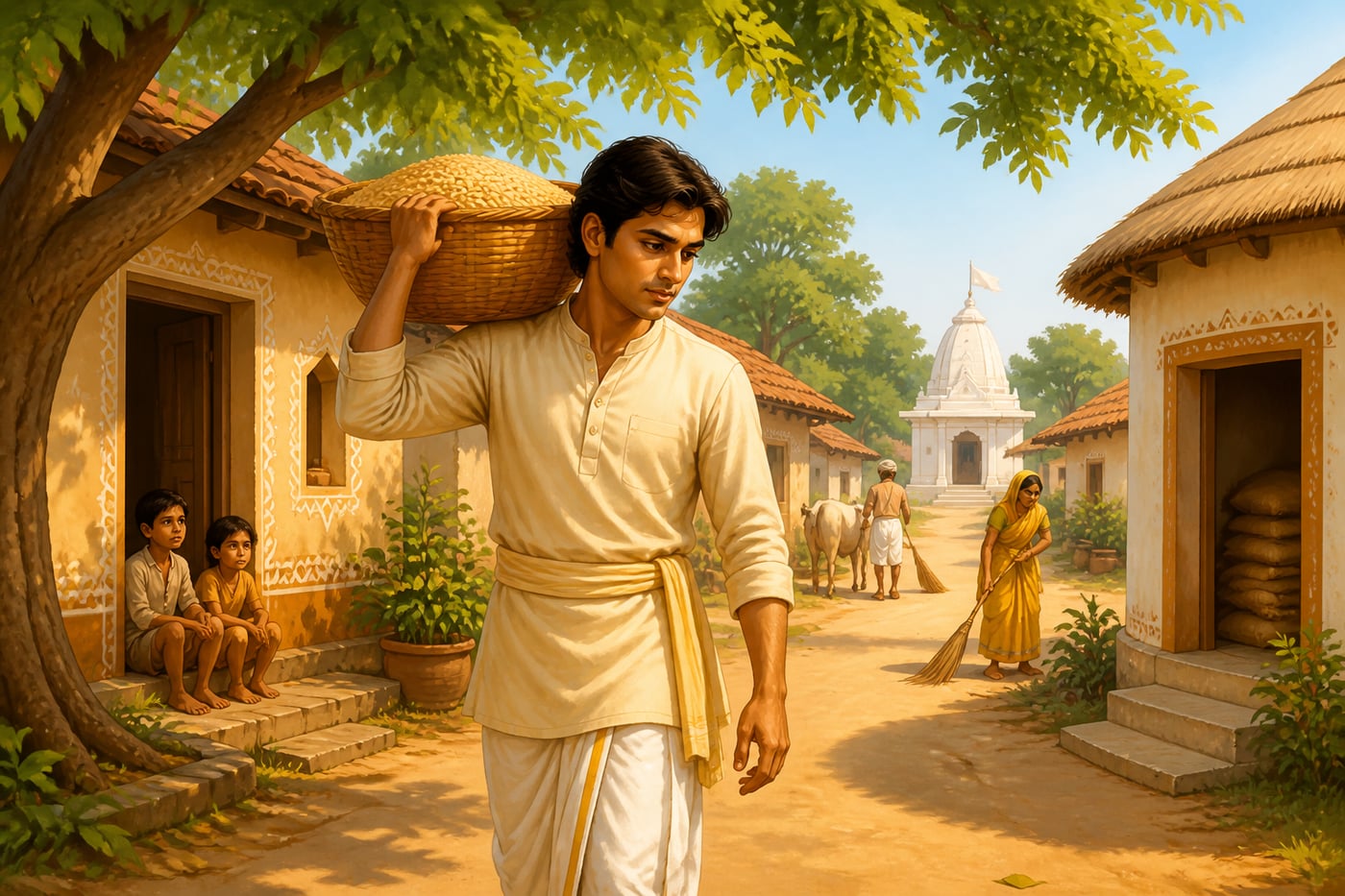
The third phase is dāna, giving. But this is not buying one's way out of consequences. Dāna in prāyaścitta means releasing something precious, loosening the grip of the ego that caused the harm in the first place. What you give should cost you something real, your time, your status, your comfort, not just surplus resources you won't miss.
The fourth phase is japa, repetition of sacred sounds or commitments. This rewrites the mental patterns that led to the harmful action. By repeatedly affirming a new way of being, consciousness gradually reshapes itself. Modern neuroscience confirms what the ṛṣis intuited: repetitive practice literally rewires neural pathways.
The Transformation: From Individual to Collective

While prāyaścitta traditionally focused on individual restoration, the ṛṣis recognized that some imbalances are collective. When an entire community, nation, or civilization has violated ṛta, individual efforts alone cannot restore harmony. This is where Vedic wisdom becomes powerfully relevant today.
Consider the collective karma of industrialized societies: centuries of fossil fuel extraction, colonial exploitation, and ecological destruction have created imbalances too vast for any individual prāyaścitta to address. Yet the principles remain applicable. Collective acknowledgment (truth-telling about historical harms), collective tapas (systemic transformation requiring genuine effort and sacrifice), collective dāna (wealth transfers, reparations, land returns), and collective japa (new cultural narratives, educational transformation) can together reweave the torn fabric of planetary ṛta.
The Vedic insight is that restoration is not about returning to some imagined pristine past. Time moves forward; what's done cannot be undone. Prāyaścitta creates a new order that incorporates the lessons of past harm, a matured harmony richer than original innocence. The person or community that has genuinely passed through prāyaścitta is not the same as one that never erred. They carry wisdom that only comes from having broken something and consciously mended it.
The Integration: Living Restoratively
True prāyaścitta is not a one-time event but a way of living. The mature practitioner develops what we might call restorative consciousness, the constant awareness of how actions affect the web of relationships, and the willingness to immediately address any disturbance caused.
This doesn't mean living in constant anxiety about making mistakes. The Vedic tradition is remarkably compassionate here: to be human is to sometimes fall out of alignment with ṛta. The question is not whether we will cause harm but how quickly and skillfully we respond when we do. Someone with restorative consciousness notices the disturbance almost immediately, acknowledges it without defensiveness, and moves toward healing without excessive self-flagellation.
The goal is not perfection but responsiveness. A river doesn't stop flowing when it encounters an obstacle, it finds a way around, through, or eventually wears the obstacle away. Similarly, consciousness aligned with ṛta doesn't freeze when it encounters its own failures. It flows forward, carrying the lessons, seeking always to restore the harmony that is its deepest nature.
Perhaps the most profound insight of prāyaścitta is that the capacity for restoration exists in every moment. No matter how severe the imbalance, no matter how long the harm has continued, the next moment offers an opportunity to begin moving toward healing. This is not spiritual optimism but cosmic fact: ṛta is always seeking to restore itself, and human consciousness that aligns with this force participates in the self-healing nature of the universe.
The Return: Wholeness Reclaimed
What does it feel like to complete prāyaścitta? The tradition describes it as śuddhi, purity or clarity, but this requires careful understanding. Śuddhi doesn't mean the harm never happened or that its effects magically disappeared. It means that consciousness is no longer fragmented by the event, no longer spending energy on denial, guilt, or avoidance.
There's a quality of lightness that comes from genuine restoration, not the false lightness of suppression but the authentic lightness of having faced something fully and done what could be done. The Vedic texts describe this as being able to "sleep peacefully" and "meet the dawn without dread", simple images that point to a profound inner state.
Most importantly, one who has completed prāyaścitta becomes a resource for others facing similar journeys. Having mapped the territory of harm and healing, they can guide others without judgment. This is why many traditions value teachers who have themselves struggled and restored, they know the path not from theory but from footsteps.
The chapter on balance closes with this teaching: ṛta is resilient. The cosmic order has weathered countless disruptions and restored itself again and again. Human beings, as expressions of this order, carry the same capacity. Our task is not to be perfect but to be responsive, to keep moving forward toward the harmony that is both our source and our destination.
Case studies
South Africa's Truth and Reconciliation Commission: Collective Prāyaścitta at National Scale
After the end of apartheid in 1994, South Africa faced an impossible challenge: how does a nation restore balance after decades of systematic oppression, violence, and injustice? The country had choices ranging from Nuremberg-style prosecutions to blanket amnesty and forced forgetting. Neither seemed adequate.
Chaired by Archbishop Desmond Tutu, the TRC chose a third path that remarkably parallels the Vedic prāyaścitta framework. The first element was saṃkalpa, clear acknowledgment. The Commission created space for both victims and perpetrators to tell their stories publicly. Over 21,000 victim statements were taken; 7,000 perpetrators applied for amnesty. The requirement for amnesty was full disclosure, not justification, not apology necessarily, but complete truth-telling about what was done. The second element was tapas, the intense heat of confronting truth. Hearings were broadcast on national television. South Africans witnessed graphic testimony about torture, murder, and systematic dehumanization. This was not comfortable, it was precisely uncomfortable in ways that cheap reconciliation would have avoided. The heat transformed the nation's relationship with its past from denial to acknowledgment. The process was deeply imperfect. Many felt amnesty provisions denied justice. Reparations were inadequate and slow. Economic structures of apartheid remained largely intact. Critics argued the TRC allowed white South Africa to achieve psychological closure while material conditions for Black South Africans barely changed. These critiques are valid and point to incomplete prāyaścitta, acknowledgment and some tapas, but insufficient dāna (material restoration). The TRC demonstrates both the power and limitations of applying prāyaścitta principles at collective scale. Its emphasis on truth-telling as prerequisite for healing, its creation of space for perpetrator acknowledgment, and its aim of restoration rather than retribution all echo Vedic wisdom. Its shortcomings, particularly in material restoration, show that complete prāyaścitta cannot skip any phase.
The TRC completed its work in 2003, having processed 21,000 victim statements and 7,000 amnesty applications. While the process achieved remarkable truth-telling and some psychological healing, its failure to deliver adequate material reparations left deep unresolved grievances. South Africa's persistent economic inequality demonstrates that acknowledgment without material restoration is incomplete prayashchitta.
• Collective prāyaścitta requires truth-telling before reconciliation, you cannot restore what you won't acknowledge • Public acknowledgment of harm serves a different function than private confession; it changes collective memory and narrative • Incomplete prāyaścitta (especially missing the dāna/material restoration component) leaves the process unfinished and can generate new resentments • The TRC model influenced over 40 subsequent truth commissions worldwide, suggesting universal principles beneath cultural variations
The global reckoning over historical injustices, from Canada's residential school inquiry to Germany's ongoing Holocaust remembrance, follows the same pattern: public truth-telling as a precondition for collective healing. Organizations facing misconduct scandals (like the Catholic Church or corporate fraud cases) that skip the truth-telling step and jump straight to 'moving forward' consistently find that unacknowledged harm resurfaces.
The TRC took statements from 21,000 victims and processed 7,000 amnesty applications between 1996 and 2003. Its model influenced over 40 subsequent truth commissions worldwide, from Peru to Sierra Leone.
Prāyaścitta in Classical Dharmaśāstra: The Original Technology of Restoration
The Dharmaśāstra texts, including Manusmṛti, Yājñavalkya Smṛti, and various other codes, contain elaborate discussions of prāyaścitta. While modern readers often focus on these texts' problematic social prescriptions, their restoration framework reveals sophisticated understanding of how consciousness, action, and cosmic order interact.
The texts distinguish between different categories of wrongdoing based on intention. 'Kāmataḥ' (from desire) acts committed deliberately with full awareness carried heavier restoration requirements than 'akāmataḥ' (without desire) acts committed accidentally or in ignorance. This parallels modern jurisprudence's distinction between premeditated and accidental harm, but with a crucial difference. The Dharmaśāstra concern is not primarily punishment but restoration of ṛta, and even accidental harm disturbs cosmic order and requires address. Prāyaścitta prescriptions were carefully calibrated to the nature of the harm. Environmental violations (cutting certain trees, polluting water sources) required ecological restoration, planting new trees, cleaning water bodies, fasting from foods connected to the violated resource. Relational harms required apology, restitution, and demonstrated behavioral change. Internal violations (breaking one's own vows) required renewed commitment and intensified practice. The texts emphasized that prāyaścitta without genuine inner transformation was ineffective. External rituals alone couldn't restore ṛta if consciousness remained unchanged. This is why japa (repetitive affirmation) and dhyāna (meditation) were always part of the prescription, they addressed the internal dimension that enabled the harm. Critically, the tradition recognized that some harms were beyond individual prāyaścitta. Certain acts were considered so severe that only death would complete the restoration, not as punishment but as acknowledgment that the person's consciousness was so damaged that it could not be repaired in this lifetime. While we may reject this conclusion, the underlying insight is important: some disturbances to ṛta are so severe that they cannot be fully addressed through normal restoration processes. The Dharmaśāstra prāyaścitta system, for all its historical limitations, provides a comprehensive framework for understanding restoration as a conscious, multi-phase process. Its emphasis on matching restoration to harm, its insistence on inner transformation alongside outer action, and its recognition of different levels of disturbance all inform contemporary applications of restorative consciousness.
The Dharmashastra prayashchitta system influenced Indian jurisprudence for over 2,000 years. Its calibrated approach to restoration (matching remedy to harm severity and intention) anticipated principles that modern restorative justice movements only articulated in the late 20th century. The tradition's insistence that ecological harms require ecological restoration remains relevant to contemporary environmental law.
• Restoration requirements should be calibrated to both the severity of harm and the degree of intention behind it • External restoration actions must be accompanied by internal transformation to be effective • Ecological harms require ecological restoration, not just symbolic gestures but actual replenishment of what was depleted • Some harms exceed individual restoration capacity and require collective or trans-generational address
Restorative justice programs in New Zealand, the UK, and parts of the US are rediscovering calibrated restoration over uniform punishment. Environmental law is moving in the same direction, with courts increasingly ordering ecological restoration (replanting forests, cleaning rivers) rather than just imposing fines. The principle that the remedy should match the harm in kind, not just in cost, is gaining ground.
The Dharmashastra texts distinguish over 50 categories of wrongdoing with calibrated restoration prescriptions. Environmental violations required ecological restitution: cutting a sacred tree demanded planting and tending 10 new trees until maturity.
Reflection
- Think of a harm you caused that you addressed well and one you handled poorly. What was different about your approach in each case?
- Where in your life right now is there an unaddressed disturbance, something you've been avoiding or numbing yourself to? What would the first step of prāyaścitta look like?
- Consider a collective harm you've participated in (environmental damage, systemic injustice, organizational failure). What would your proportional contribution to collective prāyaścitta look like?