Dharma: Raising Contributors, Not Consumers
Purpose-Centered Parenting
Learn how Dharmic parenting focuses on contribution to family and society versus Western 'find yourself' individualism. Explore Vidura's purposeful service, contrast with the self-esteem movement's failures and the 'just be happy' trap, and understand why Ravana's sons, raised in power without purpose, exemplify wasted potential.
The Wisest Man Who Never Sought Power
In the court of Hastinapura, there was a man who could have been king. Vidura, born of the sage Vyasa and a palace maid, possessed wisdom that exceeded everyone around him. Kings sought his counsel. Kingdoms rose and fell based on his advice. Even the gods recognized his insight.
Yet Vidura never sought power for himself. He never accumulated wealth beyond his needs. He never used his exceptional abilities for personal advancement.
Why? Because he understood something that eludes most modern parents: the purpose of one's gifts is contribution, not consumption.
Vidura was raised to serve. His role was to advise, to guide, to help others make better decisions. This wasn't self-denial, it was self-fulfillment through purpose. When Dhritarashtra made disastrous choices, Vidura spoke truth. When the Pandavas needed guidance, Vidura provided it. When the kingdom needed wisdom, Vidura offered it, without seeking credit or reward.
The result? Vidura lived with profound peace. He had no regrets, no unfulfilled ambitions, no sense that he had wasted his life. When death came, he met it calmly, a soul at rest because it had fulfilled its dharma.
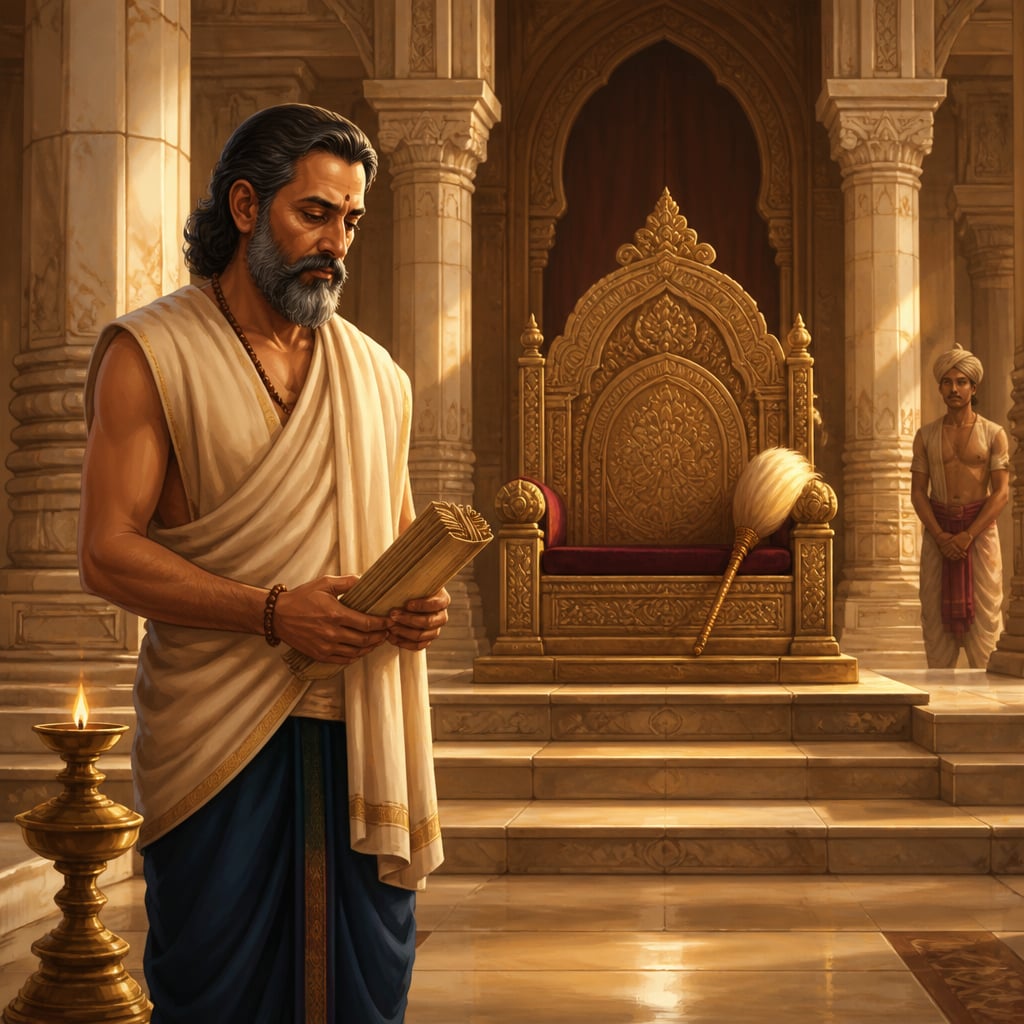
Contrast this with children raised for consumption, self-expression, and personal happiness.
The Self-Esteem Movement: A Failed Experiment
In 1986, California created the Task Force to Promote Self-Esteem. The premise was compelling: if we boost children's self-esteem, they'll succeed in life. Good feelings about yourself lead to good outcomes.
The movement spread nationwide. Teachers were trained to praise children constantly. "You're special!" became the mantra. Criticism was eliminated because it might damage fragile egos. Everyone got trophies. Everyone was told they were winners.
What was supposed to happen: Higher self-esteem → better grades, better jobs, better relationships
What actually happened:
- 30% increase in narcissism among college students (Twenge & Campbell studies)
- Children praised for being "smart" avoided hard challenges (Carol Dweck research)
- Students with inflated self-esteem showed no academic improvement
- When trophies stopped, anxiety increased, not decreased
- "Everyone is special" produced people who felt entitled but couldn't perform
The self-esteem movement produced exactly the opposite of what it promised. Children raised to feel special without achieving became adults who felt entitled without contributing.
The Happiness Paradox
The modern Western parenting mantra is: "I just want my children to be happy."
It sounds reasonable. What parent doesn't want their child's happiness? But research reveals a devastating paradox:
Parents who prioritize their children's happiness produce LESS happy adults.
Here's what the data shows:
| Parenting Focus | Adult Outcome |
|---|---|
| Happiness optimization | Higher anxiety, lower life satisfaction |
| Character development | Lower anxiety, higher life satisfaction |
| Comfort protection | Lower resilience, more depression |
| Purposeful challenge | Higher resilience, more fulfillment |
| Self-expression focus | Identity confusion, extended adolescence |
| Contribution focus | Clear identity, successful transitions |
Why does this paradox exist?
Because happiness doesn't come from pursuing happiness. Happiness comes as a byproduct of meaningful contribution. The person who chases happiness directly never catches it. The person who serves something larger than themselves finds happiness along the way.
Vidura wasn't trying to be happy. He was trying to fulfill his dharma. Happiness followed naturally.
Ravana's Sons: Power Without Purpose
The Ramayana gives us a stark warning about children raised with everything except purpose.
Ravana was the most powerful being of his age. He had conquered the three worlds. He possessed wealth beyond measure, magical abilities, physical immortality (against gods and demons), and supreme scholarship. He could give his sons anything.
And he did, except purpose.

Meghnad (Indrajit) inherited his father's magical abilities. He could make himself invisible, create illusory armies, and wield divine weapons. He had defeated Indra himself. Yet what did he use these extraordinary gifts for? To serve his father's ego-driven war against Rama.
Akshayakumara was blessed with the boon that his arrows would never miss. Extraordinary capability, but used for what? He died young, charging against Hanuman in a battle that served no higher purpose.
Both sons had capabilities that could have changed the world for the better. Both had access to education, resources, and opportunity. Both were raised to consume and conquer rather than contribute.
The outcome? Both died young, in a war their father started for ego and desire. Their potential was entirely wasted. Their lives served nothing lasting.

Contrast this with Lakshmana, raised with far fewer advantages but with clear purpose. Lakshmana chose exile with Rama. He chose service over comfort. He chose dharma over personal gain. His life had meaning because it contributed to something larger than himself.
Same capabilities, different parenting, opposite outcomes.
The Contribution Difference
What separates Vidura from the affluenza kids, Lakshmana from Meghnad, the purposeful from the entitled?
The answer lies in one question parents either ask or don't:
"What will you give?" vs "What will you get?"
Children raised with the first question develop:
- Identity rooted in contribution, not consumption
- Resilience (setbacks don't destroy meaning)
- Healthy self-esteem (earned through actual service)
- Clear direction (they know what they're for)
- Lasting satisfaction (contribution provides sustainable fulfillment)
Children raised with the second question develop:
- Identity dependent on external validation
- Fragility (setbacks feel like identity attacks)
- Narcissism (unearned confidence without capability)
- Directionless anxiety (no sense of what they're for)
- Chronic dissatisfaction (consumption never satisfies)
The difference isn't just philosophical, it shows up in measurable outcomes.
The Research: Purpose > Happiness
Modern research strongly validates the Dharmic insight that purpose matters more than happiness:
Victor Frankl's observations: Holocaust survivors who had purpose survived longer and recovered better than those who didn't. Purpose protects even in extreme circumstances.
William Damon's research ("The Path to Purpose"): Adolescents with clear sense of purpose show:
- Higher life satisfaction
- Better academic performance
- Lower rates of depression and anxiety
- More successful adult transitions
- Greater resilience to setbacks
Angela Duckworth's "Grit" research: The top predictor of success isn't talent or intelligence, it's perseverance toward long-term goals that serve something beyond oneself.
The Blue Zones studies: Communities with the longest, healthiest lives all share one factor, a clear sense of purpose (what the Japanese call "ikigai" and what Dharmic tradition calls "svadharma").
The evidence is overwhelming: children raised for purpose thrive; children raised for happiness flounder.
Dharma as Contribution Framework
The Dharmic tradition provides a clear framework for raising contributors:
1. Dharma to Family (Kula Dharma)
- Children have responsibilities to the family unit
- They contribute to household functioning, not just receive from it
- Respect for elders is expressed through service, not just words
- The family is a training ground for larger contribution
2. Dharma to Community (Samaja Dharma)
- Children learn early that they belong to something larger
- Service projects are natural, not resume-building exercises
- Neighbors, extended family, and community have claims on them
- They practice thinking beyond personal benefit
3. Dharma to Society (Rashtra Dharma)
- Children understand that their gifts serve the larger good
- Their education isn't just for personal advancement
- They develop skills the world needs, not just skills they enjoy
- Success is measured by contribution, not just achievement
4. Dharma to Creation (Vishwa Dharma)
- Children feel connected to something larger than human society
- Environmental responsibility follows naturally from this connection
- They learn to see themselves as stewards, not owners
- Their lives have cosmic significance through alignment with dharma
Vidura embodied this framework. He served family (advising Dhritarashtra despite knowing it was futile), community (guiding the Pandavas), kingdom (speaking truth even when dangerous), and dharma itself (aligning his actions with cosmic order).
From Consumer to Contributor: Practical Shifts
How do you shift a child's orientation from consumption to contribution?
Shift 1: Questions You Ask
- Instead of: "Did you have fun today?"
- Ask: "Did you help anyone today?" "What did you learn that could help others?"
Shift 2: Praise You Give
- Instead of: "You're so smart/talented/special!"
- Say: "I noticed you helped your sister with her homework, that was generous."
Shift 3: Responsibilities You Assign
- Instead of: Optional chores for allowance
- Assign: Genuine family responsibilities that matter (meal prep, sibling care, elder support)
Shift 4: Stories You Tell
- Instead of: Success stories about wealth and fame
- Tell: Stories of purpose and service (Vidura, Hanuman, real-life contributors)
Shift 5: Goals You Set
- Instead of: "What do you want to be when you grow up?"
- Ask: "What problem do you want to help solve?" "Who do you want to serve?"
Shift 6: Self-Esteem You Build
- Instead of: Empty affirmations ("You're special!")
- Provide: Real achievement through effort ("You practiced hard and improved, that's real.")
The Vidura Test
Here's a simple test for whether you're raising a contributor or a consumer:
When your child accomplishes something, what's their first thought?
- Consumer mindset: "What do I get?" "Do people admire me?" "How does this benefit me?"
- Contributor mindset: "Who can this help?" "What's the next service I can provide?" "How does this connect to something larger?"
When your child faces difficulty, how do they respond?
- Consumer mindset: "Why is this happening to me?" "This isn't fair." "Someone should fix this for me."
- Contributor mindset: "What can I learn from this?" "How can I grow through this?" "Who else has faced this, and how did they serve despite it?"
When your child has free time, what do they do?
- Consumer mindset: Consume entertainment, seek pleasure, avoid boredom
- Contributor mindset: Look for ways to help, develop skills, create something useful
Vidura would have passed this test easily. Ravana's sons would have failed spectacularly.
Which direction are your children trending?
The Ultimate Paradox
Here's the deepest irony of parenting:
If you raise your children for their own happiness, they will be unhappy.
If you raise your children for contribution to others, they will find happiness.
This isn't cruelty, it's the structure of human flourishing. We're wired for meaning, not pleasure. We're designed for purpose, not consumption. We find ourselves by losing ourselves in service to something larger.
Vidura understood this. Jijabai understood this. Every wise parent in every tradition has understood this.
The modern West forgot it, and the rising tide of anxiety, depression, and purposelessness among young people is the result.
The good news? You can recover this wisdom. Starting today, you can shift your child's orientation from consumption to contribution, from "What will you get?" to "What will you give?"
That shift changes everything.
Pursuing happiness directly doesn't work. Happiness is a byproduct of meaningful contribution, not a goal to be chased. Children raised 'just to be happy' become anxious; children raised to contribute become fulfilled.
Victor Frankl documented this in 'Man's Search for Meaning': even in concentration camps, those with purpose survived better. Positive psychology research confirms that eudaimonic wellbeing (from purpose and contribution) is more durable than hedonic wellbeing (from pleasure). The 'just be happy' approach produces hedonic treadmills, constant pursuit of the next pleasure, chronic dissatisfaction.
Dharmic tradition never made happiness the goal. The goal was dharma, right action, contribution, alignment with cosmic order. Ananda (bliss) was understood as the byproduct of dharmic living, not something to be pursued directly. This saved Indian parenting from the 'happiness trap' until Western influence introduced it.
Vidura never pursued happiness. He pursued dharma, speaking truth, serving the kingdom, guiding the righteous. The happiness he experienced was the natural result of a life aligned with purpose. Compare this to modern 'happiness optimizers' who are perpetually anxious despite having everything.
Real self-esteem is earned through genuine contribution, not bestowed through empty praise. Children need to accomplish meaningful things and receive honest feedback, not participation trophies and 'you're special' affirmations.
Carol Dweck's research shows that children praised for 'being smart' (fixed trait) develop fragile self-esteem and avoid challenges. Children praised for effort and improvement (growth mindset) develop resilient self-esteem and embrace challenges. The Dharmic focus on karma (action) over phala (fruit) naturally produces growth mindset.
Case studies
Vidura: The Servant-Sage Who Found Fulfillment
Vidura was born of Vyasa and a palace maid, making him technically a Kuru prince but ineligible for the throne. This limitation could have bred resentment. Instead, it freed him. Without the possibility of kingship, Vidura devoted himself entirely to service: advising kings, speaking truth, guiding the righteous, and maintaining dharma in a corrupt court.
Vidura embodied every principle of contributor parenting: - **Service identity**: His self-worth came from contribution, not position - **Truth-speaking**: He risked everything to tell kings what they needed to hear - **Consistent dharma**: When Dhritarashtra chose wrongly, Vidura didn't abandon him, he kept counseling - **Selfless presence**: He guided the Pandavas without seeking credit or reward - **Peaceful death**: His final moments showed a life without regrets Vidura never accumulated wealth, never sought power, never expressed bitterness about his birth status. His fulfillment came from service itself.
Vidura's counsel preserved the Pandavas multiple times. His warnings to Dhritarashtra, though unheeded, established the moral clarity that history remembers. When he chose to leave the court before the war, he did so at peace. When he died in the forest during vanaprastha, his soul merged with Yudhishthira (according to one tradition), the ultimate recognition of a life well-lived.
Contributor identity produces sustainable fulfillment. Vidura never chased happiness; he pursued service. Happiness found him. Children raised to serve, not just to achieve or accumulate, develop the same inner peace Vidura demonstrated.
In a culture obsessed with personal branding and follower counts, Vidura's model of quiet service feels countercultural. Yet research on 'helper's high' consistently shows that people who orient their lives around contribution report higher life satisfaction than those chasing personal achievement. Raising children who ask 'How can I help?' rather than 'What's in it for me?' produces adults who find lasting fulfillment in their careers, relationships, and communities.
Vidura served as prime minister of Hastinapura across three generations of kings. The Vidura Niti, comprising over 500 verses of political and ethical wisdom, remains one of the most referenced sections of the Mahabharata.
The Self-Esteem Movement: A Generation of Empty Praise
In 1986, California launched the Task Force to Promote Self-Esteem, believing that positive self-regard would solve social problems from crime to teen pregnancy. The movement spread nationally: participation trophies, grade inflation, constant praise, elimination of criticism, 'everyone is special' messaging. A generation of children was raised on unearned affirmation.
The self-esteem movement violated dharmic principles: - **Separated confidence from competence**: True self-respect comes from actual achievement (karma) - **Encouraged consumer mindset**: 'You deserve to feel good' rather than 'You exist to contribute' - **Created fragile identities**: Without earned self-worth, external threats felt like identity attacks - **Bred entitlement**: Children expected rewards without work - **Produced narcissism**: Self-focus without self-development creates hollow self-regard From a Dharmic perspective, the movement inverted the proper order: it sought to create good feelings that would lead to good actions, rather than good actions that lead to genuine self-respect.
Research documented the failure: - 30% increase in narcissism scores among college students - No improvement in academic outcomes despite inflated grades - Children praised for 'being smart' avoided challenges (Dweck) - When external affirmation stopped, anxiety increased - The generation raised on 'you're special' struggled with real-world feedback The movement produced exactly what it claimed to prevent: fragile, anxious young people with inflated self-regard and deflated capability.
Self-esteem cannot be given; it must be earned through genuine contribution and achievement. Parents who try to make children feel good without the foundation of actual service create the opposite: chronic insecurity masked by defensive narcissism.
Participation trophies, inflated grades, and 'everyone is special' messaging persist in schools worldwide. The result is visible on college campuses where students crumble at the first critical feedback. Genuine self-confidence comes from mastering difficult things, not from being told you are already wonderful. Parents who replace earned praise with constant affirmation create children who cannot distinguish between feeling good and being good.
The California Self-Esteem Task Force spent $735,000 in taxpayer funds between 1986 and 1990. A UC Santa Cruz meta-analysis found the correlation between self-esteem and academic achievement was only 0.13.
Ravana's Sons: Power Without Purpose
Ravana gave his sons everything parents dream of: the best education (he was a great scholar himself), supernatural powers (Meghnad could become invisible, Akshayakumara's arrows never missed), royal privilege, and unlimited resources. What he didn't give them was dharmic purpose beyond serving his ego and desires.
Ravana's parenting produced consumer-warriors, not contributor-leaders: - **No loka-sangraha**: Their abilities never served world welfare - **Ego service**: Their purpose was extending Ravana's will, not dharma - **No independent dharma**: They had no compass beyond their father's commands - **Wasted potential**: Extraordinary capabilities used for adharmic ends - **Early death**: Both died young in a war that served nothing lasting Meghnad had conquered Indra himself, yet he died at Lakshmana's hands, fighting for his father's kidnapped trophy. Akshayakumara's infallible arrows couldn't save him from Hanuman. Power without purpose ended in purposeless death.
Both sons died in the war against Rama. Meghnad's extraordinary magical abilities, Akshayakumara's divine boons, all wasted in service of Ravana's desire for Sita. Neither son is remembered for contribution; both are remembered as cautionary examples of capability without dharmic direction. Lanka fell, the dynasty ended, and the sons' potential was entirely unrealized.
Capability without purpose is dangerous capability. Ravana gave his sons everything except the one thing that would have made their gifts meaningful: dharmic direction. Parents who develop their children's abilities without developing their sense of contribution raise Meghnad, powerful, accomplished, and ultimately wasted.
Many high-achieving families produce children with impressive resumes and no sense of direction. The child with perfect grades, three varsity sports, and a startup who still asks 'But what should I do with my life?' is a modern Meghnad. Skills without a sense of purpose leave young adults adrift after graduation, cycling through careers and relationships without ever finding meaning in any of them.
Meghnad (Indrajit) defeated Indra, king of the Devas, in battle, earning his name. Despite possessing the Brahmastra and Nagapasha weapons, he died at age 30 fighting Rama's forces in his father's war.
Living traditions
- Vidura Kuti, Hastinapura: Traditional site associated with Vidura's residence during the Mahabharata period
- Mata Amritanandamayi Math: Headquarters of humanitarian and spiritual organization founded by Amma
Reflection
- What messages is your parenting sending about the purpose of life? Are you implicitly teaching that life is about personal happiness, achievement, and consumption, or about contribution, service, and meaning?
- Does your child have genuine responsibilities, things the family actually depends on them for? Or are their 'chores' really optional activities you pay them to do?
- Are you raising a Vidura (servant-sage who finds fulfillment through contribution) or a Meghnad (powerful capability without dharmic purpose)?