Traya Bhimashankar: The Three Claimants
The location debate between Pune, Assam, and Uttarakhand
Explore an ongoing sacred geography debate. Multiple temples claim to be the authentic Bhimashankar jyotirlinga, in Maharashtra's Sahyadri, in Assam's Kamrup, and in Uttarakhand. Learn how textual interpretation, regional identity, and devotion all play roles in this fascinating dispute.
When Sacred Geography Overlaps
In the previous lesson, we learned the legend of Bhimashankar, how Shiva destroyed the demon Bhima and established a jyotirlinga where his sweat formed a river. The story is powerful, its meaning clear.
But where exactly did this happen?
This question, which seems like it should have a simple answer, has generated centuries of debate. Three major temples claim to be the authentic Bhimashankar jyotirlinga, each with textual, archaeological, and devotional evidence. This lesson explores the debate, not to declare a winner, but to understand what these disputes reveal about how sacred geography works in the Hindu tradition.
The Three Claimants
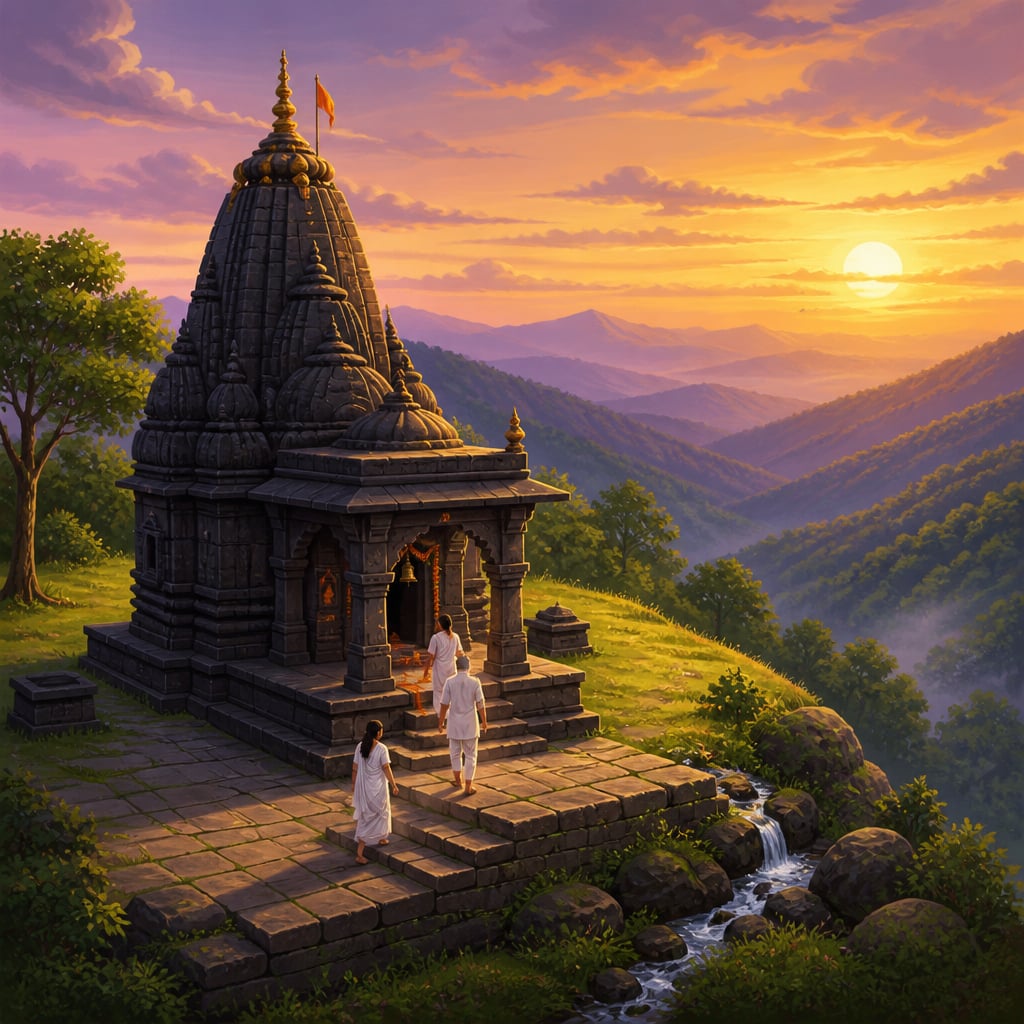
1. Bhimashankar, Pune District, Maharashtra
The Mainstream Choice
The temple in the Sahyadri mountains, about 127 kilometers from Pune, is the most widely recognized Bhimashankar jyotirlinga. It appears in most pilgrimage guides, government tourism materials, and scholarly accounts.
The Arguments For:
- Continuous pilgrimage tradition for at least 800 years
- Temple architecture from the 13th century Yadava period
- The Bhima River originates near the temple, matching the legend of Shiva's sweat
- Strong support from the Maharashtra state government and most Vedic scholars
- Included in the traditional Dwadasha Jyotirlinga pilgrimage circuit
The Textual Interpretation: The Shiva Purana says the jyotirlinga is located in "Dakini" region. Proponents argue "Dakini" means "southern" (from dakshina), referring to the southern Sahyadri region of Maharashtra.
2. Bhimeswar Dham, Kamrup, Assam
The Northeastern Contender
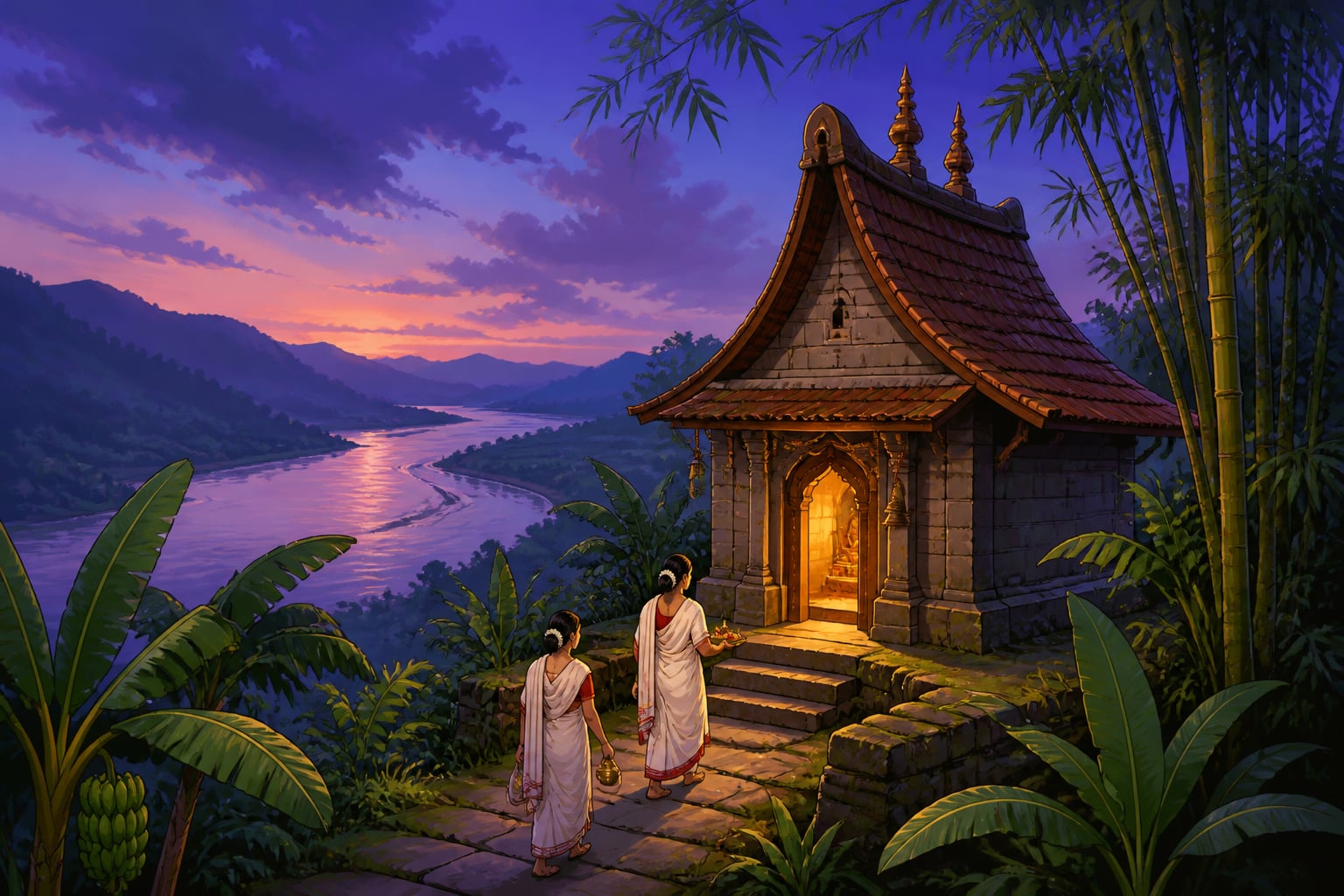
Near Guwahati, on Dakini Hill (locally called Daini Pahar), sits the Bhimeswar Dham temple. Recently promoted by the Assam government, this site has generated significant controversy.
The Arguments For:
- Located literally on "Dakini Hill", matching the Purana's reference to "Dakinyam"
- Situated in ancient Kamarupa, where the legend says King Kamrupeshwar was imprisoned
- Archaeological evidence of ancient temple foundations and ruins
- The Shiva Purana specifically mentions "Kamrupa Pradesh" in the Bhimashankar chapter
- Support from Assam government and some regional scholars
The Textual Interpretation: The Kotirudra Samhita mentions both "Dakini" and "Kamrupa", both geographical markers that fit Assam precisely. Kamrupeshwar, the devoted king in the legend, was specifically the king of Kamarupa.
3. Bhimashankar, Kashipur, Uttarakhand
The Silent Third

A lesser-known Bhimashankar temple exists near Nainital in Uttarakhand. This region was also historically called "Dakini country" in some ancient texts.
The Arguments For:
- Ancient temple with Shiva worship traditions
- Historical references to the area as "Dakini" region
- Older architectural elements suggesting possible antiquity
- Located in the Himalayan foothills, traditionally associated with Shiva
The Textual Interpretation: Some scholars argue that "Dakini" referred to a broader cultural region that included parts of what is now Uttarakhand.
The Heart of the Debate
Textual Ambiguity
The Shiva Purana's description is maddeningly ambiguous:
"In the region of Dakini, on a hill, stands the jyotirlinga known as Bhimashankar, where Lord Shiva destroyed the demon Bhima."
The problem: multiple regions can claim to be "Dakini." The word can mean:
- A direction (south/dakshina)
- A specific place name (Dakini Hill in Assam)
- A region (Dakini country in various ancient texts)
- A class of beings (dakinis, the tantric goddesses)
Ancient texts often used such multivalent terms, allowing for different readings across centuries.
The Kamrupa Question
The legend clearly states that Bhima conquered Kamrupa and imprisoned its king. Kamrupa is historically and definitively in Assam, this is not disputed. So how can Maharashtra be the jyotirlinga site if the king was in Assam?
Maharashtra's Response: The demon Bhima, after gaining power, roamed across India. The final battle could have occurred anywhere Shiva chose to manifest. The river Bhima in Maharashtra provides physical evidence.
Assam's Response: The text says the jyotirlinga appeared where Kamrupeshwar was imprisoned, worshipping his earthen linga. That was in Kamrupa. Why would Shiva manifest thousands of kilometers away?
The River Evidence
Maharashtra has a significant argument: the Bhima River actually exists and actually originates near the temple. If Shiva's sweat formed the river Bhima, the jyotirlinga should be at the river's source.
Assam's counter: rivers can be named after deities or events without the deity being physically present at the source. The Bhima River might be named in honor of the legend, not as proof of location.
Why Does This Matter?
Regional Identity
The debate isn't purely academic. Sacred sites define regional identity. When the Assam government promotes Bhimeswar Dham as the "true" Bhimashankar, Maharashtra politicians respond sharply. Pilgrimage economy, tourism revenue, and cultural prestige are all at stake.
Devotional Practice
For most devotees, the debate is secondary to practice. Millions visit the Maharashtra Bhimashankar annually. The temple is consecrated, the deity is worshipped, miracles are reported. Does textual accuracy matter when faith is active?
The Hindu Approach to Sacred Geography
Here's where it gets interesting: Hinduism has always allowed for multiple sacred sites claiming the same identity. Unlike monotheistic religions that tend toward single authoritative locations, the Hindu tradition often celebrates multiplicity.
Consider:
- Multiple temples claim to be the "original" Shakti Peetha for the same body part
- Different regions claim the same events from the Ramayana and Mahabharata
- The same deity may have "original" temples in several states
This isn't seen as a problem to solve but as abundance to celebrate. The divine is infinite, why should it be limited to one location?
The Settled and Unsettled
What's Settled
For practical pilgrimage purposes, the Maharashtra Bhimashankar is recognized as the jyotirlinga by:
- Most traditional Vedic scholars and Shankaracharyas
- The Government of India's tourism materials
- Standard pilgrimage guides and yatra operators
- The majority of Hindu devotees
Devotees completing the Dwadasha Jyotirlinga pilgrimage almost universally visit Maharashtra.
What Remains Open
Textually, the debate is legitimate. The Assam site has genuine textual support that cannot be dismissed. Scholars continue to argue, and new archaeological discoveries could shift the balance.
Devotionally, all three temples are genuine Shiva temples with living worship traditions. Visiting any of them is spiritually beneficial.
The Wisdom Response
Perhaps the mature response is: Shiva is everywhere. The legend of Bhimashankar describes eternal truths about devotion overcoming tyranny. Whether this manifested "more authentically" at one geographical location or another may be less important than whether we understand and embody those truths.
The debate itself demonstrates something important: these stories matter to people. Regions fight over sacred sites because those sites carry meaning. The passion in the dispute is evidence of the legend's enduring power.
Visiting All Three
For the dedicated pilgrim, why not visit all three? Each temple has its own energy, its own community, its own relationship with the Bhimashankar legend.
Maharashtra: The mainstream jyotirlinga, powerful temple, stunning Sahyadri setting, clear Bhima River connection.
Assam: The Kamrupa connection, Dakini Hill, Northeast India's Shaiva heritage, newer but growing pilgrimage tradition.
Uttarakhand: The Himalayan setting, ancient temple atmosphere, connection to broader Shiva geography of the mountains.
Each claims Shiva's presence. Each has devoted worshippers. The pilgrim who visits all three acknowledges both the debate and its transcendence.
Living traditions
The Bhimashankar debate has become a case study in how sacred geography intersects with regional politics and identity. Rather than resolving, it may be intensifying as state governments promote tourism and cultural heritage. The tradition's survival strategy, honoring all sites while practically favoring one, may be tested in an era of amplified regional assertions.
- Multi-Site Bhimashankar Yatra: Some dedicated pilgrims visit all three Bhimashankar claimant temples as a complete pilgrimage, honoring both the debate and its transcendence. This approach neither settles nor avoids the question, it embraces all possibilities.
- Regional Stotram Recitation: Each region has developed its own stotrams (hymns) praising 'their' Bhimashankar. Marathi devotional songs differ from Assamese ones. These regional variations enrich the tradition rather than competing.
- Bhimashankar Temple (Maharashtra): The mainstream jyotirlinga, recognized by most authorities. Powerful temple in stunning forest setting, with the Bhima River originating nearby.
- Bhimeswar Dham (Assam): The northeastern claimant, recently promoted by Assam government. Located on the literal 'Dakini Hill' mentioned in texts, in ancient Kamarupa.
- Bhimashankar Temple (Uttarakhand): The lesser-known third claimant, with ancient temple traditions and Himalayan setting.
- Kamakhya Temple: One of the most important Shakti Peethas, located in the same ancient Kamarupa region as Bhimeswar Dham. The presence of both Shaiva and Shakta power sites in this region strengthens Assam's sacred geography claims.
Reflection
- Different regions claim the same sacred site, and each community deeply believes in its claim. How might the dispute itself be spiritually meaningful, rather than being a problem to solve?
- The verse says 'wherever Shiva worship occurs, there Shiva is directly present.' If this is true, why do we care about visiting specific sites at all? Why not just worship at home?
- Regional identity and pride clearly play roles in the Bhimashankar debate. When does regional pride enhance spiritual practice, and when does it distort it?