Mahadana: The Festival of Giving
When a whole kingdom learns to give
The Bodhisattva, born as a king, establishes the Great Giving - a seven-day festival where the royal treasury opens to all. The poor receive food, the sick receive medicine, and travelers receive shelter. But the king discovers that the greatest transformation is not in those who receive, but in his own ministers and nobles who learn the joy of giving for the first time.
The King's Dream
King Brahmadatta ruled a prosperous kingdom. His treasury overflowed with gold. His granaries burst with grain. His people were fed, clothed, and safe.
But the king was troubled.
Every night, he walked through his palace, past rooms filled with treasures - silks that no one wore, jewels that no one enjoyed, gold that sat in darkness doing nothing.
"What is all this for?" he wondered. "My treasury grows, but is anyone happier for it?"
One night, he had a dream. He saw his palace transformed into a great river, and from this river, streams flowed out in every direction - to villages, to cities, to distant lands. Wherever the water touched, flowers bloomed and trees bore fruit.
He woke with the answer in his heart.
"I will create the Mahadana," he declared. "The Great Giving."
Preparing the Festival
The king summoned his ministers.
"For seven days," he announced, "the royal treasury will be open to all. Anyone - from the wealthiest merchant to the poorest beggar - may come and take whatever they need. Food for the hungry, medicine for the sick, cloth for the naked, shelter for the homeless. No one will be turned away. No one will be questioned."
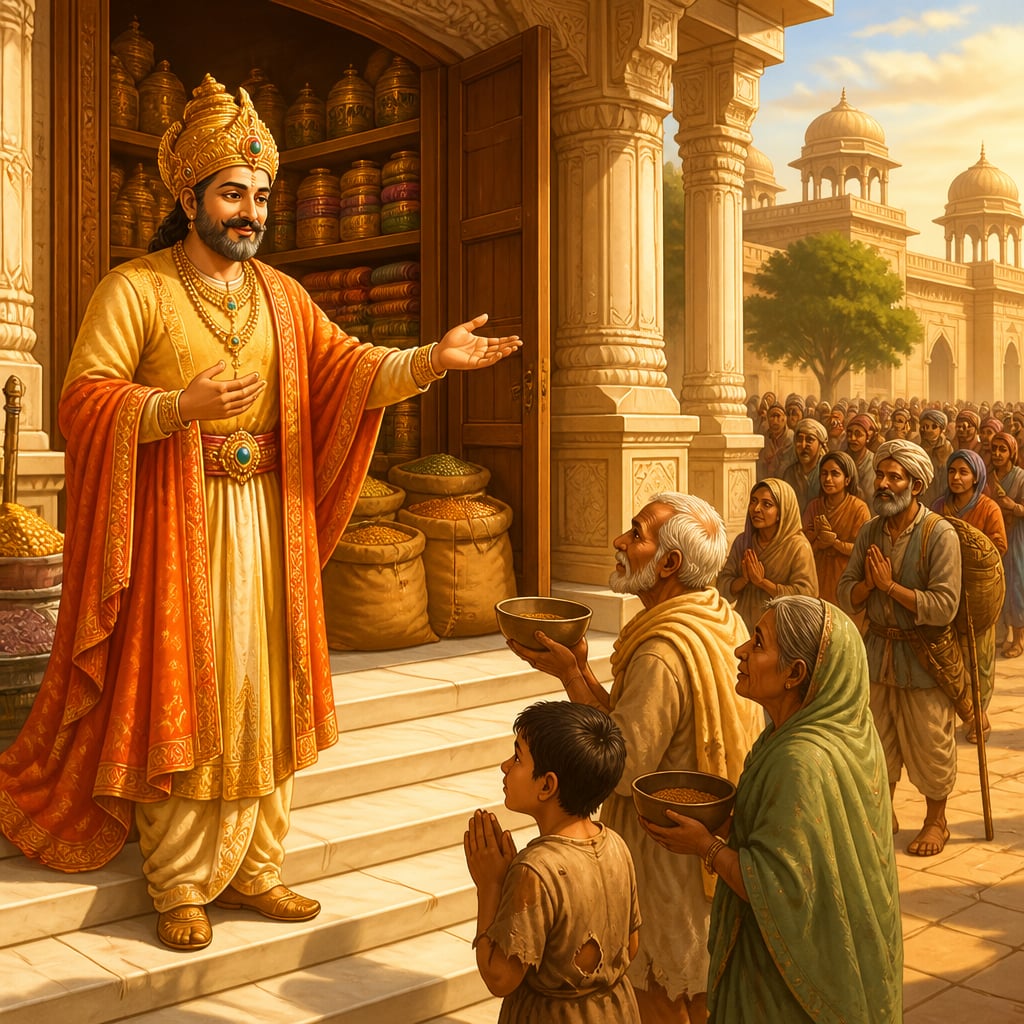
His ministers stared at him in shock.
"Your Majesty," the chief minister sputtered, "this is madness! The treasury will be emptied! The kingdom will be ruined!"
"Will it?" the king asked calmly. "Tell me, Minister - when you were a boy, did you ever share your food with a hungry friend?"
The minister blinked. "I... yes, once. A schoolmate who had forgotten his lunch."
"How did you feel afterward?"
The minister was quiet for a long moment. "I felt... good. Happy, even. Like I had more than before, somehow."
"That," said the king, "is what I want for our entire kingdom. Not just the giving - but the feeling. I want everyone to know that joy."
The Seven Days
Word spread across the land: the king was opening his treasury!
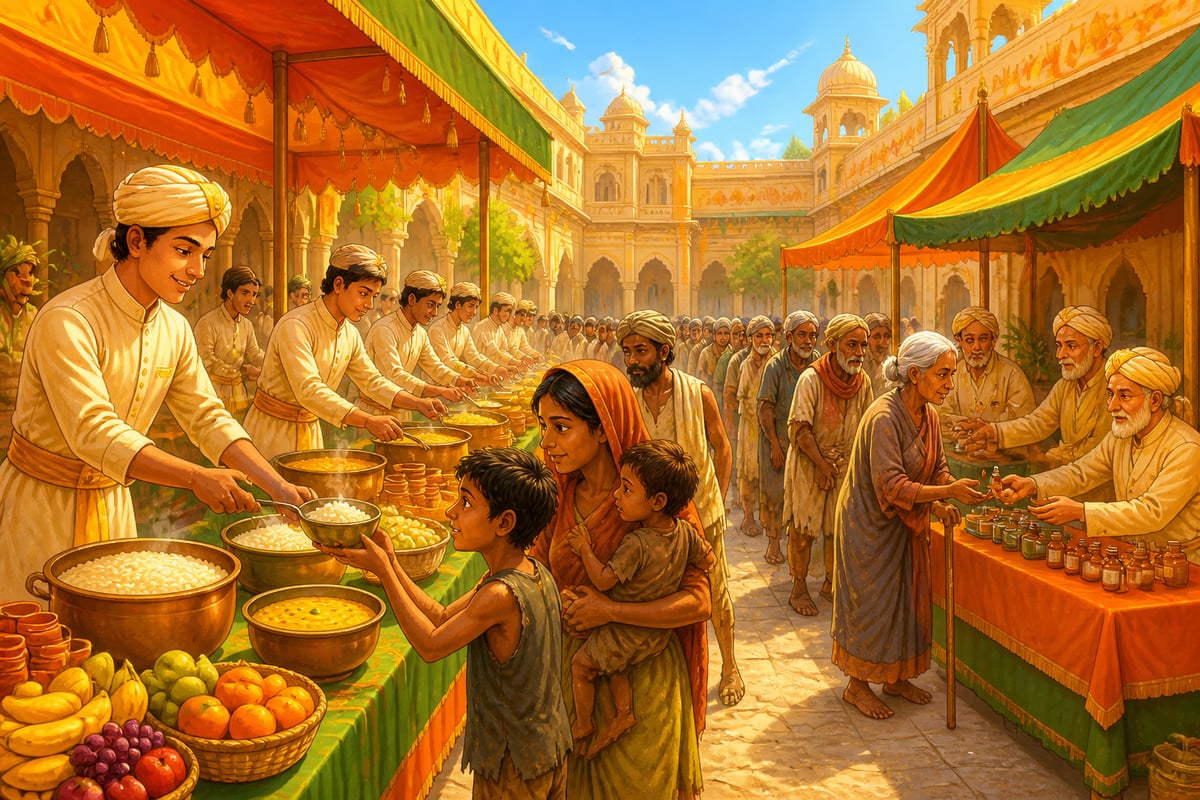
On the first day of Mahadana, the poor came first. They approached the palace gates nervously, hardly believing it could be true. Servants welcomed them with bows. Tables groaned with food. Bags of grain were pressed into their hands.
"Take more," the servants urged. "There is plenty."
The hungry ate. The ragged received robes. The sick were given medicine. By evening, the poor were returning to their villages, singing with joy.
On the second day, travelers came - merchants whose caravans had been robbed, pilgrims who had lost their way. They received shelter, food, and supplies to continue their journeys.
On the third day, the sick came. Healers attended to them free of charge, with medicines from the royal stores.
Day after day, the giving continued. And something strange began to happen.
The Transformation
The king's nobles and ministers, who had watched the first days with skepticism, began to change.
At first, they helped reluctantly, ordered by the king. But as they placed food into grateful hands, as they saw tears of relief in the eyes of the sick who received medicine, something shifted inside them.
"Your Majesty," one elderly minister said on the fifth day, "I have served in this treasury for forty years, counting coins and guarding gold. I thought that was important work. But this week... this week I have actually done something that matters."
Another minister, known for his stinginess, surprised everyone. He went home and returned with his own family's extra clothes, adding them to the goods being given away.
"I don't need three winter cloaks," he muttered, embarrassed. "Someone else can use them."
By the seventh day, even the servants were contributing. The cook gave extra portions. The gardener shared seeds. The stable boy donated his one spare blanket.
The giving had become contagious.
The Treasury's Secret
When the festival ended, the chief minister conducted an inventory. He had expected disaster - empty vaults, barren storerooms.
What he found amazed him.
"Your Majesty," he reported, his voice shaking, "the treasury... it's not empty."
"Of course not," the king smiled. "What did you find?"
"During the seven days, wealthy citizens began sending contributions. They saw the poor being helped and wanted to be part of it. Merchants donated grain. Nobles gave gold. By the end, we received nearly as much as we gave away."
"And the kingdom itself?" the king asked.
"Healthier than before. The sick have recovered and returned to work. The travelers have spread word of our generosity, and merchants are eager to trade here. The poor, no longer desperate, are planting crops instead of begging."
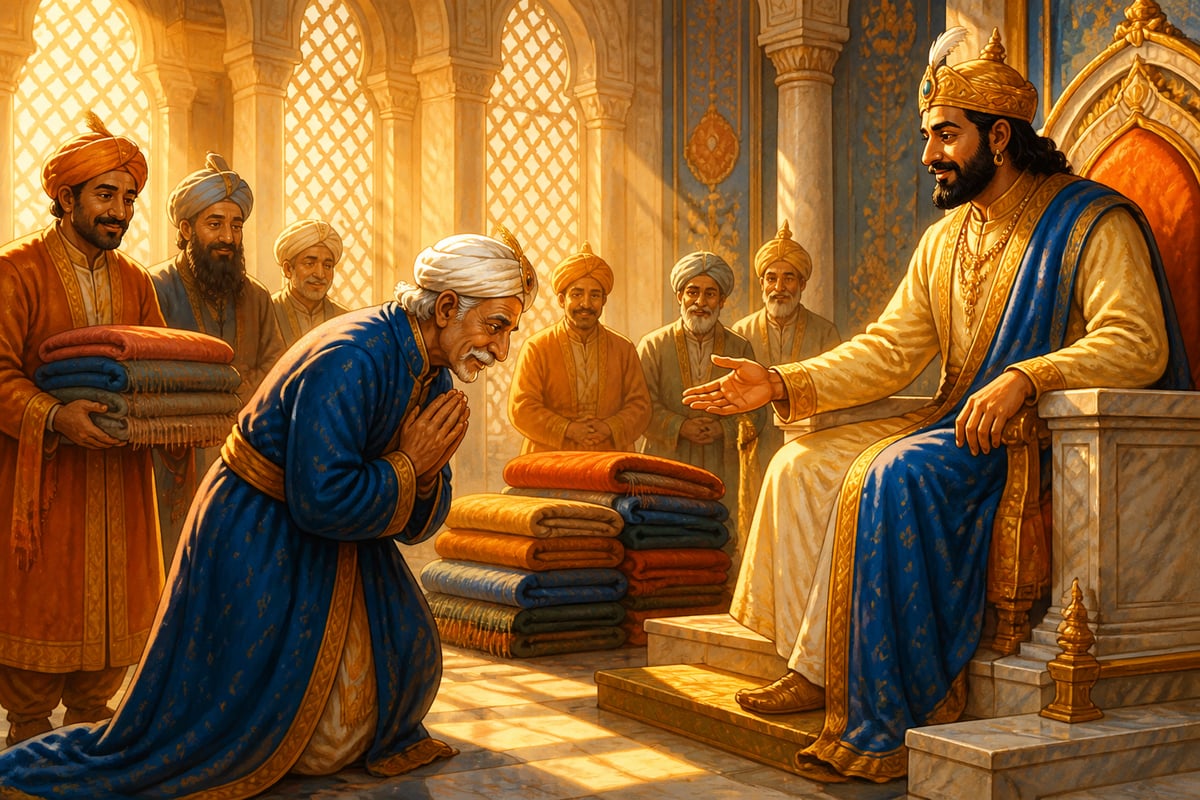
The chief minister bowed low.
"I was wrong, Your Majesty. You didn't empty the treasury. You invested it."
The king shook his head.
"The treasury was never the point. Look at your own heart, old friend. How do you feel?"
The minister looked inward and found something he hadn't felt in years: lightness. Joy. The warm glow of having helped.
"I feel... rich," he whispered. "Truly rich."
"Then the Mahadana has succeeded," said the king. "Not in what we gave away - but in what we became."
The Wisdom
The Festival of Giving teaches us something beautiful: generosity is contagious.
When one person gives, others are inspired to give too. When a community practices giving together, something magical happens. The givers are transformed as much as the receivers. Hearts that were closed begin to open. People who never thought of themselves as generous discover the joy of sharing.
King Brahmadatta's genius was understanding that the treasury's gold was not the real treasure. The real treasure was the generosity in people's hearts - and that grows larger the more it's used.
A kingdom of givers is richer than a kingdom of hoarders, even if the hoarders have more gold.
In Your Life
You might not have a royal treasury, but you can create your own mini-Mahadana.
Try this: organize a giving day with your family. Everyone contributes something - toys, clothes, books, or time. Give it away together - to a charity, to neighbors, to anyone who could use it.
Notice what happens. Does your family feel poorer afterward? Or does something else happen - a feeling of closeness, of shared purpose, of joy?
Generosity grows when it's shared. One person giving alone is wonderful. But a whole group giving together - that's a festival. That's a celebration. That's the Mahadana spirit.
And here's the secret the chief minister learned: you often receive more than you give. Not in things, necessarily - but in connection, gratitude, and the deep satisfaction of making someone's life a little better.
The treasury of the heart has no limit.
Reflection
- Have you ever participated in a group giving activity - like a food drive, charity event, or community service day? How did it feel different from giving alone?
- The chief minister spent forty years counting gold and thought that was important. Then he discovered that giving was more meaningful. What activities in your life might seem important but are actually less valuable than helping others?
- The king said the treasury was 'invested, not emptied.' What do you think he meant? How can giving be like an investment?