The Making of a King
Birth & Early Formation
In the hill fortress of Shivneri, a child was born who would challenge the mightiest empires of his age. While his father Shahaji served distant Sultanates, young Shivaji was raised by his mother Jijabai on tales of Rama and ancient Hindu glory. Discover how stories became strategy, how a mother's vision planted the seeds of Swarajya, and how the mentorship of Dadoji Konddev transformed a dreamer into a warrior-king.
A Birth in the Mountains
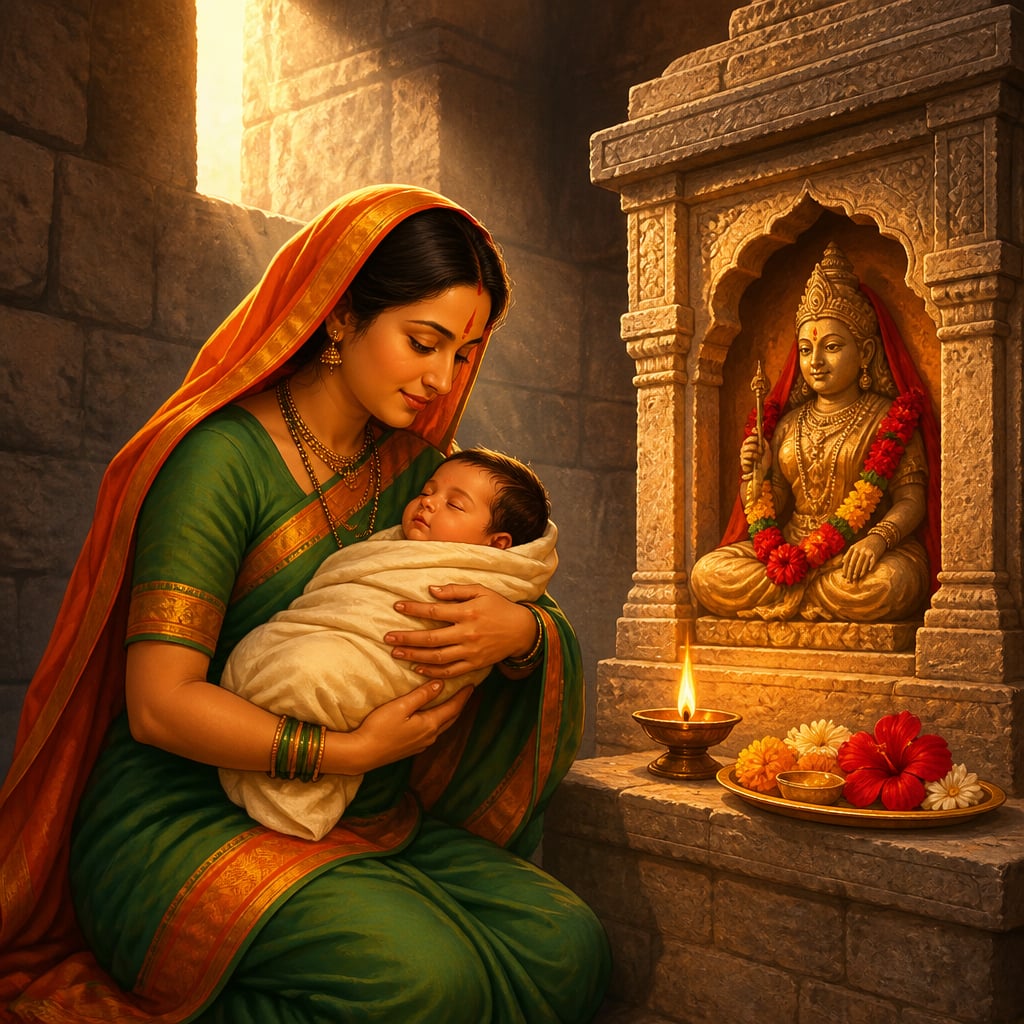
On a February day in 1630 CE, in the mountain fortress of Shivneri, a child was born who would change the course of Indian history. The fort, perched 3,500 feet above the Deccan plains, was named after the goddess Shivai Devi whose temple stood within its walls. The child would be named after her, Shivaji.
His mother Jijabai had prayed at Shivai Devi's shrine for a son. Now, holding the newborn in that mountain fortress, she made a silent vow. This child would not grow up to serve foreign rulers. He would be a king.
The World Shivaji Was Born Into
To understand what Jijabai dreamed for her son, we must understand the world he entered.
For over 300 years, the Deccan had been under Muslim rule. The great Hindu kingdoms, the Yadavas of Devagiri, the Kakatiyas of Warangal, the Hoysalas of Dwarasamudra, had fallen one by one to the Delhi Sultanate and its successors. By 1630, the region was divided between three powers:
- The Bijapur Sultanate in the west
- The Ahmadnagar Sultanate in the center (soon to be absorbed by the Mughals)
- The Mughal Empire pressing from the north under Emperor Shah Jahan
Hindu nobles survived by serving these powers. Shivaji's father, Shahaji Bhonsle, was one such noble, a talented general who commanded troops for the Sultanates. He held jagirs (land grants) from both Bijapur and Ahmadnagar, maintaining his own cavalry while navigating the treacherous politics of rival Muslim courts.
Shahaji was powerful, respected, and often absent. His military campaigns kept him far from home for years at a time. The task of raising young Shivaji fell to Jijabai.
Jijabai: The Architect of Vision
Jijabai was no ordinary mother. Born into the Jadhav clan of Sindkhed, she came from a proud Maratha family with memories of better times. While other noble women might have been content with comfort and status, Jijabai burned with a different fire.
"She raised him on tales of Rama, of the Pandavas, of ancient kings who ruled by dharma. Every story was a lesson. Every hero was a model."

Every evening, as the sun set over the Sahyadri mountains, Jijabai would gather young Shivaji and recite from the Ramayana and Mahabharata. She told him of Rama's exile and triumphant return. Of the Pandavas who lost everything and won it back through dharma. Of kings who protected their people and priests who blessed righteous rule.
These were not bedtime stories. They were blueprints for a future kingdom.
Jijabai also told him of the Bhosle heritage, how their family claimed descent from the great Sisodias of Udaipur, the same royal house that produced Maharana Pratap. Whether this genealogy was historical or legendary mattered less than its message: You come from kings. You are meant to be a king.
In an age when Maratha nobles had accepted service to Sultanates as their destiny, Jijabai planted a revolutionary idea in her son's mind: Swarajya, self-rule, one's own kingdom, Hindu sovereignty.
The Move to Pune
When Shivaji was around twelve years old, Shahaji assigned his jagir around Pune to Jijabai's care. He appointed a trusted administrator, Dadoji Konddev, to manage the territory and train the young prince.
This move changed everything.
Pune was not like Shivneri. Nestled in the hills of the Western Ghats, surrounded by the valleys of Maval, it was a land of hardy mountain people, the Mavlas. These farmers, herdsmen, and hunters knew every path through the Sahyadris, every cliff that could be climbed, every cave that could hide an army.
Young Shivaji roamed these hills with Mavla boys who would become his lifelong companions and commanders. He learned:
- The secret paths through mountain passes
- How to climb fortress walls that seemed impossible
- The endurance required to march for days through difficult terrain
- The loyalty of men who shared hardship together
These childhood adventures were unknowing preparation for guerrilla warfare.
Dadoji Konddev: The Practical Mentor

If Jijabai gave Shivaji the vision, Dadoji Konddev gave him the skills.
Dadoji was an experienced administrator and soldier, old and wise in the ways of power. Under his tutelage, Shivaji learned:
| Domain | What Shivaji Learned |
|---|---|
| Administration | Revenue collection, land surveys, managing villages |
| Military | Cavalry tactics, fort warfare, troop discipline |
| Diplomacy | Navigating between rival powers, reading intentions |
| Justice | Settling disputes, maintaining law, protecting the weak |
Dadoji also instilled in Shivaji a crucial understanding: power must be built systematically. Dreams alone would not create Swarajya. It would require trained soldiers, loyal officers, secure forts, steady revenue, and the goodwill of the common people.
The Three Pillars of Formation
Shivaji's remarkable formation rested on three pillars:
1. Jijabai, The Visionary Mother
- Gave him the purpose: Swarajya, Hindu sovereignty
- Gave him the models: Rama, the Pandavas, dharmic kings
- Gave him the identity: A Bhosle, a future king, not a servant
2. Dadoji Konddev, The Practical Teacher
- Gave him administrative skills: How to govern
- Gave him military training: How to fight
- Gave him political awareness: How power actually works
3. The Mavla Companions, The Brothers in Arms
- Gave him knowledge of terrain: Every hill, every path
- Gave him loyal soldiers: Men who would die for him
- Gave him grounding: Connection to the common people
No single influence could have created Shivaji. It was this triangle of formation, vision from mother, skills from mentor, brotherhood from companions, that produced a complete leader.
The Lal Mahal Years
In Pune, the family resided at the Lal Mahal, the Red Palace, built by Shahaji. Here Shivaji spent his teenage years, absorbing Jijabai's teachings and Dadoji's lessons.
By the time he was sixteen, Shivaji had developed:
- An unshakeable conviction that Hindu self-rule was possible
- Practical skills in administration and warfare
- Deep knowledge of the Sahyadri terrain
- A band of loyal Mavla friends ready to follow him anywhere
- The patience to wait for the right moment
The stage was set. The boy raised on stories of Rama was ready to become a legend himself.
The Moment Approaches
Dadoji Konddev died around 1647, when Shivaji was seventeen. With his mentor gone and his father distant, Shivaji was effectively independent, master of the Pune jagir, commander of his own small force, and burning with the vision Jijabai had planted.
The Sultanates were weakening. The Mughals were pressing from the north. The mountains were full of poorly defended forts. The Mavlas were restless for a leader.
Everything young Shivaji had learned, from Jijabai's stories, from Dadoji's lessons, from his Mavla adventures, was about to be tested.
The child of Shivneri was ready to become the founder of Swarajya.
Historical context
Early Maratha Period (1630-1647 CE)
The Deccan was contested between three powers: the Bijapur Sultanate, the Ahmadnagar Sultanate (soon to be absorbed by the Mughals), and the expanding Mughal Empire under Shah Jahan. Hindu nobles like Shahaji served as military commanders for the Sultanates, maintaining their own forces while navigating between rival Muslim powers. The common people, farmers, artisans, and traders, suffered under heavy taxation and religious persecution.
Living traditions
Shivaji remains the most revered historical figure in Maharashtra. His image adorns public spaces, political campaigns, and home shrines. The Indian Navy's Western Naval Command is headquartered at facilities bearing his name. Major infrastructure, airports, railway stations, universities, honors his memory. His concept of Hindavi Swarajya influenced the freedom movement, with leaders from Tilak to Savarkar invoking his example. Today, Shivaji Jayanti is a state holiday, and his forts receive millions of visitors annually.
- Shivneri Fort: Shivaji's birthplace, featuring the room where he was born, the Shivai Devi temple that gave him his name, and the Badami Talav lake. The fort offers panoramic views of the Sahyadri ranges.
- Lal Mahal: The red palace where Shivaji spent his formative years under Jijabai's care and Dadoji Konddev's tutelage. The reconstructed palace now houses a museum depicting scenes from Shivaji's childhood.
- Shivaji Maharaj Museum, Raigad: Though Raigad was Shivaji's capital in later life, its museum provides comprehensive coverage of his entire life, including his childhood and the influences that shaped him.
Reflection
- Who in your own life has shaped your character through stories, whether told directly or through their own example? What vision did they plant in you?
- Why do you think Jijabai's influence proved more decisive in shaping Shivaji than his father Shahaji's, despite Shahaji's greater worldly power and experience?
- What is the relationship between cultural memory, stories of past glory, and the capacity for future action? Can a people who have forgotten their heroes create new ones?