Sahanadhairya: Patient Endurance
When not acting is the wisest action
Two tales about the power of patience. In The Storm and the Oak, Tenali teaches that sometimes you must bend and wait rather than fight. In The King's Anger, he shows how waiting out someone's rage is wiser than responding to it.
The Storm and the Oak
A terrible storm was approaching Vijayanagara. The sky turned dark. The wind began to howl.
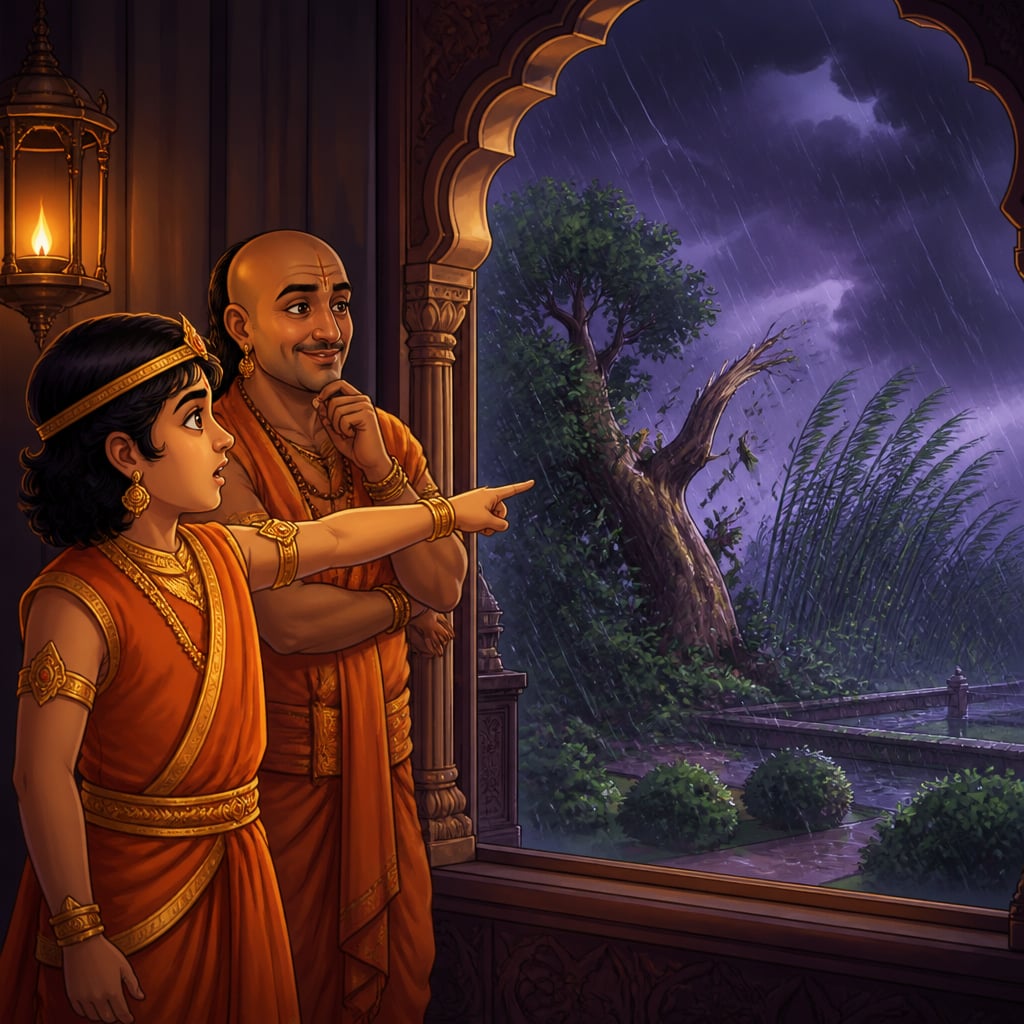
In the royal garden, the young prince was watching from a window with Tenali.
"Look at that tall oak tree," the prince said. "It's so strong and mighty. The wind cannot bend it!"
Indeed, the oak stood rigid against the gusts, its thick trunk unmoving.
Nearby, a thin bamboo grove swayed wildly in the wind, bending almost to the ground with each gust.
"And look at that bamboo," the prince laughed. "So weak! It bends completely. The oak is much better."
Tenali smiled but said nothing.
The storm grew stronger. Lightning flashed. Thunder roared. The wind became a screaming monster.
Suddenly - CRACK! A deafening sound.
The mighty oak had snapped in half. Its rigid trunk, which refused to bend, had broken under the storm's force. The great tree lay shattered on the ground.
But the bamboo? It was still standing. Bent, yes. Battered, certainly. But when the storm passed, the bamboo slowly straightened up again, damaged but alive.
"Prince," Tenali said quietly, "which is truly stronger? The oak that refused to bend and broke? Or the bamboo that bent with the storm and survived?"
The prince stared at the fallen oak. "I... I thought standing firm was strength."
"Sometimes it is," Tenali agreed. "But sometimes, strength is knowing when to bend. When to wait. When to let the storm pass over you instead of fighting it head-on. The bamboo didn't FIGHT the wind - it ENDURED it. And it won."
The King's Anger
Even the great Krishnadevaraya sometimes lost his temper.
One day, a messenger brought bad news. An important treaty had failed. A kingdom to the north had insulted Vijayanagara's ambassador.
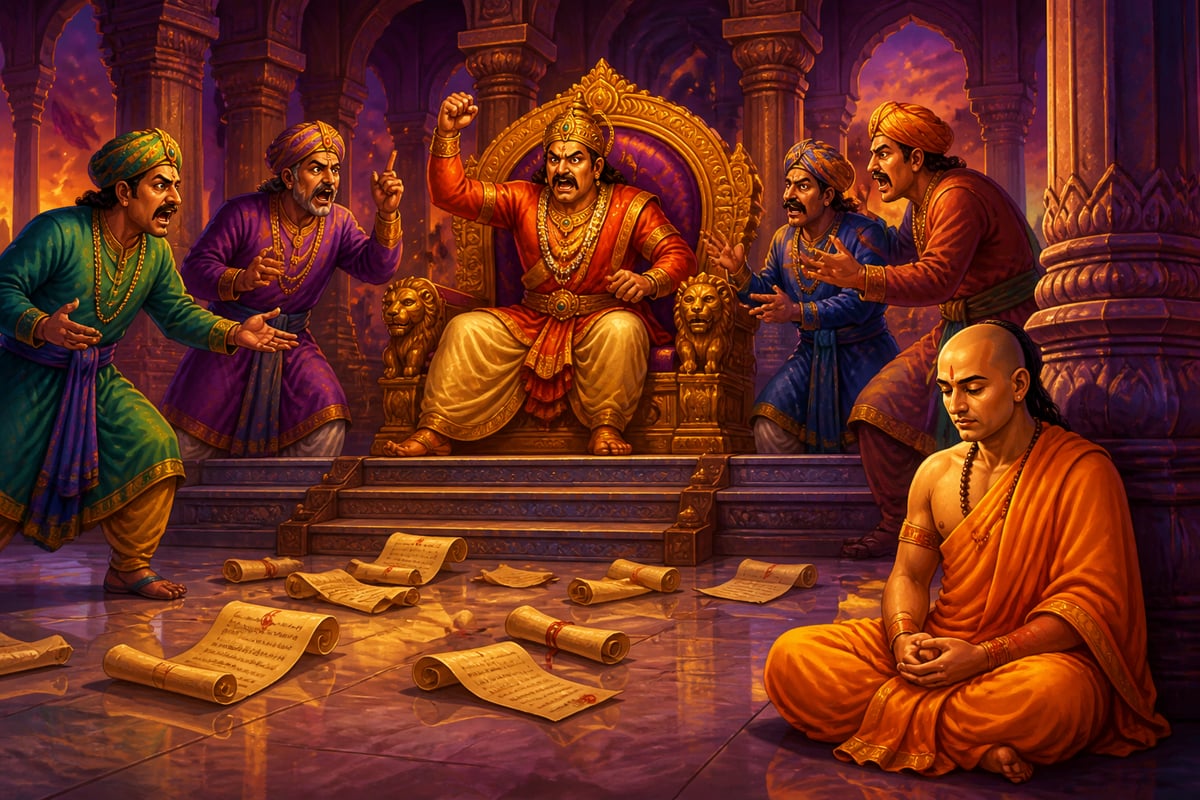
The king exploded with fury.
"HOW DARE THEY?" he roared. "I will send my armies! I will crush them! They will learn to fear Vijayanagara!"
The ministers began offering advice.
"We should attack immediately, Maharaja!"
"No, send assassins!"
"Write an insulting response!"
Everyone was shouting. Everyone had an opinion. The king's anger was feeding on their energy.
Tenali said nothing.
He sat quietly in his corner, watching. He didn't agree with the angry advice. He didn't argue with the shouting ministers. He just... waited.
After an hour, the king's fury began to cool. He noticed Tenali sitting silently.
"Tenali! You have nothing to say? No clever response?"
"Maharaja," Tenali said calmly, "a wise man once told me: never make important decisions when you are angry, hungry, or tired. You are angry. The kingdom will still be there tomorrow. The insult will not disappear overnight. But decisions made in rage often become regrets in peace."
The king glared at him. For a moment, Tenali wondered if he'd gone too far.
Then the king sighed heavily. "You're right. I'm furious, and that's exactly when I shouldn't be making war decisions."
He dismissed the court. "We will discuss this tomorrow, when heads are cooler."

The next day, the king called Tenali to his private chambers.
"I almost started a war yesterday," he said quietly. "A war we probably would have won - but at what cost? Thousands of lives, years of resources, all because of an insult to my pride."
"And today, Maharaja?"
"Today, I'm considering a diplomatic response. Firm but not foolish. Strong but not wasteful." He looked at Tenali. "Why didn't you argue with me yesterday? Why didn't you tell me I was being foolish?"
"Because, Maharaja, you weren't ready to hear it. Arguing with a man in a storm is like arguing with the wind. You wait for the storm to pass. Then you speak."
The Wisdom
Sometimes the wisest action is NO action at all.
The bamboo didn't fight the storm - it endured. It bent, it waited, and when the storm passed, it was still standing.
Tenali didn't argue with the angry king - he waited. He let the fury burn itself out. And when the king was calm, the right path became clear.
This is sahana - patient endurance. It's not weakness. It's not giving up. It's the strength to know that some storms cannot be fought. They can only be survived.
Not every problem needs an immediate response. Not every insult needs a comeback. Not every fight needs to be fought. Sometimes the wisest discernment is knowing when to step back and wait.
In Your Life
When someone is really angry at you - a parent, a teacher, a friend - that's usually NOT the time to explain yourself. They're not listening. Their storm is too loud.
Wait. Be quiet. Let them finish. Let their anger cool.
Then, when they're calm, you can have a real conversation.
The same is true for your OWN anger. When you're furious, you're not thinking clearly. You might say things you'll regret. You might make decisions that hurt you.
Wait. Breathe. Let your own storm pass.
Patience isn't doing nothing forever. It's knowing when to wait and when to act. The bamboo bends during the storm - but when the sun comes out, it stands tall again.
Reflection
- Can you remember a time when you stayed calm while others around you were upset? What happened because you kept your composure?
- Why do you think the ministers rushed to give advice while Tenali stayed silent? What made their approach different from his?
- Is there a difference between patient endurance and just giving up? How do you know when to wait and when to fight?