Haasyakala: The Art of Laughter
Laughter opens minds where logic cannot
Two tales showing how humor opens minds that arguments cannot. The Donkey's Brains reveals how laughter can expose foolishness, while The Horse and the Well demonstrates how a joke can solve what force cannot.
The Donkey's Brains
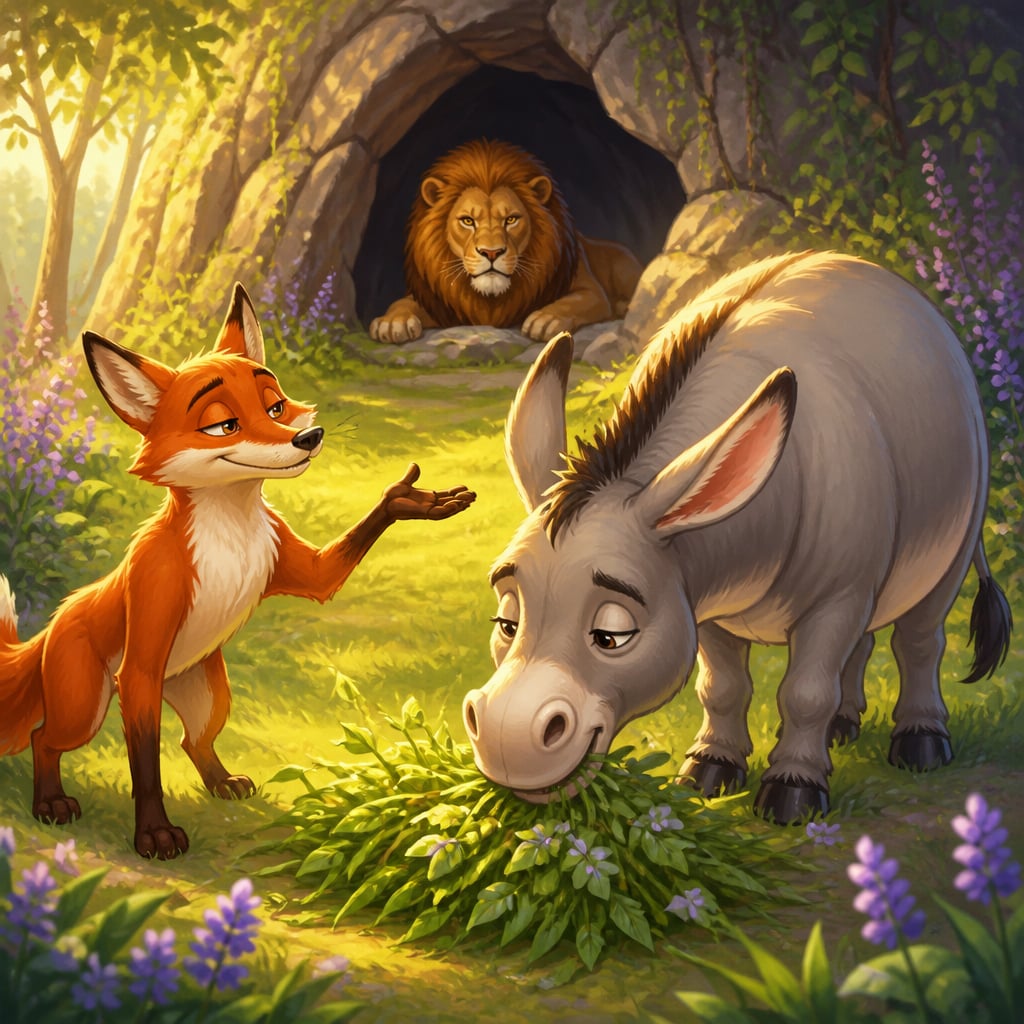
One day, a lion caught a donkey in the forest. Just as he was about to eat it, a clever fox ran up.
"Wait, Your Majesty!" the fox cried. "This donkey is too thin. Let me fatten him up first. In a month, he'll be a proper feast!"
The lion agreed. The fox led the donkey to a beautiful meadow.
"Eat all you want," the fox said sweetly. "I'll protect you from the lion."
The foolish donkey believed every word. He ate happily for weeks, growing fat and lazy.
When the donkey was nice and plump, the fox led him back to the lion's den. The lion pounced! In the chaos, the donkey's head rolled away.
"Where's the head?" the lion roared. "I want to eat the brains first - they're the tastiest part!"
The fox bowed low. "Your Majesty, if this donkey had ANY brains, would he have come back here?"
The lion burst out laughing so hard he forgot his anger!
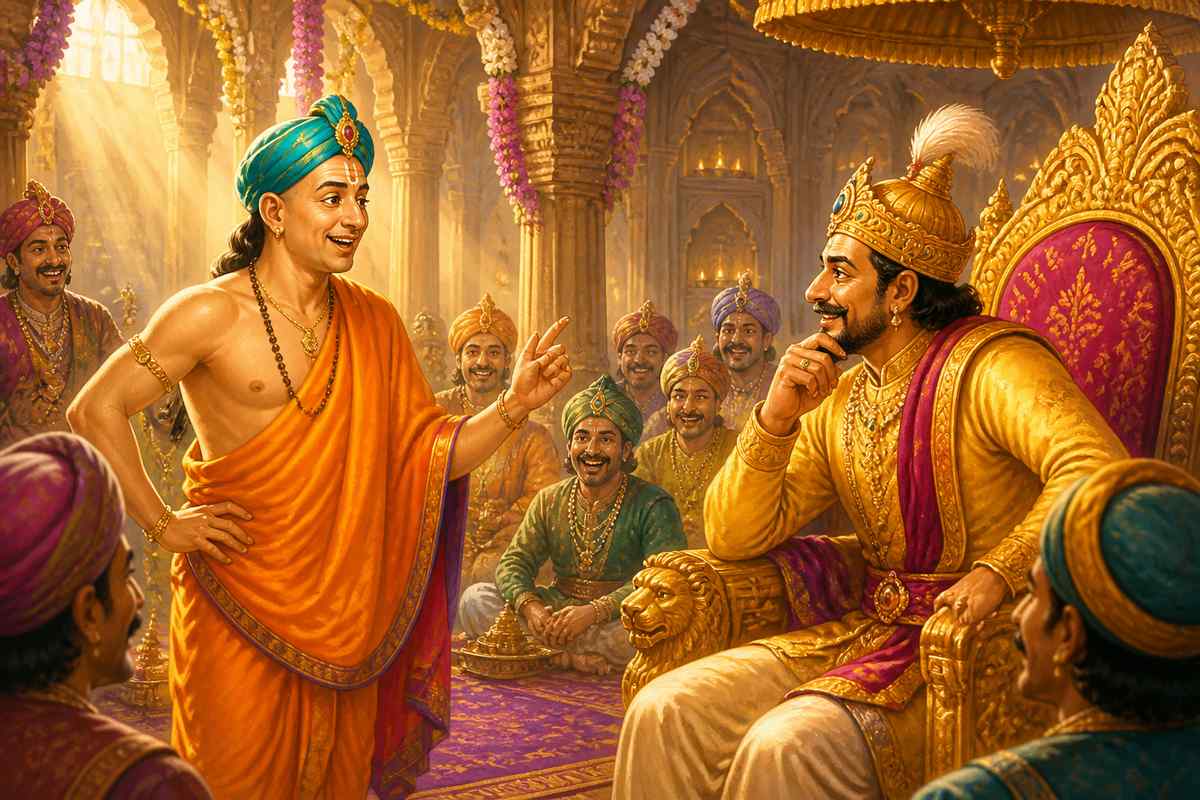
Tenali told this story to King Krishnadevaraya one morning.
"Why this tale, Tenali?" the king asked, amused.
"Maharaja, yesterday you asked why your spy Ranganatha returned to the enemy kingdom after barely escaping with his life."
"Yes! I was furious at his foolishness!"
"He went back because you promised him gold. Some people will walk into danger if the reward seems sweet enough. Like the donkey, they forget the lion waiting."
The king stroked his beard thoughtfully. "So perhaps I shouldn't blame him for being brave... but question whether I'm offering rewards that make people reckless?"
"Your wisdom exceeds the tale, Maharaja," Tenali smiled.
The Horse and the Well
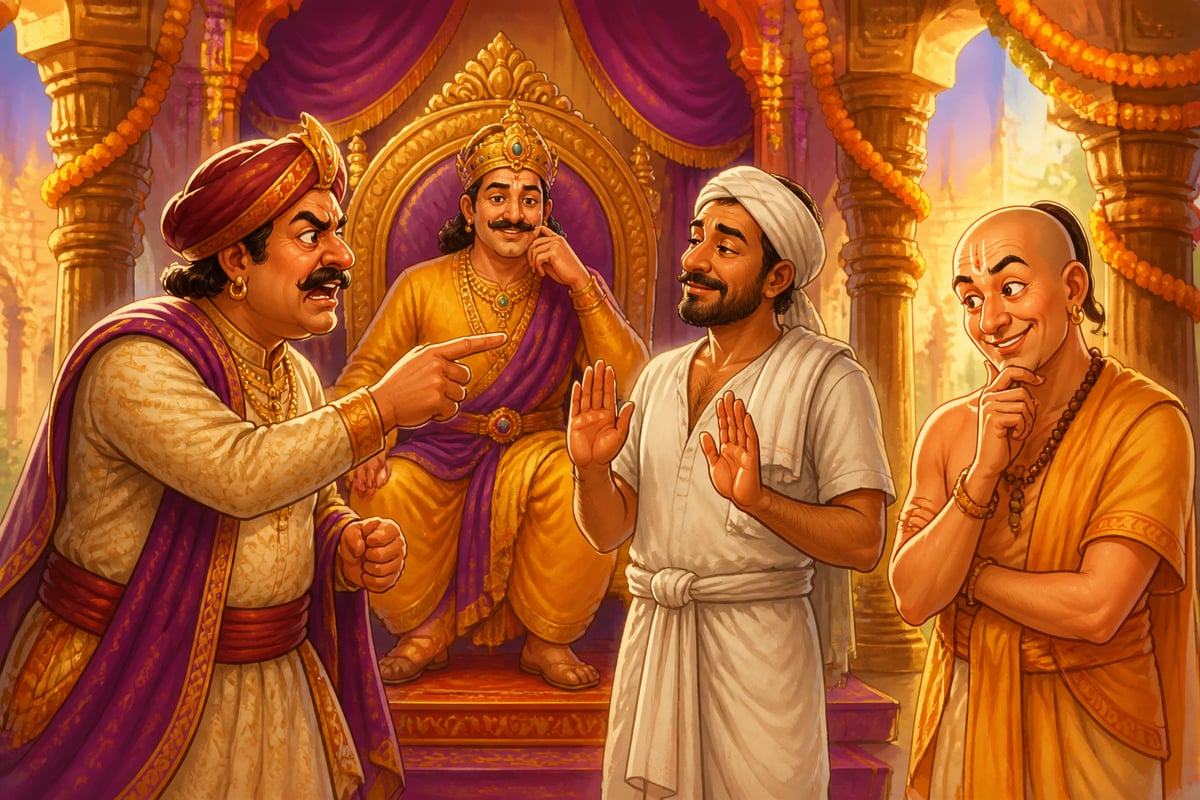
A merchant stormed into the royal court.
"Maharaja! I sold my well to this farmer, but he won't let me take my water!"
The farmer shook his head. "I bought the WELL. The water inside belongs to me now!"
"That's ridiculous!" the merchant shouted. "A well without water is just a hole!"
The courtiers whispered among themselves. This was indeed tricky.
"Tenali," the king said. "What do you think?"
Tenali's eyes sparkled. "Maharaja, may I tell a story?"
"Please."
"Once, a man sold his horse to another. But when the buyer came to collect, the seller said: 'I sold you the horse, but not the air in its lungs! You can take the horse, but leave the breathing here.'"
The court erupted in laughter.
"The buyer replied: 'Fine! I'll wait right here until the horse stops breathing. Then I'll take it home!'" Tenali continued.
Even the merchant chuckled despite himself.
"So, friend merchant," Tenali turned to him gently. "You sold the well. The water lives in the well. Unless you plan to carry water out in buckets every night and pour it back every morning, I think the water stays."
The merchant opened his mouth... closed it... then laughed.
"I've been a fool, haven't I?"
"Not a fool," Tenali said. "Just someone who needed to see his own argument from the outside. We all need that sometimes."
The Wisdom
Why did Tenali use jokes to solve these problems?
Because a good joke does something magical - it lets people see their own mistakes WITHOUT feeling attacked. When you lecture someone, they get defensive. But when you make them laugh, their guard comes down.
The merchant wasn't evil. He'd just convinced himself of something silly. Tenali's funny story was like a mirror - it showed the merchant his own logic from outside. Once he saw how ridiculous it looked, he laughed at himself.
This is the art of hasya. It heals instead of hurts. It teaches instead of preaches.
In Your Life
Have you ever tried to tell someone they were wrong, and they just got angry? Maybe a friend making a bad choice, or a sibling who wouldn't listen?
Next time, try Tenali's way. Instead of saying "You're wrong!" tell a funny story that shows the problem. Make them laugh first. When people are laughing, they stop fighting.
Remember: The goal isn't to WIN an argument. The goal is to help someone SEE. And laughter opens doors that pushing cannot.
Reflection
- Think of a time when someone made you laugh about a mistake you made. Did it feel better than being scolded? How did humor change how you felt about being wrong?
- Why do you think people get defensive when directly told they're wrong, but can accept the same message when it comes through a joke?
- Can ALL truths be taught through humor? Or are some lessons too serious for laughter? Where is the line?