Prativeshi Dharma: Being a Good Neighbor
The circle of care begins next door
We do not live alone. Our well-being is inseparable from those who live around us. This lesson explores the dharmic duty toward neighbors - from daily courtesies to life-saving moments. Through the examples of Vidura who opened his home when palace doors closed, and Jatayu who gave his life protecting a neighbor's wife, we learn that prativeshi dharma is not optional kindness but essential duty.
The Circle of Care Begins Next Door
Opening Scenario
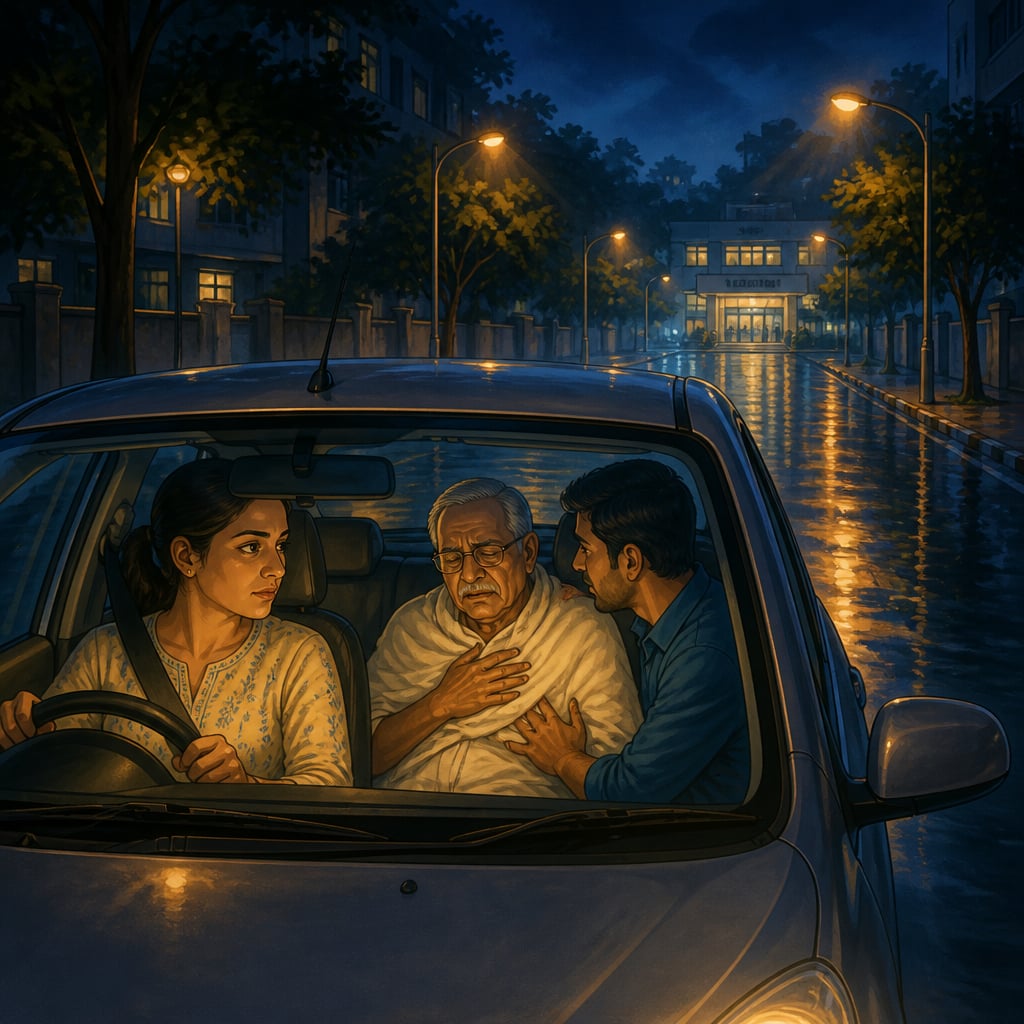
Urban Scene: Meera lives in a Bangalore apartment. At 2 AM, she hears frantic knocking. Her neighbor Mr. Sharma, a 68-year-old widower, is gasping - chest pain. His own relatives live across the city. Meera has two choices: call an ambulance and go back to sleep, or drive him to the hospital herself. She barely knows him - just nods in the elevator. What would you do?
Rural Scene: In a Rajasthan village, Ramesh is bitten by a snake while working in his field. The nearest hospital is 30 kilometers away. His own family's vehicle broke down yesterday. His neighbor Lakshman, with whom he had a property dispute last year, has the only working motorcycle. Lakshman sees Ramesh's family running toward his house. What does dharma demand?
Why It Matters
Your neighbor is not a stranger who happens to live nearby. In the dharmic worldview, proximity creates obligation. The Sanskrit word प्रतिवेशी (prativeshi) literally means "one who dwells near" - and dwelling near means your fates are intertwined.
When you ignore a neighbor's need:
- You break the web of mutual protection that keeps everyone safe
- You signal to the universe that you too may be ignored in crisis
- You damage the community's collective strength
The hard truth: Your family's safety depends on neighbors you may never have spoken to. In a fire, who will help evacuate your children? In a medical emergency at midnight, who will be first to respond? Strangers across the city - or the people next door?
What Our Tradition Teaches
संगच्छध्वं संवदध्वं Saṅgacchadhvaṁ saṁvadadhvaṁ
"Come together, speak together, let your minds comprehend alike." , Rig Veda 10.191.2
This ancient hymn establishes the foundation: we are meant to move together, not merely exist side by side. The Vedic seers understood that isolated individuals are vulnerable; only communities thrive.
सहनाववतु सहनौ भुनक्तु Sahanāvavatu sahanau bhunaktu
"May we be protected together, may we be nourished together." , Taittiriya Upanishad 1.11
This prayer, recited before learning, reminds us that protection and nourishment are collective. "May WE be protected" - not "may I be protected while my neighbor suffers."
Stories That Illuminate
Vidura: When Palace Doors Closed

When the Pandavas were exiled, stripped of kingdom and dignity, who opened his home? Not the wealthy nobles of Hastinapura, not their powerful allies. It was Vidura - the minister who had little to gain and much to lose by showing hospitality to the fallen princes.
Vidura's house was modest. He had no political power to protect them. Yet he offered what he had: a roof, a meal, honest counsel. In their darkest hour, a neighbor's simple kindness became their lifeline.
The lesson: You don't need wealth or power to be a good neighbor. You need willingness.
Jatayu: The Ultimate Neighbor
Jatayu was an aged vulture, friend of Rama's father Dasharatha. When Ravana abducted Sita, Jatayu was resting nearby. He was old, his fighting days behind him. Ravana was a powerful demon king with a flying chariot.
Jatayu could have done what many do: "This is not my problem. I'm too old. What can I do against such power?"

Instead, he attacked. He fought until Ravana cut off his wings. He lay dying when Rama found him. His last words were not regret but information - he told Rama which direction Ravana had flown.
The lesson: Jatayu died as he lived - as a true prativeshi. He could not save Sita, but he tried. Age, weakness, and certain defeat did not excuse him from duty.
Sugriva and Rama: Neighbors in Exile
Two strangers - a prince wandering in search of his wife, a monkey king hiding from his brother - met by chance. Both were in exile. Both had lost everything.
They made a pact: Rama would help Sugriva regain his kingdom; Sugriva would help Rama find Sita. Neither had anything to gain immediately. Both were helping a stranger in need.
This alliance of mutual aid - neighbors in circumstance if not geography - changed the course of the Ramayana. Their combined strength accomplished what neither could alone.
The lesson: Sometimes your neighbor is whoever shares your situation. Help them, and you help yourself.
Modern Scenario: The 2 AM Decision
Meera drove Mr. Sharma to the hospital. The doctors said he had arrived just in time - another 20 minutes and the heart attack would have been fatal. His son arrived the next morning, tears streaming, trying to thank Meera.
"I barely know your father," Meera said.
"That's exactly why I'm crying," the son replied. "Strangers saved him when family was too far away."
Three months later, Meera's husband was traveling when their daughter developed high fever at night. Who drove them to the hospital? Mr. Sharma.
In Rajasthan, Lakshman put Ramesh on his motorcycle without a word about last year's dispute. Ramesh survived. The property dispute? It resolved itself - somehow, arguing over six inches of boundary seemed absurd after that night.
The pattern: Help given returns. Not as transaction, but as transformed relationship.
Dharmic Guidelines
| DO | DON'T |
|---|---|
| Know your neighbors' names and faces | Treat neighbors as invisible strangers |
| Check on elderly or alone neighbors regularly | Assume "someone else will help" |
| Share emergency contact information | Keep to yourself in false privacy |
| Offer help during illness, travel, or crisis | Wait to be asked when need is obvious |
| Resolve disputes through dialogue, not silence | Let small conflicts become permanent walls |
| Be the first responder in emergencies | Calculate whether helping is "worth it" |
The Karma Angle
For Children (Ages 8-12): Imagine if you fell off your bicycle and hurt yourself. Would you want the neighbor aunty to help you, or walk past saying "not my child"? Treat others' children like you'd want others to treat you.
For Teenagers (Ages 13-17): You're building your reputation right now - not for college applications, but for life. The person who helps neighbors becomes known as reliable. The person who ignores becomes known as selfish. Which reputation do you want in 10 years when YOU need help?
For Adults (Ages 18+): Your children are watching. When you ignore the neighbor's distress, your children learn that community doesn't matter. When you help, they learn that we protect each other. You're not just being a neighbor - you're teaching your children how to be human.
The Deeper Teaching: Chanakya's Wisdom
सुखस्य मूलं धर्मः, धर्मस्य मूलं समाजः
"The root of happiness is dharma. The root of dharma is society." , Chanakya Niti
You cannot find lasting happiness in isolation. Dharma itself - right action, proper conduct - arises from community. A hermit in the forest follows a different path; but for those of us living among others, our dharma is defined by our relationships.
The neighbor who never speaks to anyone may think they're preserving their peace. In reality, they're severing the roots of both dharma and happiness.
Reflection
- Do you know the names of the families on either side of your home?
- When was the last time you checked on an elderly neighbor?
- If you had a medical emergency tonight, which neighbor would you call?
- Have you ever helped a neighbor you barely know? How did it feel?
- Is there a neighbor you've been avoiding? What would it take to reconnect?
Case studies
The 2 AM Heart Attack
Meera, a 35-year-old IT professional in Bangalore, barely knew her neighbor Mr. Sharma - just elevator nods. At 2 AM, she heard frantic knocking. Mr. Sharma, 68, widower, was having a heart attack. His family lived across the city. Meera had two choices: call an ambulance and wait, or drive him herself immediately.
In the dharmic worldview, Mr. Sharma's proximity to Meera created obligation. The moment of crisis revealed what neighborliness actually means - not convenience but commitment. Vidura didn't merely acknowledge the Pandavas; he sheltered them.
Meera drove him immediately. Doctors said 20 more minutes would have been fatal. Three months later, when Meera's husband was traveling and their daughter had high fever at night, Mr. Sharma drove them to the hospital.
Help given creates invisible bonds that return in unexpected ways. Not as transaction - Meera didn't help expecting return - but as transformed relationship. The neighborhood itself became stronger.
In modern apartment complexes where neighbors barely know each other, emergency response still depends on proximity. Cardiac arrest, falls, fires, and medical emergencies all require faster help than any ambulance can provide. Building even minimal relationships with neighbors is practical emergency preparedness, not just social nicety.
Studies show cardiac arrest survival drops 10% for every minute without treatment. Neighbor response is often faster than ambulance arrival in Indian cities with traffic congestion.
The Snake Bite and the Disputed Boundary
In rural Rajasthan, Ramesh was bitten by a snake while working his field. His family's vehicle had broken down. His neighbor Lakshman, with whom he'd had a bitter property dispute for two years, had the only working motorcycle. The nearest hospital was 30 kilometers away. Lakshman saw Ramesh's family running toward his house.
This mirrors Jatayu's choice: Lakshman could calculate grievances (Ramesh had accused him of encroaching six inches of boundary) or respond to the human being dying in front of him. Dharma demanded he see the person, not the dispute.
Lakshman didn't hesitate. He put Ramesh on his motorcycle and raced to the hospital. Ramesh survived. The property dispute? It resolved itself afterward - arguing over six inches seemed absurd after that night. They never formally settled it; they just stopped caring.
Conflicts dissolve when we remember our shared humanity. The six inches of land that seemed so important became meaningless once the real stakes - life itself - became clear.
Property disputes between neighbors remain one of the most common civil litigation categories in India. Yet the same neighbors who fight over boundary walls often depend on each other during floods, power outages, and medical emergencies. Communities that build relationships across disputes are more resilient than those that let conflicts define all interactions.
In rural India, neighbor networks remain the primary emergency response system. Government ambulance services average 30+ minutes in remote areas; neighbor response is typically under 5 minutes.
Vidura's Modest Home
After losing everything in the dice game, the Pandavas were exiled in humiliation. The wealthy nobles of Hastinapura, their powerful allies, their fair-weather friends - all were suddenly unavailable. Vidura, a minister with modest means and no political leverage, invited them to his home.
Vidura had everything to lose: Duryodhana's displeasure, loss of position, potential danger to his family. He had nothing material to gain - the Pandavas were powerless exiles. Yet he saw neighbors in need, not political calculations.
His simple hospitality - a roof, a meal, honest counsel - became their lifeline in the darkest hour. Vidura's home was not grand, but it was open. That openness mattered more than any palace.
You don't need wealth or power to be a good neighbor. Vidura didn't give the Pandavas a kingdom; he gave them dignity. A warm meal and honest words can be worth more than gold.
In corporate and social settings, fair-weather allies disappear during career setbacks, scandals, or financial crises. The people who show up during your worst moments, often those with nothing to gain from you, reveal the true meaning of loyalty. Vidura's example applies to anyone deciding whether to stand by a friend facing public humiliation.
Vidura is remembered 5000 years later not for his political achievements but for this single act of prativeshi dharma. One moment of courage created eternal legacy.
Living traditions
Urban India is rediscovering prativeshi dharma through RWAs (Resident Welfare Associations), apartment WhatsApp groups for emergencies, and neighborhood watch programs. While the form has changed, the need for community remains eternal.
- Village Well Sharing: Traditional village wells were community property, maintained collectively, with established protocols for usage times and cleaning duties
- Saubhagya Ceremonies: Neighbors formally bless newly married couples, visiting their home with gifts and good wishes
- Apartment Association Pujas: Urban apartment complexes increasingly organize collective worship - Ganesh Chaturthi, Navratri, etc.
- Traditional Village Clusters: Visit villages where homes are built in clusters with shared courtyards - physical architecture that enforces prativeshi dharma. Notice how house design itself assumes neighborly interaction.
- Village Temple Commons: Traditional village temples served as community centers where neighbors gathered daily. The temple wasn't just for worship - it was where news was shared, disputes resolved, and community decisions made.
Reflection
- Do you know the names and faces of the five families closest to your home? If not, what has prevented you from learning them?
- If you had a medical emergency at 2 AM tonight, which neighbor would you call? If you cannot name anyone, what does this reveal about your community connections?
- Is there a neighbor you've been avoiding due to a past conflict? What would it take to reconnect?
- When was the last time you helped a neighbor without being asked? How did it feel?